
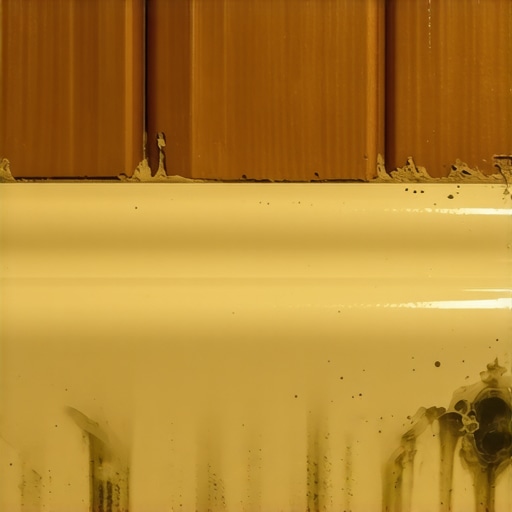
The lie of the waterproof bead
Bathroom baseboard rot occurs when moisture bypasses the surface seal through capillary action, often fueled by hydrostatic pressure from the subfloor or the wicking nature of porous trim materials like MDF. Most homeowners and amateur renovators believe that a simple bead of silicone acts as a permanent dam. It does not. I spent three days grinding concrete on a job last month just so the floor wouldn’t click like a castanet, and that same client had baseboards that looked like soggy oatmeal. He had applied three layers of caulk, but the wood was rotting from the back. Water does not just sit on top of your tile. It moves through grout lines, travels under the baseboard via the expansion gap, and gets trapped against the drywall. If your subfloor is concrete, moisture vapor transmission is constantly pushing water upward. When you seal the front with caulk, you create a terrarium for mold. The moisture has nowhere to go but into the wood fibers of your trim. This is a structural failure disguised as a cosmetic nuisance.
The physics of the hidden water cycle
To understand why trim fails, you must analyze the molecular movement of water and how capillary rise allows liquid to travel vertically against gravity. When you take a shower, the humidity in the room spikes to near saturation levels. This water vapor finds its way into any unsealed crack. Even if you think your tile is waterproof, your grout is likely a cementitious product that acts like a hard sponge. If you have not looked into grout restoration secrets for long lasting results, your grout is probably absorbing soapy water and pulling it toward the wall. Once the water hits the bottom of the baseboard, it begins the wicking process. Materials like Medium Density Fiberboard (MDF) are the biggest culprits. MDF is composed of sawdust and resin. Once the water breaks the surface tension of the factory primer, the fibers expand at a rate of up to twenty percent. This expansion cracks the paint, allowing more water to enter, and the cycle of rot accelerates. It will buckle. It will smell. It will fail.
“A floor is only as good as the subfloor beneath it; deflection is the enemy of every joint.” – Master Flooring Axiom
Why your subfloor is lying to you
Subfloor moisture levels must be measured with an anhydrous calcium chloride test or a pinless moisture meter to ensure the slab is not actively off-gassing vapor. In regions with high humidity or high water tables, concrete slabs are never truly dry. They are permeable. If you have installed tile over a slab without a proper vapor barrier, moisture is rising through the thin-set. When this vapor hits the baseboard, it condenses. This is why the bottom edge of the trim starts to peel even if you never spill a drop of water on the floor. Most installers skip the leveling compound and the moisture membrane to save a few dollars. They think the underlayment or the tile will hide the moisture. It won’t. I have seen thousand dollar bathrooms ruined because the installer did not understand the Dewey Decimal of moisture movement. If you are planning a renovation, you should check out showers that wow modern designs for 2025 but ensure the underlying waterproofing system meets TCNA standards.
| Material Type | Moisture Resistance | Chemical Composition | Recommended Use |
|---|---|---|---|
| MDF | Very Low | Compressed sawdust and glue | Dry hallways only |
| Solid Pine | Moderate | Natural cellulose fibers | Well-ventilated half baths |
| PVC | Absolute | Polyvinyl chloride plastic | Full bathrooms and wet rooms |
| Cedar | High | Natural tannins and oils | Exterior and high moisture |
The 1/8 inch that ruins everything
Expansion gaps are required by the National Wood Flooring Association to allow for the natural movement of materials, but in a bathroom, these gaps often become conduits for water. You are supposed to leave a small gap between the tile and the wall to allow for structural shifting. However, if this gap is not properly handled, it becomes a gutter. Water from a splashing shower or a leaky toilet flows into this gap and sits there. Since there is no airflow behind a baseboard, the water cannot evaporate. It sits against the gypsum board and the back of the trim. This is why I always recommend using PVC trim in wet areas. While people want the look of real wood, chic baseboard designs that transform rooms in 2025 now include high density polymers that are indistinguishable from painted wood. These materials cannot rot because they have no organic matter for mold to feed on. A plastic board does not care about a leaky shower curtain.
- Use 100 percent silicone caulk instead of siliconized acrylic.
- Seal the bottom and back of wood trim with an oil-based primer before installation.
- Leave a 1/4 inch gap between the trim and the floor and fill it with backer rod before caulking.
- Install a moisture barrier that extends 3 inches up the wall behind the baseboard.
- Ensure the bathroom fan is rated for the actual square footage of the room.
- Check grout lines for cracks where water can seep through.
- Consider using a tile base instead of wood trim for a zero-rot solution.
- Avoid MDF in any room with a drain.
- Inspect the wax ring of your toilet every five years.
- Clean tile regularly using tile cleaning tips for a sparkling bathroom in 2025 to prevent soap scum buildup that holds moisture.
The ghost in the expansion gap
Hydrostatic pressure and the capillary effect are the silent killers of bathroom aesthetics, often appearing months after a project is finished. I remember a job where the client complained about a musty smell. I pulled off the baseboards and the drywall was black with mold up to the six-inch mark. The culprit was not a leak. It was the fact that the bathroom was located on a north-facing wall that stayed cold. Warm, moist air from the shower would hit the cold baseboard, condense behind it, and the wood would suck it up like a straw. This is where contrarian advice comes in. While most people want the thickest underlayment, too much cushion actually causes the locking mechanisms on LVP or the grout lines in tile to snap under pressure, creating even more paths for water. You want a firm, flat, and dry surface. If you need to update your trim to something more durable, explore baseboards makeover ideas to elevate your space and focus on moisture-resistant materials.
“Cementitious grout is not waterproof; it is a filter that slows down water but does not stop it.” – TCNA Installation Handbook
The chemistry of the bond
Modified thin-set and high-performance grouts provide a better defense against water than traditional materials, but they must be mixed to exact manufacturer specifications. If the mix is too watery, the resulting structure is too porous. This porosity is what leads to baseboard rot. Water travels through the microscopic voids in the grout and hits the wall plate. If you have a shower that is used three times a day, the subfloor never has a chance to dry out. This is why showers with a style trendy ideas for small bathrooms must prioritize the pan and the curb construction. If the curb is not sloped correctly, water will sit against the end of the baseboard. No amount of caulk can fix a geometry problem. You need to understand the pitch and the plane. If the floor is out of level by even 1/8 of an inch, water will find the low point, which is usually the corner where your baseboards meet. Fix the floor, and you fix the rot. It is that simple. It is that difficult. [{“@context”:”https://schema.org”,”@type”:”Article”,”headline”:”Why Your Bathroom Baseboards Keep Rotting Even After You Caulk Them”,”author”:{“@type”:”Person”,”name”:”Master Floor Architect”},”datePublished”:”2025-05-20″,”description”:”A deep dive into the physics of moisture, capillary action, and subfloor vapor that causes bathroom baseboards to rot despite caulking.”,”publisher”:{“@type”:”Organization”,”name”:”Elegant Floorz”}}]
Comments
One response to “Why Your Bathroom Baseboards Keep Rotting Even After You Caulk Them”
I found this post incredibly insightful, especially the point about how unsealed gaps around the baseboards can act as conduits for water. It’s a reminder that even small details, like expansion gaps and the choice of trim material, play a huge role in preventing rot. I once worked on a bathroom remodel where I overlooked sealing behind the baseboards properly, and several months later, I noticed mold and a musty smell. It turned out water had been wicking into the drywall and wood, even though the visible part seemed intact. Since then, I always recommend PVC or other moisture-resistant materials, especially in wet areas. Do others have tips on how to effectively identify hidden moisture problems before they escalate? It seems like measuring vapor transmission with the right tools can save a lot of trouble in the long run.