
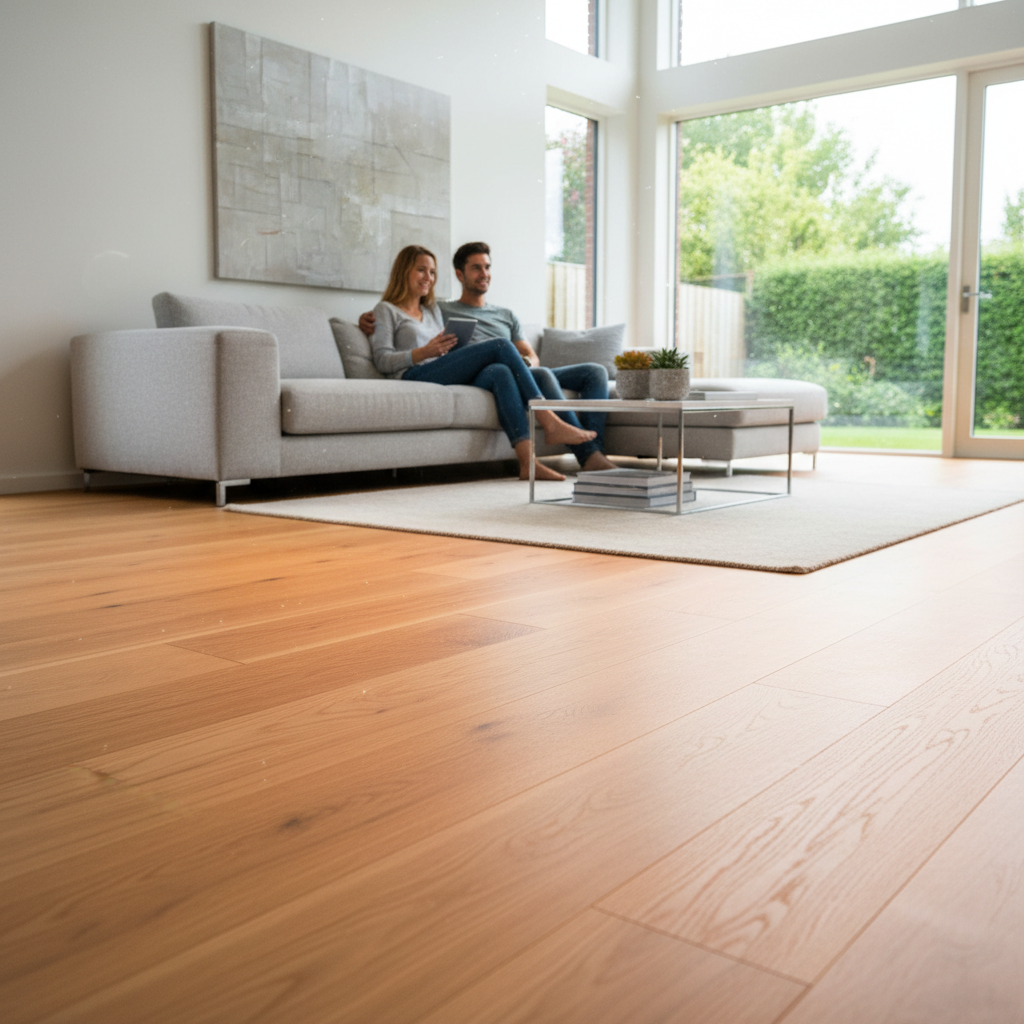
Stop sacrificing architectural aesthetics for structural flooring performance.
Intelligent flooring for elegantly modern living spaces.
We analyze the material science behind luxury surfaces. Discover how temperature regulating composites maintain a precise 72 degree surface and resist moisture for 72 hours before you specify materials for your next project.
The Science Behind High Performance Architectural Surfaces

🌡️ Thermal Conductivity Analysis
We test how different composites interact with radiant heating systems. Our data reveals which materials maintain a consistent 72 degree surface temperature without degrading the wear layer over a 10 year cycle.
💧 Moisture Mitigation Protocols
Water exposure destroys standard planks. We evaluate engineered cores that resist swelling up to 72 hours of direct liquid contact, preventing the cupping and warping that ruins high end installations.
📏 Subfloor Tolerance Metrics
A 3/16 inch variance in your concrete slab dictates your material options. We break down the exact leveling requirements for rigid core versus flexible luxury vinyl to prevent long term joint separation.
🔉 Acoustic Dampening Ratings
Multi story living requires strict sound control. We review underlayment materials and plank densities that achieve an Impact Insulation Class rating of 65 or higher, eliminating hollow footfall echoes.
🔬 Dimensional Stability Testing
Large format planks expand and contract with seasonal humidity shifts. We document the expansion gaps required for 9 inch wide composites to prevent buckling during summer humidity spikes.
72 Hours
Surface Water Resistance
The minimum exposure time our top rated composite cores withstand before showing a 1 percent expansion rate.
3/16 Inch
Subfloor Variance Limit
The maximum allowable deflection over a 10 foot radius for installing rigid core materials without joint failure.
65 IIC
Acoustic Performance Baseline
The Impact Insulation Class rating required to block heavy footfall noise in multi level architectural projects.
Material Specification Outcomes

High Rise Condominium, Chicago
Before: Concrete subfloors presented a 1/4 inch variance, causing previous engineered wood to buckle.
After: Specified a mineral core composite with a 2mm attached pad, achieving zero joint separation across 12,000 square feet.
⏱ 18 months post installation
Radiant Heated Custom Build, Denver
Before: Client wanted wide plank aesthetics but feared thermal degradation from the hydronic heating system.
After: Installed a temperature regulating polymer blend that maintains a 75 degree surface heat with zero dimensional shrinkage.
⏱ 3 winter seasons
Commercial Gallery Space, Miami
Before: High ambient humidity caused 5 percent expansion in traditional hardwood, leading to severe cupping.
After: Transitioned to a moisture reactive stone polymer composite, reducing expansion to 0.01 percent under 80 percent relative humidity.
⏱ 24 months
Specify Materials With Scientific Precision
1
Analyze Environmental Variables
Bring your project blueprints to our material lab at 2103 Garner Station Blvd Building 109, or submit your environmental metrics online. We require your exact square footage and ambient humidity ranges to begin.
2
Evaluate Composite Structures
We dissect the anatomy of potential flooring options, examining wear layers ranging from 12 mil to 30 mil thickness. You review the exact tolerances of each material against your subfloor constraints.
3
Finalize Technical Specifications
You receive a complete material profile detailing the required 1/4 inch expansion gaps and moisture barrier specifications. This ensures the chosen product performs flawlessly in your specific environment.
Environmental Challenges We Address
Subfloor Deflection
Uneven concrete slabs create hollow spots and stress the locking mechanisms of floating floors. We identify materials engineered to bridge 3/16 inch variances without structural failure.
Hydronic Radiant Heat Stress
Constant temperature fluctuations dry out and shrink natural materials. We evaluate polymer composites designed to conduct heat efficiently up to 85 degrees while maintaining dimensional stability.
High Moisture Zones
Kitchens and entryways face constant liquid exposure. We analyze the waterproof integrity of various core structures to prevent edge swelling after 48 hours of standing water.
Acoustic Transmission
Multi level structures suffer from impact noise transfer. We review the exact IIC and STC ratings of flooring combinations to ensure they meet strict 60 IIC building code requirements.
UV Degradation
Floor to ceiling windows expose surfaces to intense ultraviolet light. We test the fade resistance of aluminum oxide wear layers over simulated 10 year exposure periods.
High Traffic Wear
Abrasive dirt and heavy footfall destroy standard finishes. We measure the scratch resistance of 20 mil and 30 mil commercial grade wear layers under real world conditions.
Frequently Asked Questions
Does a thicker wear layer always mean better scratch resistance?
A 20 mil wear layer provides excellent protection, but the curing process matters more than raw thickness. Urethane finishes cured with aluminum oxide resist micro scratches far better than thicker, untreated vinyl layers.
Can I install rigid core composites over an existing tile floor?
You must fill the grout lines first. If the grout depressions exceed 1/8 inch in width, the locking mechanisms on the new planks will eventually snap under the pressure of daily foot traffic.
Why do my luxury vinyl planks have gaps at the ends?
End gapping occurs when the material experiences extreme temperature swings or when the installer fails to leave the mandatory 1/4 inch expansion perimeter. The planks contract in cold weather, pulling the short joints apart.
How does moisture reactive flooring actually work?
These materials feature a closed cell extruded polymer core that physically blocks water molecules from penetrating the structure. When exposed to standing water for up to 72 hours, the core maintains a 0 percent absorption rate.
Master the Science of Architectural Flooring
Stop guessing which materials will survive your environment. Access our database of over 450 composite performance metrics and structural tolerances.
Written & Reviewed By
Lidiia Kurylenko
Managing Partner
Lidiia Kurylenko serves as a Managing Partner at Elegant Floorz, where
Latest from Our Blog
Why Your Kansas City Hardwood Floor Inspection Caught a Hidden Moisture Problem
Why Your Kansas City Hardwood Floor Inspection Caught a Hidden Moisture Problem Why Your Kansas City Hardwood Floor Inspection Caught…
The Best Way to Align Patterned Tiles in a Tiny Bathroom
Installing tile in a small space requires extreme structural precision. Many amateur installers view tile as a simple cosmetic skin,…
The Best Way to Hide Gaps in Your Bathroom Baseboards
I once walked into a house where a fifteen thousand dollar wide plank walnut floor was cupping so bad it…