
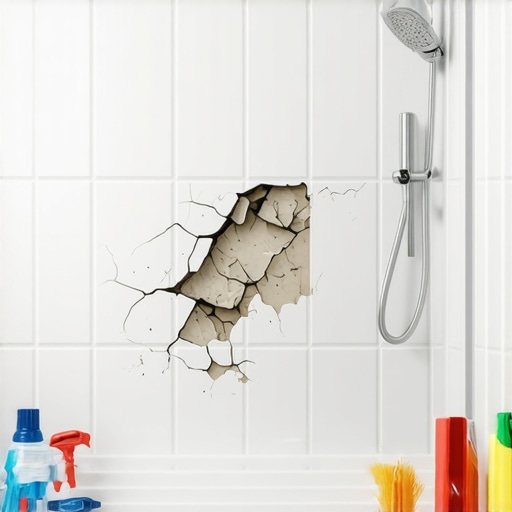
The invisible erosion of the portland cement binder
Grout cleaning mistakes often involve using harsh chemicals or abrasive tools that chemically dissolve or physically strip the cementitious binder between tiles. When you apply acidic solutions like undiluted vinegar to grout, you are triggering a chemical reaction that leaches the calcium carbonate out of the mixture, leaving behind a brittle and porous skeleton. This structural failure allows water to bypass the surface and saturate the thin-set and subfloor below. Most guys skip the leveling compound. They think the underlayment will hide the dip. It won’t. I spent three days grinding concrete on a job last month just so the floor wouldn’t click like a castanet, and showers are even more sensitive. If that grout fails, the water finds the path of least resistance right into your joists. I have spent 25 years on my knees with a moisture meter, and I can tell you that a shower seal is only as good as the chemistry of its grout. When you walk into a bathroom and smell that damp, earthy scent, it is not just a cleaning issue. It is a structural failure of the grout envelope. You can find tile cleaning tips for a sparkling bathroom in 2025 that respect the chemistry of your installation, but most people just reach for the strongest bottle under the sink. That is where the heartbreak starts. I have seen fifteen thousand dollar marble installs reduced to moldy scrap because a homeowner thought bleach was a daily cleaner. It is not. It is a corrosive agent that destroys the polymer modifiers that modern grout depends on for flexibility and water resistance. You need to understand the physics of the shower pan. It is a controlled drainage system. When the grout is compromised, the system is broken. This leads to rot that you will not see until the floor feels soft under your feet. By then, you are not looking at a cleaning bill, you are looking at a full demo and a five-figure replacement.
“A tile assembly is only as rigid as its substrate; deflection causes the grout to pulverize under the stress of movement.” – Master Flooring Axiom
The acid trap hiding in your pantry
Vinegar and lemon juice are highly acidic liquids that dissolve the minerals in grout and erode the protective sealants designed to keep water out. While these are often touted as eco-friendly cleaners, they are the natural enemy of cement-based products. Grout is essentially a mixture of sand and portland cement. Portland cement is alkaline. When you introduce an acid, you get an acid-base reaction that literally eats the grout from the inside out. I have seen grout lines that were originally flush with the tile surface recessed by a full eighth of an inch because of a obsession with vinegar. This creates a valley where soap scum and skin cells collect, feeding the very mold the homeowner was trying to kill. If you are looking for eco-friendly tile solutions for sustainable homes in 2025, you must look at pH-neutral cleaners. A pH of 7 is the goal. Anything lower is an attack on the integrity of the shower. The molecular structure of the grout becomes honeycombed. Water then moves through these microscopic tunnels via capillary action. This is called vapor drive. Once the water gets behind the tile, the bond of the thin-set begins to emulsify. This is why you see tiles popping off the wall. It is not a bad adhesive, it is a bad cleaning routine. You have to treat your grout like the structural component it is. It is the mortar of your bathroom’s fortress. If the mortar fails, the walls come down eventually. I always tell my clients to put the vinegar back in the salad and keep it off the showers that wow modern designs for 2025. You need a dedicated stone and tile cleaner that is formulated to protect the seal, not strip it. If you have already done damage, you might need to look into grout restoration secrets for long-lasting results to stabilize the surface before it is too late.
The chemistry of cleaner pH levels
| Cleaner Type | Typical pH Level | Impact on Grout Binder |
|---|---|---|
| White Vinegar | 2.4 | Severe Erosion |
| Lemon Juice | 2.0 | High Mineral Dissolution |
| Neutral Cleaner | 7.0 | Safe for Daily Use |
| Baking Soda Paste | 8.5 | Mildly Abrasive/Safe |
| Bleach | 12.0 | Dries and Cracks Binder |
Why the stiff brush is a demolition tool
Aggressive scrubbing with stiff nylon or wire brushes creates micro-fissures in the grout surface that trap bacteria and moisture. People think they need to put their weight into it to get the grout white. All they are doing is sanding away the top layer of protection. Every time you scrub with a hard brush, you are increasing the surface area of the grout. More surface area means more places for mold to take root. It is a vicious cycle. I prefer using a soft-bristled brush or even a microfiber cloth. If the dirt is not coming off with a gentle touch, the problem is your cleaner or the age of your grout, not the lack of elbow grease. I have walked into jobs where the homeowner used a wire brush and the grout was so chewed up it looked like gravel. You cannot save that. You have to scrape it out and start over. This is a nightmare because you risk chipping the edges of the tile. If you are worried about your baseboards makeover ideas to elevate your space, remember that the wet environment of the shower is far more demanding than the dry areas of your home. The transition where the tile meets the wall is a common failure point. Scrubbing too hard at the base of the shower can compromise the silicone bead that acts as an expansion joint. Once that bead is punctured, water will travel behind your chic baseboard designs that transform rooms in 2025 and rot your drywall. I have seen baseboards that looked fine on the outside but were held together by nothing but paint and mold spores on the inside. It all started with a stiff brush in the shower corner. You have to be surgical, not structural, with your cleaning tools. If you need to learn how to refresh grout without replacing it, start with the right chemistry, not more power.
“Waterproof membranes are the primary line of defense, but the grout is the sacrificial layer that protects the integrity of the bond.” – Tile Council of North America Guide
The steam cleaner lie that rots your floor
High-pressure steam can force water vapor behind tile installations and blow out the sealants within the grout pores. Steam cleaners are marketed as the ultimate sanitization tool, but they are dangerous for tile showers. The intense heat causes the air and moisture trapped in the grout to expand rapidly. This creates pressure that can actually pop the grout right out of the joint. Furthermore, the heat can break down the molecular bonds of topical sealers. Once the sealer is gone, the steam injects water deep into the substrate. In a shower, you want moisture to stay on the surface and go down the drain. Steam turns water into a gas that can penetrate materials that liquid water cannot. I have seen showers that were steam cleaned weekly where the moisture level in the wall studs was over twenty percent. That is a recipe for black mold. If you have showers with a style trendy ideas for small bathrooms, you likely have more grout lines per square foot. This means more entry points for steam to do its damage. I always tell people to skip the steam. Use warm water and a neutral soap. It is slower, but it does not destroy the waterproof envelope of your home. You should also be checking your perimeter seals. If you see cracking, do not just clean it. You need to remove the old material and apply a fresh bead of 100 percent silicone. Grout should never be used in change-of-plane joints, like where the floor meets the wall. These areas need to flex. If they are grouted, they will crack, and cleaning them with a steam mop will only accelerate the failure.
- Always use pH-neutral cleaners specifically labeled for tile and stone.
- Replace grout with silicone at all corner joints and transitions.
- Seal your grout every six to twelve months depending on usage.
- Dry your shower with a squeegee after every use to prevent mineral buildup.
- Avoid using bleach or ammonia, as they can discolor and weaken the grout.
- Inspect the perimeter of your shower for any gaps in the caulking.
The silent failure of the perimeter seal
Using hard grout instead of flexible caulk at the base of the shower leads to stress cracks that invite water into the wall cavity. This is the most common mistake I see. People see a gap and they fill it with more grout. But houses move. They breathe. The shower pan and the walls do not move at the same rate. This movement creates shear stress. If the joint is filled with rigid grout, it will crack. Cleaning these cracks with high-pressure water or chemicals only pushes moisture into the framing. You need a flexible seal. This is where your maintenance should focus. If you want to keep your bathroom in top shape, you have to look at the structural transitions. I have spent years fixing the messes made by people who ignored the expansion gaps. If you have questions about your specific layout, you should contact us for professional advice. A floor is a performance surface. In a shower, it is a life-safety system that protects your home from water damage. Do not treat it like a kitchen counter. It requires a different level of respect for the materials and the physics of water management. When you see a crack in the corner, that is a red alert. It is not just an aesthetic issue. It is a hole in your boat. Plug it with the right material, not more of the wrong stuff. If you are diligent, a tile shower can last fifty years. If you make these cleaning mistakes, you will be lucky to get five. Stop the acid, stop the steam, and stop the scrubbing. Your subfloor will thank you.
Comments
2 responses to “5 Grout Cleaning Mistakes That Are Actually Ruining Your Shower Seals”
I found this post incredibly insightful, especially the detailed explanation about how vinegar and lemon juice, despite being natural, can actually damage grout. I’ve always been cautious about what cleaners I use in my bathroom, but I didn’t realize how much damage acidic cleaners could do over time. I remember using vinegar to clean my tiles, thinking it was safe, but now I wonder if that contributed to some micro-fissures I noticed. It makes me think that many homeowners might be unknowingly weakening their grout without realizing it. Has anyone here switched to pH-neutral cleaning products and seen a noticeable improvement in the longevity of their tiles? I’m curious if those small changes really add up, especially in older homes where the grout might already be compromised. All in all, this really underscores the importance of understanding the chemistry behind our cleaning routines rather than just going with quick fixes. Would love to hear some success stories or additional tips from those who have gone more eco-friendly with their bathroom maintenance.
This post really opened my eyes to how seemingly harmless cleaning methods can cause long-term damage. I’ve always been a fan of natural solutions like vinegar, but seeing how acidic solutions actually erode grout’s structure in the long run makes me rethink my entire routine. It’s so easy to overlook the impact of pH levels when there’s so much emphasis on ‘green’ cleaning. I’ve started switching to pH-neutral cleaners, and honestly, the difference in the appearance and smell of my grout lines is noticeable. I’m curious, has anyone experienced a reversal in damage after switching to gentler cleaners? Also, for those with older grout, are there effective restoration techniques to rebuild the integrity without full replacement? This truly highlights that proper maintenance isn’t just about cleanliness but about preserving the longevity of our tiles and ceilings. Would love to hear tips on how to identify early signs of grout deterioration before it’s too late!