
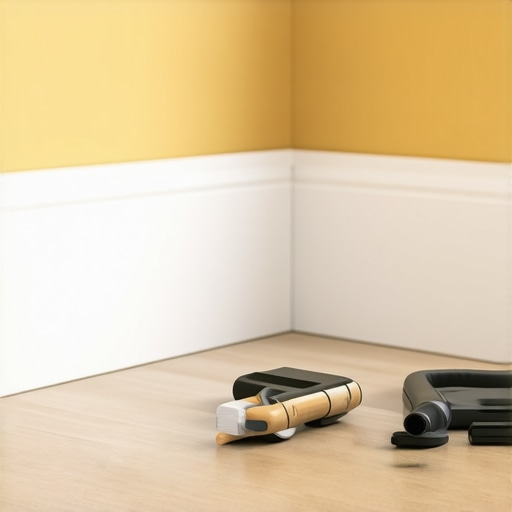
Professional Scribing Techniques for Closing Gaps Between Bathroom Baseboards and Uneven Floors
I spent three days grinding concrete on a job last month just so the floor wouldn’t click like a castanet. Most guys skip the leveling compound. They think the underlayment will hide the dip. It won’t. I walked into that bathroom and saw a gap under the baseboard big enough to slide a deck of cards through. The homeowner wanted a quick fix with caulk, but I had to explain that you cannot bridge a three-eighths inch chasm with goop and expect it to last. My hands were covered in white dust and my back was screaming, but that is the price of a floor that actually stays flat. When you are dealing with wonky floors, you are fighting the physics of the house itself. I have seen it all. I have seen wide-plank oak cup into U-shapes because the crawlspace was a swamp. I have seen LVP buckle because the installer trapped it under a heavy vanity. Dealing with an ugly gap at the floor line requires more than a tube of cheap sealant. It requires a mastery of the scribe and an understanding of subfloor deflection.
Why your subfloor is lying to you
Subfloor deflection and structural settlement create gaps when the floor joists sag or the concrete slab is poured with a low spot. In bathrooms, the weight of heavy tile and showers can cause the plywood subfloor to flex beyond its L/360 rating, leaving the baseboard hanging in mid-air. A subfloor might look flat to the naked eye, but a ten-foot straightedge usually tells a different story. If your joists are spaced too far apart, the plywood between them will bow. This is the primary reason why your trim doesn’t meet the floor. You can try to force the trim down, but the tension will eventually pull the nails right out of the studs. This movement is worsened by seasonal humidity changes. In the winter, the wood shrinks and the gap grows. In the summer, the wood swells and the gap might disappear, but the damage to your caulk line is already done. You need a permanent solution that accounts for the fact that no floor is ever truly level. If you are working with tile, you might also need to look into grout restoration secrets for long lasting results to ensure the entire perimeter remains watertight.
“A floor is only as good as the subfloor beneath it; deflection is the enemy of every joint.” – Master Flooring Axiom
The ghost in the expansion gap
Expansion gaps are essential for floating floors like LVP or laminate to prevent buckling and locking mechanism failure. If you install your bathroom baseboards too tightly against the floor, you risk pinning the floor, which stops it from moving during temperature fluctuations. This is a common mistake. Most people want the gap to be invisible, so they jam the trim down hard. This causes the floor to peak at the seams. Instead, the gap should be covered by the baseboard without putting downward pressure on the flooring material. This creates a architectural challenge. How do you hide the space without killing the floor? The answer lies in the material choice for your trim. PVC baseboards are often better for bathrooms because they don’t rot when they come into contact with moisture, but they are harder to scribe than wood. If you want to explore more styles, check out these chic baseboard designs that transform rooms in 2025 for a modern look that handles moisture well.
The precise art of scribing the trim
Scribing baseboards involves using a compass or scribing tool to transfer the floor profile onto the trim board. This technique allows the bottom edge of the baseboard to be cut in a wavy line that perfectly matches the irregularities of the wonky floor. You start by leveling the baseboard as it sits against the wall, even if that means one end is hovering an inch off the ground. You set your compass to the width of the largest gap. Then, you run the point of the compass along the floor while the pencil marks the baseboard. This is the only way to get a professional fit on a floor that looks like a rolling sea. Once marked, you take your jigsaw and perform a back-bevel cut. This means you cut at a slight angle toward the back of the board, so only the very front edge touches the floor. It makes for a much tighter fit. I always use a 60-grit sandpaper block to fine-tune the cut after the jigsaw. It is tedious work. It smells like sawdust and sweat. But when you slide that board into place and it follows the dip of the floor perfectly, there is no better feeling in the world.
| Method | Pros | Cons |
|---|---|---|
| Scribing | Permanent, professional look, no extra molding. | Time-consuming, requires skill with a jigsaw. |
| Shoe Molding | Fast, covers gaps up to 3/4 inch, very easy. | Adds a second layer of trim, looks bulky. |
| Caulking | Cheapest, anyone can do it. | Only works for tiny gaps, will eventually crack. |
| Self-Leveling | Fixes the root cause of the problem. | Extremely messy, requires removing the floor. |
Why shoe molding is a compromise
Shoe molding is a flexible trim piece that installs at the base of the baseboard to bridge the gap to the floor. While many contractors prefer this quick fix, it often creates a dated aesthetic and makes baseboards look unnecessarily thick. I call it the lazy man’s prayer. It is used because it can bend to follow the floor while the stiffer baseboard stays straight. If you must use it, go with a quarter-round that matches your trim color. However, be warned that in a bathroom, these extra joints are just more places for water to hide. If your showers are not properly contained, water will seep behind the shoe molding and rot the drywall. You can see better ways to manage your bathroom layout by looking at showers that wow modern designs for 2025. A zero-threshold shower combined with a scribed baseboard is the peak of modern bathroom engineering. It looks clean and it functions even better.
The chemical reality of caulk and grout
Modified silicone caulk is the only acceptable sealant for filling small gaps between a baseboard and a tile floor because it offers elongation properties. Pure Portland cement grout will crack the moment the subfloor flexes, which is why you should never use it in the change of plane. I have seen countless DIY jobs where the homeowner packed the gap with grout. Within three months, that grout is crumbling onto the floor. You need something that can stretch. The chemistry of the sealant matters. A high-quality siliconized acrylic latex is paintable, which is great for white trim, but for the actual floor-to-wall joint, a 100 percent silicone product is better for water resistance. It is sticky, messy, and smells like vinegar, but it stays flexible. You have to be careful with the application. Use a profiling tool to get a clean bead. If you mess it up, you’ll be scraping it off for hours. This is especially important in high-moisture areas like Phoenix where the dry heat can cause wood to shrink faster than the caulk can compensate, or in Houston where the humidity causes massive expansion in the wall plates.
“Every bathroom transition must account for moisture; the movement of the house is inevitable.” – Tile Council of North America Standard
The 1/8 inch that ruins everything
Precision measurements are the difference between a high-end bathroom and a budget flip. If your baseboard gap is larger than one-eighth of an inch, standard caulking techniques will fail because the bead of sealant will sag under its own weight. This is a physics problem. You cannot span a wide distance with a liquid. If you have a wide gap, you must use a backer rod. This is a foam rope that you stuff into the gap first. It provides a surface for the caulk to bond to. Without it, the caulk just disappears into the abyss under the wall. Also, consider the information gain here. Many people think the thickest underlayment is best for a quiet floor. This is wrong. Too much cushion actually causes the locking mechanisms on LVP to snap under pressure because the floor bounces too much. That bounce then creates more gaps at your baseboards. You want a firm subfloor, not a trampoline.
The Bathroom Trim Installation Checklist
- Check subfloor moisture levels with a pin-less meter.
- Find the highest point of the floor using a laser level.
- Scribe the baseboard to the floor profile using a compass.
- Back-bevel the cut at a 5-degree angle for a tight fit.
- Use stainless steel finish nails to prevent rust in wet areas.
- Apply a bead of 100 percent silicone to the floor-to-trim joint.
- Ensure a 1/4 inch expansion gap is maintained behind the trim for floating floors.
The secret to a perfect bathroom is ignoring the shortcuts. You can buy the fanciest tile and the most expensive faucets, but if your trim looks like it was installed by someone in a hurry, the whole room feels cheap. Spend the time on your knees. Get the scribing tool out. Grind the concrete if you have to. Your floor is a structural assembly, not a sticker. Treat it with the respect that engineering requires. When you finish, you will have a transition that looks like it grew out of the floor, rather than something that was slapped on to hide a mistake. That is the mark of a master installer.
Comments
2 responses to “How to Hide the Ugly Gap Between Your Bathroom Baseboard and a Wonky Floor”
This post really hits home on the importance of proper floor preparation before finishing details like trim and baseboards. Too often, I see DIYers trying to hide uneven floors with quick fixes, which only lead to bigger problems down the line. I particularly agree with the emphasis on scribing and back-bevel cuts; precision truly makes a difference in achieving a clean, professional look. One thing I’ve learned from experience is that investing in good tools, like a quality scribing compass and a sharp jigsaw, saves a lot of time and frustration. Also, addressing subfloor issues early on can prevent the need for extensive corrections later. Have others found that combining these techniques with moisture barriers in bathrooms helps maintain the integrity over time? I’d love to hear tips on managing both the aesthetic and durability in high-moisture environments, especially for someone tackling a bathroom remodel.
Reading through this post, I couldn’t agree more with the emphasis on meticulous floor prep and precise scribing. I remember a project where I initially thought I could hide some unevenness with simple caulking, but it crumbled within a few months, especially with bathroom humidity changes. That taught me the importance of addressing the subfloor’s actual condition before installing the trim. I also appreciate the reminder about the limitations of foam backer rods and the necessity of a proper caulk bead to avoid sagging. In my experience, using a moisture barrier beneath the subfloor—particularly in wet areas—can significantly help maintain the integrity of the installation over time, especially in high-humidity climates like Houston. Have others here incorporated moisture barriers or vapor retarders when scribing baseboards in bathrooms? It seems like a simple addition that could prevent long-term issues and keep the finished look sharp.