
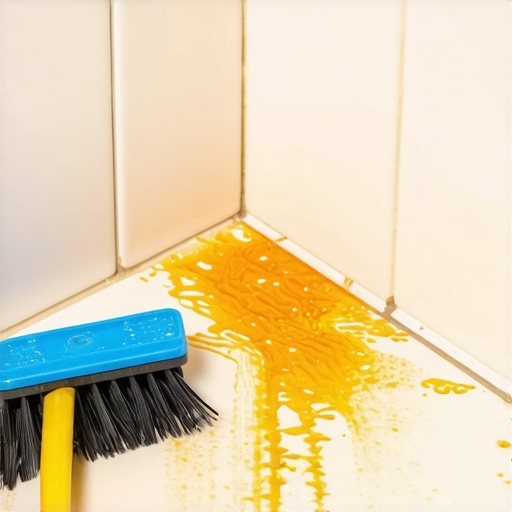
Why Your Shower Grout Is Turning Orange And How To Stop It
Most guys skip the leveling compound. They think the underlayment will hide the dip. It won’t. I spent three days grinding concrete on a job last month just so the floor wouldn’t click like a castanet. That same level of neglect happens in showers. I have walked into hundreds of bathrooms where the owner is panicked because their pristine white tile joints have turned a nasty, pumpkin shade of orange. They think the tile is bleeding. It is not. It is a sign of mineral oxidation, bacterial growth, or soap scum accumulation reacting with the alkalinity of the grout. This is a structural and chemical issue, not just a cleaning annoyance.
The rust colored intruder in your bathroom
Orange grout is primarily caused by iron levels in your water supply or the colonization of Serratia marcescens bacteria. When dissolved iron meets oxygen, it oxidizes and leaves a metallic stain. Serratia marcescens thrives in damp environments, feeding on fatty acids found in soap and shampoo residues. This is a common occurrence in showers with poor ventilation and high moisture retention. I have seen beautiful bathrooms ruined because people ignore the chemistry of their water. If you have a well, you are likely dealing with ferric iron. If you are on city water, you might be dealing with the pinkish orange hue of airborne bacteria. Either way, the grout is porous. It acts like a sponge for these contaminants. You can learn more about managing these surfaces in our guide on grout restoration secrets for long lasting results. I do not care how much you spent on the tile if you cannot keep the joints clean. It looks cheap and neglected. You need to understand the physics of the pour.
“A floor is only as good as the subfloor beneath it; deflection is the enemy of every joint.” – Master Flooring Axiom
Iron bacteria and the chemistry of well water
Well water often contains high concentrations of ferrous iron which remains clear until it hits the air in your shower. Once the water is aerated through the showerhead, the iron oxidizes and precipitates as a solid. These iron particles then lodge themselves inside the capillary pores of cementitious grout. This is a mechanical bond that is incredibly difficult to break without the right acids. The pH level of your water matters. Acidic water can eat away at the calcium carbonate in your grout, making it even more porous and prone to staining. I have worked in homes where the water was so aggressive it turned baseboards orange just from the humidity in the air. You need to check your water softener. You need to check your filtration. If you are not filtering the iron out at the point of entry, your tile joints will never stay white. It is a losing battle. You are trying to fight geology with a toothbrush. It does not work.
Why your soap choices destroy cementitious bonds
Soap scum is a combination of tallow, wax, and minerals that forms a water resistant film over your grout. This film traps Serratia marcescens and provides a food source for the biofilm to expand. Many modern liquid soaps contain dyes and oils that penetrate the grout and alter its color permanently. When you combine these fats with the alkaline nature of grout, you get a chemical reaction that holds onto orange pigments. Most homeowners use a scrub brush that is too soft. They just move the slime around. You need to strip the fats before you can tackle the stain. I tell people all the time that their expensive organic body wash is the reason their floor looks like a rust bucket. You are feeding the problem. If you want a clean shower, you need to understand the chemical load you are putting into the system every morning. For those looking for better materials, check out eco friendly tile solutions for sustainable homes in 2025 to see how modern materials handle these issues.
The pink mold deception
Serratia marcescens is frequently mistaken for pink mold, but it is actually a Gram-negative bacterium that produces a red pigment called prodigiosin. This pigment appears orange or pink depending on the moisture levels and the age of the colony. This bacteria is airborne and loves the phosphates found in many cleaners. It will grow on baseboards, grout, and even the caulking around the tub. It is not just an eyesore. It can be a health risk for people with compromised immune systems. It loves the 1/8 inch gap where the tile meets the floor. If that transition isn’t sealed perfectly, the bacteria will migrate behind the wall. That is where the real trouble starts. I have ripped out entire showers because the mold and bacteria had compromised the backer board. It smells like rot and old socks. You can find more on tile cleaning tips for a sparkling bathroom in 2025 to keep this from happening.
| Grout Type | Porosity Level | Stain Resistance | Best Use Case |
|---|---|---|---|
| Sanded Grout | High | Low | Floor tiles with wide joints |
| Unsanded Grout | High | Medium | Wall tiles with thin joints |
| Epoxy Grout | Zero | High | Showers and high moisture areas |
| High Performance Cement | Low | Medium | Commercial installations |
Structural failure and moisture behind the tile
Moisture entrapment behind the tile assembly creates a microclimate that fosters continuous orange staining from the inside out. If the waterproofing membrane was installed incorrectly, water sits in the mud bed or on the substrate, slowly leaching minerals back through the grout. This is called efflorescence combined with mineral staining. It is a sign of a failed installation. I have seen guys skip the pre-slope on a shower pan. The water just sits there. It never drains. It stews. The orange color you see is the death rattle of a poorly built shower. You cannot clean your way out of a structural deficit. Sometimes you have to tear it down to the studs. If you are seeing orange stains that return within 24 hours of cleaning, your subfloor or wall system is saturated. You need a professional with a moisture meter to tell you the truth. If you need to fix the look of your trim after a leak, look at chic baseboard designs that transform rooms in 2025. They take a beating during these repairs.
“Grout is not waterproof; it is a filter that eventually clogs with the sins of the plumber and the tile setter.” – Master Flooring Axiom
Solutions that actually work
Removing orange stains requires a two step process of degreasing the surface and then oxidizing the bacterial or mineral pigment. Use a high pH cleaner to break down the soap scum first. Then follow up with a chlorine based solution or a hydrogen peroxide mixture to kill the Serratia marcescens. Do not mix chemicals. That is how you end up in the hospital. For iron stains, you need an oxalic acid or citric acid cleaner that can chelate the iron and lift it from the cement matrix. Once it is clean, you must seal the grout. A penetrating sealer fills the pores so the iron cannot get back in. If the grout is too far gone, you might need to learn how to refresh grout without replacing it. It is a tedious job. It requires patience. Most people don’t have it. They want a magic spray. There is no magic spray. There is only elbow grease and chemistry.
Maintenance schedules for the obsessive
Daily squeegeeing and weekly disinfection are the only ways to prevent the return of orange grout in a high iron environment. You have to remove the surface tension of the water so it cannot sit and oxidize. Open a window. Run the exhaust fan for at least 30 minutes after your shower. If the humidity stays above 60 percent, you are growing a lab experiment in your bathroom. I tell my clients to treat their shower like a performance engine. You don’t leave old oil in a truck. Don’t leave old water on your tile. If you want to see what a well maintained system looks like, check out showers that wow modern designs for 2025 for inspiration. It takes work. If you are lazy, your grout will be orange. It is as simple as that.
- Install a whole house iron filter if you are on well water
- Use a squeegee after every single shower use
- Switch from bar soap to liquid glycerin soap to reduce tallow buildup
- Apply a high quality solvent based sealer every twelve months
- Ensure your bathroom fan is rated for the square footage of the room
- Scrub the perimeter where the floor meets the baseboards weekly
The grout in your shower is a cementitious product. It is alive in a sense. It breathes. It absorbs. If you treat it like plastic, it will fail you. The orange hue is a warning. It tells you that your water is hard, your ventilation is weak, or your cleaning routine is insufficient. Fix the physics of the room first. Then fix the chemistry of the surface. Only then will you have a bathroom that stays clean. If you have questions about specific materials, feel free to contact us. We have seen it all. We have fixed it all. Do not let a bacteria colony win. Take control of your subfloor and your surfaces today.
Comments
2 responses to “Why Your Shower Grout is Turning Orange and How to Stop It”
I found this post incredibly detailed and helpful, especially the emphasis on the chemical reactions behind the orange staining. In my experience, regular maintenance like squeegeeing and ventilation can really make a difference in high iron areas. I installed a whole-house iron filter last year, and it significantly reduced the staining and bacterial growth issues. What other natural or less harsh chemical solutions have others found effective for stubborn stains? I’ve tried some homemade remedies but wonder if there are safer, equally effective options out there that won’t compromise the grout or tile.
This post hits the nail on the head regarding the importance of understanding the chemistry behind grout stains. I’ve dealt with similar issues in my bathroom, especially with high iron content in well water, which left reddish-orange patches even after cleaning. Installing a whole-house iron filter really made a difference for me, but I’ve also found that regular use of a diluted oxalic acid solution helps to keep stubborn iron stains at bay. I’m curious—has anyone here experimented with using naturally derived acids or edibles, like lemon juice or vinegar, as a less aggressive alternative for iron chelation? While they might not be as potent, I wonder if they can be part of a gentle maintenance routine without risking damage to the grout. It’d be great to hear others’ experiences or tips on combining chemical and natural methods effectively.