
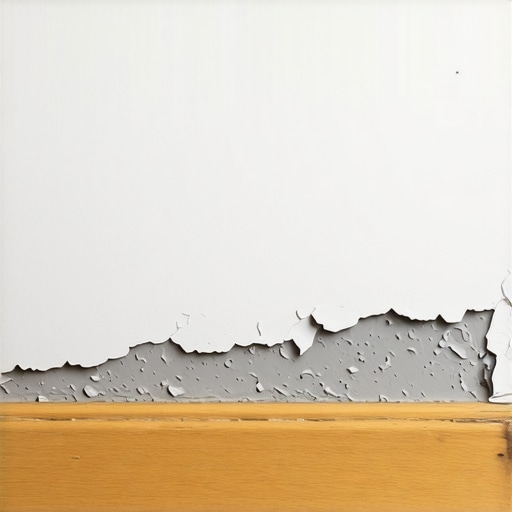
Why Your Bathroom Baseboard is Rotting from the Back Side
Most guys skip the leveling compound. They think the underlayment will hide the dip. It won’t. I spent three days grinding concrete on a job last month just so the floor wouldn’t click like a castanet. That same job had a master bathroom where the baseboards were literally crumbling into black mush. The homeowner thought they had a massive pipe leak. They didn’t. They had a physics problem. When you spend twenty-five years looking at floors, you realize that the aesthetic finish is just a mask for the structural reality underneath. A bathroom is a high-pressure environment for building materials. It is a place where steam, splash, and gravity conspire to destroy anything made of cellulose. If your baseboards are soft to the touch or showing dark stains at the bottom, the damage started months ago on the side you cannot see. This is not about bad luck. This is about the chemistry of absorption and the failure of secondary seals.
The silent decay behind the paint
Bathroom baseboard rot occurs because of moisture entrapment behind the trim board where airflow is non-existent and evaporation is impossible. This decay usually starts at the floor-to-wall junction where water wicks up through the raw bottom edge of the baseboard. Once water enters the rear of the board, it becomes trapped between the drywall and the trim. The paint on the front acts as a vapor barrier that prevents the wood from drying out. This creates a permanent wet-zone where fungal spores thrive. This is especially common in small bathrooms where humidity levels spike rapidly. I have seen solid oak baseboards turned into sponge because a simple bead of caulk failed at the floor line. The water does not just sit there. It migrates. It moves into the gypsum board of the wall. It moves into the plate of the wall studs. By the time you see a bubble in the paint, the structure is already compromised.
“A floor is only as good as the subfloor beneath it; deflection is the enemy of every joint.” – Master Flooring Axiom
The physics of capillary action in porous trim
Capillary action is the primary driver of baseboard rot in wet environments where liquid water moves upward against gravity through narrow spaces. Think of the back of your baseboard like a bunch of tiny straws. If you use Medium Density Fiberboard (MDF), those straws are even more thirsty. MDF is basically sawdust and glue pressed together. When it gets wet, the fibers expand and the glue fails. The material swells to twice its size and can never be repaired. Even if you use real wood, the back is often left raw and unprimed. This is a massive mistake. The moisture from a damp floor or a humid crawlspace moves into that raw wood. In places like the humid Gulf Coast or the swampy parts of Florida, this process happens twice as fast. You need a material that does not act like a wick. I always tell people that modern baseboard designs should prioritize moisture resistance over pure cost. If you are putting wood in a bathroom, you are playing a game of chicken with biology. Eventually, the biology wins.
Why your grout is a sponge in disguise
Standard cementitious grout is a porous material that absorbs water and transfers it directly to the subfloor and the wall cavity. Many homeowners assume that because a floor is tiled, it is waterproof. This is a lie. Tile is waterproof, but the lines between them are not. Grout is a network of microscopic tunnels. When you mop your floor or step out of the shower, water sits on that grout. Gravity pulls it down. If the installer did not use a high-quality modified thin-set or a proper waterproofing membrane like Kerdi or Wedi, that water hits the subfloor. Once it hits the subfloor, it travels laterally. It finds the edge of the room. It finds the back of your baseboards. This is why restoring your grout is not just about looks. It is about maintaining the integrity of the seal. If your grout is cracked or missing, you are effectively pouring water directly into your walls every time you clean the floor. I have seen subfloors rotted through because of a pinhole in a grout joint that went ignored for three years.
The hidden failures of shower waterproofing
Shower waterproofing failures often manifest as baseboard rot in the adjacent area because water travels along the top of the subfloor. If the shower pan liner was not installed correctly or if the curb was not sealed, water will escape the wet zone. It does not always leak through the ceiling below. Sometimes it just migrates into the bathroom floor. You might notice the baseboard next to the shower curb is the first to go. This is a red flag. It means the secondary drainage system of your shower is failing. We see this a lot with modern shower designs that use curbless entries. If the slope is not perfect, the water finds a way out. The National Wood Flooring Association and the Tile Council of North America have strict rules about these transitions. They exist for a reason. You cannot fight the weight of water. It will always find the lowest point.
“Movement joints are not optional; they are a structural necessity in every wet environment.” – TCNA Standard
Comparing bathroom baseboard materials
Choosing the right material for a bathroom environment requires understanding the water absorption rates and the chemical stability of the substrate. Not all trim is created equal. If you are a professional, you stop using MDF in bathrooms entirely. It is a recipe for a callback. I have replaced miles of the stuff. It is cheap for a reason. If you want a floor that lasts, you look at the physical properties. Below is a breakdown of how common materials handle the moisture of a typical bathroom.
| Material | Absorption Rate | Lifespan in Bathrooms | Stability |
|---|---|---|---|
| MDF (Fiberboard) | Extremely High | 2 to 5 Years | Poor |
| Finger-Jointed Pine | High | 5 to 10 Years | Moderate |
| Solid PVC (Plastic) | Zero | Lifetime | Excellent |
| Tiled Base (Ceramic) | Zero | Lifetime | Superior |
As the table shows, the only way to truly defeat rot is to remove the organic material from the equation. PVC trim looks exactly like wood once painted, but it cannot rot. It is a polymer. It does not have cells. It does not have straws to wick up the water. It stays stable even if the bathroom becomes a sauna. For the best makeover results, I always recommend moving to a waterproof substrate in any room with a drain.
The moisture meter does not lie
A professional moisture meter is the only way to accurately diagnose if your baseboard rot is a result of surface humidity or a deep structural leak. When I walk onto a job, I do not guess. I take a pin-less meter and sweep the floor. Then I take a pin meter and poke the baseboard. If the reading is over 12 percent, we have a problem. If it is over 20 percent, the wood is actively rotting. Often, the moisture is coming from the concrete slab itself. In new construction, builders are in such a rush that they do not let the concrete cure. They slap down a vapor barrier and a floor, and the moisture gets trapped. It has to go somewhere. It goes to the perimeter. It goes to your baseboards. This is why cleaning your tile correctly matters. You should never flood the floor with water. Use a damp mop, not a wet one. You are just adding fuel to the fire if you have an underlying moisture issue.
The checklist for a dry bathroom
Ensuring a bathroom stays dry requires a multi-layered approach that addresses both liquid water and vapor pressure. If you are remodeling or just trying to fix a recurring rot issue, follow these steps. Do not skip any of them. They are the difference between a floor that lasts thirty years and one that lasts three.
- Install a high-CFM exhaust fan and ensure it is actually vented to the outside, not the attic.
- Prime all six sides of any wood trim before installation, especially the back and the bottom cut.
- Apply a high-quality 100 percent silicone caulk to the gap between the baseboard and the floor.
- Seal your grout every year to reduce its permeability.
- Use an eco-friendly tile solution that includes a waterproof sub-membrane.
- Ensure the shower door sweep is functioning and water is staying inside the basin.
- Check the toilet wax ring for slow leaks that might be traveling under the floor.
Modern solutions for a humid reality
The industry has moved toward materials that are chemically inert and physically resistant to the expansion and contraction caused by moisture. We no longer have to rely on cheap wood. We have porcelain tile that looks like wood. We have LVP that is truly waterproof. But remember, waterproof flooring does not mean a waterproof house. The floor might be fine, but the subfloor can still rot beneath it. If you have questions about your specific setup, you should contact us to talk to a specialist. We see these failures every day. We know how to prevent them. It starts with the subfloor. It ends with the right choice of trim. Do not let a 1/8 inch gap in your caulk ruin a five-thousand-dollar tile job. Pay attention to the details. The back side of the board tells the true story of the room. Keep it dry, keep it sealed, and keep the airflow moving. Anything less is just waiting for the mold to move in.