
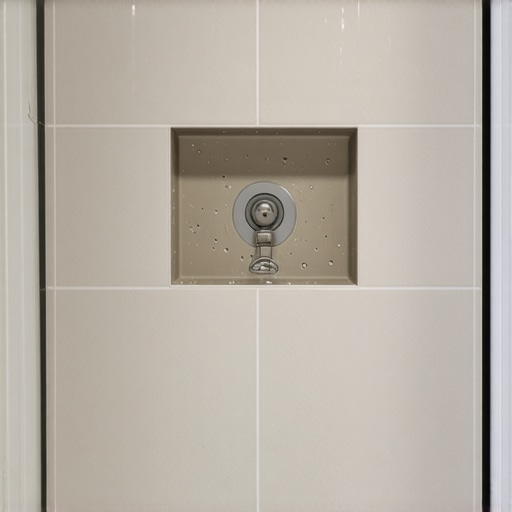
The structural lie of the perfect shower
A shower niche that does not leak requires a complete capillary break and a mandatory one quarter inch per foot slope toward the drain for every horizontal surface. Failure usually stems from using site-built wooden framing and liquid membranes that lack the tensile strength to bridge structural gaps between studs.
I spent three days grinding concrete on a job last month just so the floor would not click like a castanet, but the real nightmare was in the master bath. The homeowners were proud of their custom tiled niche. They should not have been. I walked in and smelled the rot before I even saw the tile. I once walked into a house where a custom niche was leaking so bad it had rotted the subfloor through to the basement. Most guys skip the leveling compound and the proper waterproofing. They think the underlayment or the tile will hide the dip or the leak. It will not. A shower is a high moisture environment where hydrostatic pressure and vapor drive work against you every second of the day. If you view a shower as a pretty box for soap, you have already lost. It is a structural engineering challenge. When you cut a hole in a wall to create a niche, you are essentially creating a breach in your waterproofing envelope. Without the right materials and the physics of drainage on your side, that hole becomes a funnel for water to enter your wall cavity. You have to understand that showers that wow modern designs for 2025 are only as good as the chemistry behind the tile. I have spent 25 years on my knees with a moisture meter. I have seen what happens when the bond between the substrate and the membrane fails. It is not just about the tile. It is about the deflection of the studs and the chemical bond of the modified thin-set. Most people focus on the aesthetic, but the mechanic with sawdust under his nails focuses on the flashing and the slope.
Why your wall is secretly a sponge
Standard wall substrates like green board or even basic cement board can act as a wick for moisture if the waterproofing layer is compromised at the niche. Effective shower niches utilize pre-formed foam or stainless steel inserts to ensure a 100 percent waterproof seal that is independent of the wall framing.
The physics of moisture movement is relentless. Water molecules are tiny, and they find every micro-crack in your grout. While grout restoration secrets for long-lasting results can help keep surfaces clean, grout itself is not waterproof. It is porous. When water passes through the grout, it hits the waterproofing membrane. If that membrane is a liquid-applied product that was brushed on too thin, it will fail. Most manufacturers require a dry film thickness that is hard to achieve with a single coat. This is why I prefer pre-formed niches made of high-density expanded polystyrene. These units are factory-sealed. You are not relying on a guy with a paintbrush to get the corners right in a dark shower stall. You have to account for the vapor drive. In a hot shower, the air pressure increases, pushing moisture into the walls. If your niche is built out of 2x4s and plywood, that wood will expand and contract. That movement cracks the grout and eventually the waterproofing itself. I have seen niches that looked perfect for six months and then started dripping into the kitchen below because the installer did not understand the L/360 deflection limits of the Tile Council of North America standards. You need a substrate that stays dead still. When you are looking at tile-cleaning tips for a sparkling bathroom in 2025, remember that cleaning is easy when the water stays on the surface. When it gets behind the tile, no amount of scrubbing will save you.
“A floor is only as good as the subfloor beneath it; deflection is the enemy of every joint.” – Master Flooring Axiom
The microscopic failure of standard thinset
The bond between your shower niche and the surrounding tile depends on the polymer density of the thin-set mortar used during installation. Using an unmodified mortar in a niche environment is a recipe for bond failure because it lacks the flexibility to handle the thermal expansion of the shower walls.
When we talk about the chemistry of adhesives, we are looking at the ANSI A118.4 or A118.15 standards. These are polymer-modified mortars. The polymers act as bridges between the tile and the substrate. In a niche, you have multiple planes meeting at 90-degree angles. This is where stress concentrates. If the mortar is too rigid, the thermal expansion from the hot water will cause the tile to debond. This creates a pocket where water can sit and grow mold. I often tell clients that if they want to how to refresh grout without replacing it, they need to make sure the tile is still solidly attached. If I tap a tile and it sounds hollow, the niche is already failing. The chemistry of the bond is affected by the porosity of the niche material. A pre-formed niche has a textured surface designed to grab onto the mortar. A site-built niche covered in a liquid membrane can sometimes be too slick, leading to sagging tiles. You have to wait for the proper cure times. If you tile over a wet membrane, you trap moisture that will eventually blow the bond. It is a slow-motion car crash that takes years to manifest. I have seen guys rush a job and tile a niche the same day they applied the membrane. Those are the same guys who do not return phone calls three years later when the baseboards start to rot. If you see water damage on your chic baseboard designs that transform rooms in 2025, the leak might actually be coming from the shower niche five feet away.
The difference between wet and waterproofed
Waterproofing is a system, not a single product, and the niche is the most vulnerable point in that system because it interrupts the vertical flow of water. A truly waterproof niche requires an integrated flange that overlaps with the wall membrane to create a shingle effect for moisture.
| Niche Type | Waterproof Rating | Installation Complexity | Risk of Failure |
|---|---|---|---|
| Pre-formed Foam | High | Low | Very Low |
| Stainless Steel | High | Medium | Low |
| Site-Built Wood | Low | High | High |
| Plastic Insert | Medium | Low | Medium |
The table above shows why I refuse to build niches out of wood anymore. The risk is simply too high. When you use a pre-formed foam niche, the flange sits on top of the wall board. You then apply a waterproof tape or a liquid sealant over the joint. This creates a continuous barrier. It is like a roof. You want the water to flow over the top of the next layer, not under it. Many installers get this backward. They put the wall board over the niche flange, which creates a ledge for water to sit on. That ledge is where the mold starts. I am a stickler for the details because I have had to tear out too many beautiful bathrooms. You can spend thousands on eco-friendly tile solutions for sustainable homes in 2025, but if the niche is leaking, you are not being sustainable. You are being wasteful. You are going to end up in a landfill when the whole wall has to be gutted. The chemistry of the waterproofing membrane must also be compatible with the thin-set. Not all brands play nice together. If you use a Brand A membrane and a Brand B thin-set, you might find that they do not bond properly. I always stick to a single manufacturer’s system from the studs to the grout. It is the only way to get a warranty that actually means something.
Gravity always wins against your tile
The pitch of the bottom shelf of a shower niche must be at least one eighth to one quarter inch sloping toward the shower floor. Without this slope, surface tension will hold water against the back wall and the grout lines, leading to inevitable saturation and mold growth.
- Check the level of the wall studs before cutting the niche opening.
- Ensure the bottom framing of the niche has a built-in slope.
- Use a solid piece of stone or quartz for the bottom sill to minimize grout lines.
- Apply waterproofing at least two inches past the niche opening onto the main wall.
- Perform a flood test if the niche is large or located in a high-splash zone.
Gravity is the best plumber you will ever hire. It never takes a day off and it never makes a mistake. If you give water a path to leave the niche, it will take it. If you build a perfectly level shelf, the water will sit there. Over time, that water will find a way through the grout. I recommend using a solid threshold piece for the bottom of the niche. This reduces the number of grout joints where water can penetrate. If you are updating your home with baseboards makeover ideas to elevate your space, you should also look at your shower niches. A dated, moldy niche makes the whole bathroom look cheap. Most homeowners do not realize that the niche is the most used part of the shower. It gets hit with direct spray and holds wet bottles. It is a high-stress area. I have seen people try to use plastic inserts that they just caulk into place. Caulk is a temporary sealant. It is not waterproofing. It will peel, it will crack, and it will leak. You need a mechanical bond and a waterproof membrane that is integrated into the wall. Anything else is just a decorative bucket waiting to overflow into your framing. I have spent years fixing the mistakes of builders who thought they could save fifty bucks by not buying a pre-formed niche. It costs five thousand to fix a fifty dollar mistake. That is the math of the flooring industry. Don’t be the person who learns that the hard way.
“Waterproofing is not a suggestion; it is a structural mandate for any wet area.” – TCNA Handbook Summary
The 1/8 inch that ruins everything
Small gaps in the waterproofing at the corners of a niche are the primary cause of hidden rot. These gaps, often no wider than a pencil lead, allow water to enter the wall through capillary action, where it cannot evaporate and begins to destroy the framing.
Capillary action is a beast. It can pull water upward against gravity if the gap is small enough. This is why the corners of a niche are so dangerous. If the waterproofing membrane is not perfectly continuous in those tight 90-degree angles, the water will be sucked into the wood. I always use a corner tool to ensure the membrane is pressed firmly into the junction. I also look for any pinholes. When you are considering showers with a style trendy ideas for small bathrooms, remember that smaller showers actually put more stress on the niche because it is closer to the shower head. The volume of water hitting that niche is much higher. You need to be even more careful with your waterproofing in a small stall. I have seen niches that were so poorly installed that the water was actually running down the inside of the wall and pooling under the floor tiles. The homeowner thought they had a plumbing leak. It was just a bad niche. They had to replace the entire floor and the baseboards because of a tiny hole in a corner that nobody could see. This is why I insist on pre-formed units. They are molded as a single piece. No seams, no corners to fail, no human error. You just thin-set it into the wall and move on. It is the only way to sleep at night in this business. My hands are scarred from years of handling cement board and sharp tile edges, but I would rather work harder on the install than have to go back and explain to a client why their ceiling is falling down. A floor is a performance surface. A shower is a high-performance machine. Treat it that way or it will break down on you. Focus on the chemistry of the mortar and the physics of the slope. If you do that, the aesthetic will take care of itself and your shower will last a lifetime.
Comments
2 responses to “How to Choose a Shower Niche That Doesn’t Leak”
This article really hits home how critical proper waterproofing and slope are in shower niches. I’ve seen so many DIY installations where folks overlook the importance of a built-in slope and end up with hidden water damage and mold. I particularly agree with the emphasis on pre-formed niches made of high-density foam or stainless steel. In my own experience, these units make a huge difference because their sealed design minimizes human error during installation. One thing I’ve learned over the years is that the choice of thin-set mortar is just as vital—polymer-modified is definitely the way to go for flexibility and durability. My question is, have others found that certain membrane brands perform better in high-moisture environments? I’m interested in hearing about different systems that work well together, especially for small, high-splash showers where every detail matters for longevity.
Reading through this detailed breakdown really highlights how important proper installation techniques are for shower niches. I’ve personally seen cases where even a slight miscalculation in slope or a tiny gap in waterproofing led to long-term mold issues and costly repairs. The emphasis on using pre-formed foam or stainless steel inserts resonates with me, especially since these materials seem to provide more consistency versus site-built wooden niches, which are just more prone to failure over time due to movement and moisture absorption.
I’ve also found that choosing a high-quality, fully compatible waterproof membrane system can make a big difference. Do others have favorite brands that stand out in terms of durability and ease of installation? It seems like sticking to a system from the same manufacturer from the studs to the grout is a smart move to ensure a reliable bond and warranty. Also, with small bathrooms or high splashes, have you guys experimented with additional reinforcing techniques around the niche to further prevent any leakage? Would be great to hear more about practical tips that work in real-world scenarios.