
I spent three days grinding concrete on a job last month just so the floor wouldn’t click like a castanet. Most guys skip the leveling compound because they think the underlayment will hide the dip, but it never does. I bring that up because bathroom window rot is the exact same story of hidden failures. People look at a peeling window sill and think it just needs a fresh coat of paint. They are wrong. By the time you see the paint bubbling, the structural integrity of the wood is already a memory. I have seen 25 years of homeowners trying to caulk their way out of a moisture problem that actually starts at the molecular level. If you do not understand how water vapor moves through your bathroom, you are just painting a corpse. My hands are stained with wood dust and my knees are shot from decades on subfloors, and if there is one thing I know, it is that moisture is a patient killer. It does not care about your aesthetic choices. It only cares about the physics of saturation and the chemical breakdown of cellulose.
The hidden physics of moisture migration
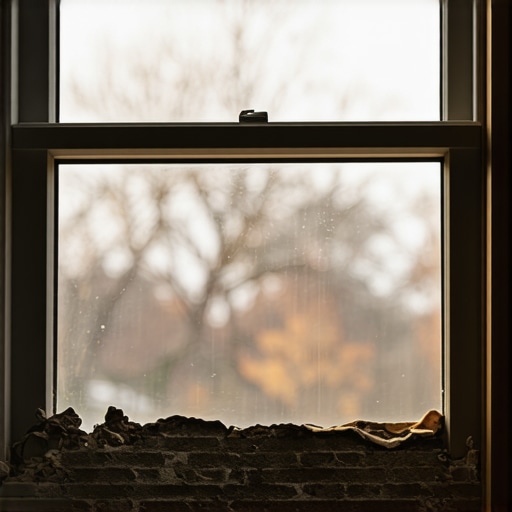
Capillary action and moisture vapor transmission are the primary drivers of rot in bathroom window trim. When high humidity levels from showers saturate the air, water molecules penetrate the cellulose fibers of wood or MDF baseboards, leading to fungal growth and structural decay within the substrate. Most people assume water has to splash onto a surface to cause damage. That is a dangerous misunderstanding of how bathrooms work. Every time you run hot water, you are creating a pressurized environment where water vapor is looking for a home. The coldest surface in the room is usually the window glass. When that vapor hits the glass, it condenses into liquid. That liquid then follows gravity straight down into the joint where the trim meets the sill. This is where capillary action takes over. The wood acts like a straw, pulling that standing water deep into the end grain where no amount of surface fans can reach it. The lignin that holds wood fibers together begins to dissolve as anaerobic bacteria move in. This is not a cosmetic issue; it is a structural failure of the building envelope.
Why your shower is attacking your window
Your shower enclosure acts as a localized humidity engine that creates a microclimate of 100 percent relative humidity. This moisture settles on cooler surfaces like window trim and grout lines, where it condenses into liquid water that bypasses weak silicone seals and rots the underlying framing. When looking for showers with a style, you have to consider how that steam will exit the room. If your exhaust fan is underpowered or if the window is located directly inside the splash zone, you are inviting disaster. The steam penetrates the porous surface of the grout and travels behind the tile. If the installer did not use a proper waterproof membrane like Kerdi or Wedi, that water sits against the studs. I have pulled apart walls where the window header was so soft I could poke a screwdriver through it like it was butter. The interplay between the wet air and the cold exterior air creates a dew point right inside your wall cavity. It is a slow motion train wreck that starts with a tiny crack in the grout and ends with a five thousand dollar repair bill.
[image_placeholder]
The failure of standard baseboards in wet zones
Standard MDF baseboards absorb water through their unfinished bottom edges via wicking. Once moisture enters the wood composite, it causes irreversible swelling and mold colonization. Professionals recommend using PVC trim or porcelain tile baseboards to ensure a waterproof barrier that prevents rot. Many builders use Medium Density Fiberboard because it is cheap and easy to paint. In a dry hallway, it is fine. In a bathroom, it is a sponge. I always tell my clients to look at chic baseboard designs that transform rooms in 2025 that utilize inorganic materials. MDF is essentially compressed sawdust and glue. When it gets wet, the glue bonds fail and the sawdust expands. You can see this when the bottom of your trim looks like it is