
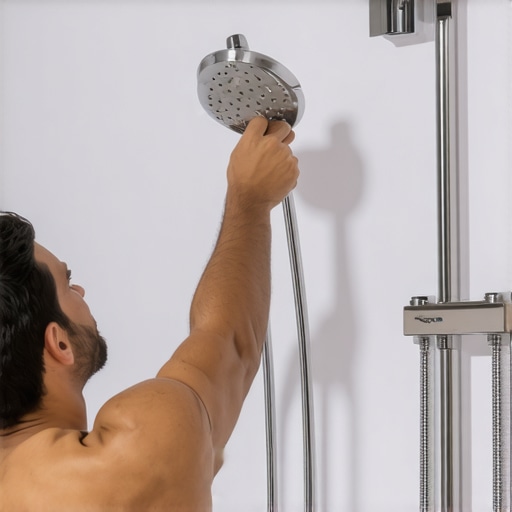
High Pressure Rain Shower Installation Guide for Perfect Flow
I spent three days grinding concrete on a job last month just so the floor wouldn’t click like a castanet, and that same level of obsession applies to your plumbing. Most homeowners think a shower is just a cosmetic fixture, but as a master floor installer, I see it as the primary source of moisture load in a structural envelope. If you do not respect the physics of water velocity and the chemistry of the seals, you are begging for subfloor failure. I once walked into a house where a walnut floor was cupping because the shower arm had a slow, invisible weep behind the tile that saturated the joists. We are going to fix your pressure and protect your home with the same technical precision I use to level a slab.
The physics of gravity and water velocity
Water pressure in a residential plumbing system is measured in pounds per square inch (PSI), typically ranging between 40 and 60 PSI for most homes. When installing a rain shower head, the static pressure must be converted into dynamic flow to ensure the spray pattern remains consistent across the wide diameter nozzle array without dripping. A rain shower head relies on a mix of gravity and internal aeration to mimic a natural downpour. Unlike a standard concentrated spray, these heads distribute the same volume of water over a much larger surface area. This distribution reduces the perceived force. To counteract this, we must optimize the internal diameter of the supply line and minimize friction loss at every junction. If your home has low base pressure, a rain shower head will feel like a sad drizzle unless you address the flow restrictors and pipe scale. This is not just about comfort; it is about ensuring the water hits the drain and does not pool in the corners of your showers with a style designed for high usage.
The flow restrictor hidden in your hardware
Shower head flow restrictors are small plastic disks inserted into the shower arm connection to limit water consumption to 2.5 gallons per minute (GPM) or less. Removing or modifying these O-rings and pressure regulators significantly increases the hydrostatic pressure delivered to the rain shower head for a more vigorous experience. Federal regulations mandate these restrictors, but they are often the culprit behind poor performance in older homes with 1/2 inch galvanized piping. When you pull that restrictor out, you are increasing the volume of water the shower head can process. This puts more stress on your grout and tile joints. You must be certain your tile cleaning tips include checking for cracks, as higher pressure means more water bouncing off the walls and finding its way into every microscopic fissure. I have seen guys yank these restrictors and then wonder why their bathroom floor is damp two hours later. It is all about the bounce.
“A floor is only as good as the subfloor beneath it; deflection is the enemy of every joint.” – Master Flooring Axiom
The 1/2 inch pipe bottleneck
Plumbing supply lines in most modern bathrooms use 1/2 inch PEX or copper tubing which provides a standard flow rate for most fixtures. However, for a luxury rain shower, a 3/4 inch supply line is the gold standard to prevent pressure drops when other faucets in the home are active. The math is simple. The cross-sectional area of the pipe dictates the volume of water available at the valve. If you are feeding a 12 inch wide rain head through a tiny, calcified 1/2 inch pipe, you will never get that spa feel. While most people want the thickest underlayment for their floors, too much cushion actually causes the locking mechanisms on LVP to snap under pressure, and the same logic applies here. Over-pressurizing a small pipe creates turbulence. Turbulence creates noise and vibration. Vibration eventually loosens the shower arm at the drop-ear elbow behind your wall. If that elbow moves, your tile will crack. Period.
| Pipe Material | Standard Diameter | Max Flow Rate (GPM) | Pressure Drop per 100ft |
|---|---|---|---|
| Copper Type L | 0.5 inch | 5.0 | Low |
| PEX Tubing | 0.5 inch | 3.2 | Moderate |
| Galvanized Steel | 0.5 inch | 4.0 (new) | High (aged) |
Sealing the threads without cracking the tile
Thread seal tape, often referred to as PTFE tape, must be applied in a clockwise direction to ensure the tapered pipe threads (NPT) form a watertight mechanical bond. Use at least five to seven wraps of high-density pink or gray tape to provide enough mass to fill the valleys of the threads. I see rookies use two wraps of the cheap white stuff and it leaks every time. When you are threading that new shower arm into the wall, you are working blind. You cannot see the connection. You have to feel the torque. If you over-tighten, you risk snapping the brass elbow. If you under-tighten, you get a drip that rots your wall studs. Once the arm is in, you need to look at the gap between the pipe and the tile. This is a major failure point. People slap a flange over it and call it a day. I want you to use a high-quality silicone sealant around that pipe before the flange goes on. This prevents steam and splash-back from entering the wall cavity. This is the same reason I obsess over grout restoration secrets. You have to keep the water where it belongs.
How baseboards and bathroom humidity interact
Bathroom baseboards are the first things to rot when a shower is under-performing or leaking, especially in high-humidity climates like Florida or the Gulf Coast. The constant vapor pressure from a hot rain shower expands the wood fibers of MDF baseboards, leading to swelling, paint peeling, and mold growth at the floor line. In these swampy regions, you should be using PVC or solid wood baseboards that have been back-primed. If you do not have a vent fan rated for at least 100 CFM, your new high-pressure shower will turn your bathroom into a sauna. This moisture settles on the floor. If you have engineered hardwood or LVP, that moisture can sit in the micro-bevels. Over time, that water migrates down. Always look at chic baseboard designs that allow for a proper silicone bead at the bottom to create a true water barrier.
- Ensure the shower arm is level to prevent uneven nozzle drainage.
- Flush the supply line for 60 seconds before attaching the new head.
- Apply PTFE tape to the male threads only.
- Check the rubber gasket seated inside the shower head pivot ball.
- Hand-tighten first, then use a rag-protected wrench for a final quarter turn.
The ghost in the expansion gap
Expansion gaps are the 1/4 inch to 3/8 inch spaces left at the perimeter of a floor to allow for thermal and hygroscopic movement of the material. When you install a high-pressure shower, you are increasing the local relative humidity, which causes your floor to grow. If you did not leave a proper gap at the threshold of the bathroom, the floor will buckle. I have seen 500 square feet of flooring ruined because a guy didn’t leave a gap under the bathroom transition. It is the small details that matter. Just as you want tile that is easy to maintain, you want a shower system that handles the water load. If you are struggling with old stains, check out how to refresh grout without replacing it to make sure the rest of the bathroom matches your new hardware.
“Every gallon of water that leaves the shower head must be accounted for by the drain or the HVAC system; there is no third option.” – The Mechanic’s Rule
The final word on hydraulic balance
Installing a rain shower head for better pressure is a matter of removing artificial restrictions and respecting the mechanical connections. You are dealing with a system that has to survive thousands of thermal cycles. Every time you turn that water on, the pipes expand. Every time you turn it off, they contract. If you use the right materials, like high-density tape and proper sealants, you will have a shower that performs for decades. If you cut corners, you will eventually be calling a guy like me to replace your subfloor and your baseboards makeover ideas will be the least of your worries. Get the pressure right, seal your threads, and keep your grout tight. That is how you build a bathroom that lasts. [{“@context”:”https://schema.org”,”@type”:”HowTo”,”name”:”How to Install a Rain Shower Head for Better Pressure”,”step”:[{“@type”:”HowToStep”,”text”:”Remove the old shower head and clean the threads of the shower arm.”},{“@type”:”HowToStep”,”text”:”Locate and remove the flow restrictor from the new rain shower head if local laws allow and pressure is insufficient.”},{“@type”:”HowToStep”,”text”:”Apply 5 to 7 wraps of high-density PTFE tape to the shower arm threads in a clockwise direction.”},{“@type”:”HowToStep”,”text”:”Hand-thread the rain shower head onto the arm until snug.”},{“@type”:”HowToStep”,”text”:”Use a wrench and a soft cloth to tighten the connection an additional quarter turn while avoiding damage to the finish.”}],”totalTime”:”PT30M”}]
Comments
2 responses to “How to Install a Rain Shower Head for Better Pressure”
I really appreciate how this post emphasizes the importance of proper pipe sizing and sealing techniques. In my experience, addressing the bottleneck created by 1/2 inch pipes can vastly improve shower performance, especially when upgrading to a rain head. Sometimes, people overlook the significance of adequately sealing threads; a tiny leak or inconsistent pressure can cause damage over time, particularly in humid environments. I’ve personally had success by installing a 3/4 inch supply line and ensuring all threads are meticulously sealed with high-quality PTFE tape and silicone. It extends the lifespan and maintains optimal pressure.
Has anyone found an effective way to measure actual water pressure at the shower head after installation? I wonder if there are simple tools or methods for homeowners to verify they’re getting the right flow and pressure without professional help. It seems crucial for troubleshooting if the shower isn’t performing as expected or if there’s evidence of water damage creeping in.
This post really highlights how crucial it is to think about the entire plumbing system when upgrading a shower for better pressure. I’ve found that increasing the pipe diameter, especially upgrading to 3/4 inch supply lines, makes a noticeable difference in rain shower head performance. I also agree that sealing threads thoroughly with high-quality PTFE tape and silicone is often overlooked but vital to prevent leaks and water damage over time. A small leak might seem insignificant, but in humid bathrooms, it can lead to mold and structural issues as you mentioned.
Regarding measuring actual water pressure, I’ve used a simple water pressure gauge that screws onto the shower arm. It gives a quick reading of PSI post-installation, which helps diagnose if the modifications are effective or if further adjustments are needed. Have others tried similar tools? I’d love to hear what methods or gadgets folks recommend to ensure they’re getting the right flow without having to call in a plumber every time.