
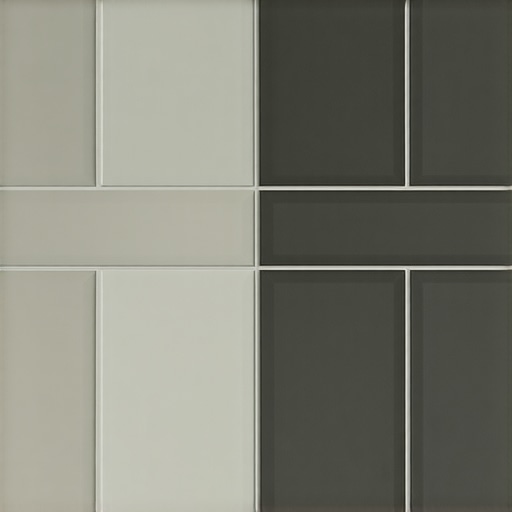
I spent three days last month grinding out white grout in a master bathroom because the homeowner could not stand the orange tinted soap scum anymore. They thought it was a cleaning issue. It was actually a structural and chemical failure of choice. Most guys skip the leveling compound and they think the underlayment will hide the dip but it won’t. I have seen too many showers where the water pools in the corner because the floor isn’t sloped right. That standing water becomes a petri dish for minerals and fatty acids. I have spent decades on my knees with a moisture meter and a level. You view a floor as a performance surface. It is not just a decoration. Choosing the wrong grout color is the fastest way to turn a beautiful shower into a source of constant stress. Soap scum is a relentless chemical byproduct that bonds to porous surfaces. When you choose an Arctic White grout you are essentially inviting a visible layer of gray and yellow film to live in your shower joints. I prefer to look at the physics of the installation. We are dealing with capillary action and mineral deposits. If you do not plan for the chemistry of your water you are going to lose the battle against grime before the first tile is even set.
The white grout delusion
White grout colors for showers represent a maintenance nightmare because they provide the highest possible contrast for soap scum and mineral buildup. Soap scum is a mixture of calcium and magnesium minerals from hard water combined with fatty acids from body oils and soap. This mixture creates a dull gray or yellowish film that adheres to the microscopic pores of cementitious grout. When you use bright white grout every single molecule of this buildup stands out like a sore thumb. I always tell my clients that if they want white grout they need to be prepared to scrub it with a toothbrush every three days. It is not about being clean. It is about the physical reality of how light reflects off a white surface versus a tinted one. Showers that look great in a showroom often fail in the real world because showrooms do not have hard water running through them five times a day. If you want a lasting look you have to think like an engineer. You need a color that mimics the hue of the very minerals that are trying to destroy it. This is why I push people toward medium tones that have a neutral base. You can check out some showers that wow to see how darker joints can actually enhance the geometric patterns of your tile work while hiding the inevitable residue of daily use.
The molecular mechanics of soap scum
Soap scum formation involves a chemical reaction between the minerals in your water and the fats in your soap products. Hard water contains high levels of dissolved calcium and magnesium which are the primary culprits in grout staining. When these minerals hit the surface of a porous grout joint they settle into the voids. Cement grout is essentially a hard sponge. It has tiny holes that suck in water and anything dissolved in that water. As the water evaporates the minerals stay behind. If you are using a natural bar soap the fatty acids bond with these minerals to create a waxy substance that is incredibly difficult to remove once it hardens. This is why I suggest looking at the pH of your cleaning products. You need a solution that can break that chemical bond without eroding the grout itself. For those looking for long term success I recommend reading up on tile cleaning tips to understand how to manage this chemistry. I once worked a job in Phoenix where the water was so hard it turned every grout line white with efflorescence within a month. We had to switch to a high performance epoxy grout just to keep the colors stable. Epoxy grout is non-porous. It does not have the same microscopic holes that cement grout has. This means the soap scum stays on the surface where it can be wiped away instead of being absorbed into the structure of the floor.
“A floor is only as good as the subfloor beneath it; deflection is the enemy of every joint.” – Master Flooring Axiom
Why neutral grays save your weekends
Gray grout colors such as silver or pewter are the gold standard for hiding soap scum because their undertones match the natural color of mineral deposits. Light gray grout acts as a camouflage for the grayish film that soap leaves behind. It reduces the visual contrast between the clean grout and the dirty grout. I always recommend colors like driftwood or cobblestone for floors. These colors have a bit of brown and a bit of gray. They are chameleon colors. They look clean even when they aren’t. If you go too dark like a charcoal black you run into a different problem. You will start to see white mineral deposits and efflorescence. Efflorescence is a salt that migrates to the surface of cement products. On a black grout line it looks like a white powder. It is just as frustrating as soap scum on white grout. You have to find that sweet spot in the middle of the spectrum. I have found that a medium taupe or a warm gray hides about 90 percent of what a typical family of four throws at it. When you are looking at showers with a style for your home consider how the grout color interacts with the lighting. In a small bathroom dark grout can make the space feel cramped. A medium gray provides enough contrast to show off the tile without closing in the walls. It is a balance of aesthetics and physics.
The engineering behind epoxy grout performance
Epoxy grout is a two part resin system that is completely waterproof and resistant to staining from soap scum and oils. Traditional cement grout relies on water to cure which leaves behind a network of tiny tunnels when that water evaporates. Epoxy grout cures through a chemical reaction that creates a solid plastic like surface. This is why it is the choice for commercial kitchens and high end hospital showers. It does not allow the soap scum to penetrate. It stays on top. However it is a pain to install. It is sticky and you have to be fast. If you leave a haze on the tile it is permanent. I have spent hours with a razor blade cleaning up after an amateur who thought they could handle epoxy. But if done right it is a lifetime solution. You never have to seal it. You never have to worry about the color fading. It is the closest thing to a maintenance free floor you can get. For those interested in the environment there are also eco friendly tile solutions that pair well with high performance grouts to minimize chemical runoff from harsh cleaners. Using epoxy means you can use milder soaps and fewer acidic cleaners which is better for your plumbing and the planet.
| Grout Type | Porosity Level | Soap Scum Visibility | Maintenance Level |
|---|---|---|---|
| White Cementitious | High | Very High | Extreme |
| Gray Cementitious | High | Low | Moderate |
| Epoxy (Any Color) | Zero | Minimal | Low |
| Urethane | Very Low | Minimal | Low |
Baseboards and the splash zone reality
Bathroom baseboards are often overlooked but they are a critical part of the moisture management system in a wet room. Baseboard installation in a bathroom requires a waterproof material like PVC or a high density wood composite that is sealed on all six sides. I have seen too many people put standard MDF baseboards in a bathroom. Within a year the bottom edge starts to swell because it is sucking up moisture from the floor. This also affects the grout line where the tile meets the wall. That joint should never be grout. It should be a 100 percent silicone caulk that matches the grout color. Grout is rigid. It will crack at the change of plane because the house moves. When it cracks it allows water to get behind the baseboard. This leads to mold and rot. I always tell people to check out baseboards makeover ideas to find styles that handle moisture better. A taller baseboard can also protect the wall from splashes from the shower. If you are doing a full renovation you might even consider chic baseboard designs that use tile instead of wood. A tile baseboard is the ultimate way to handle soap scum and water because you can scrub it just like the floor. It creates a seamless transition that is functionally superior to wood in every way.
The hidden impact of hard water on shower aesthetics
Hard water deposits are the primary reason grout colors shift over time regardless of how much you clean. Mineral buildup is a slow process. You don’t notice it until one day the grout looks orange or green. In some regions the iron content is so high that the grout will eventually turn a rusty red. If you know you have high iron you should never choose a light blue or a cool gray. The iron will turn that gray into a muddy brown. You are better off choosing a warm tan or a beige grout from the start. This is what I call anticipatory design. You are designing for the reality of your environment. People in the Southwest have to deal with heavy calcium. That looks like a white crust. For them a very light tan is actually better than a gray because the white crust blends in. It is all about hiding the evidence of the water’s mineral content. If your grout is already looking rough you might need to look at grout restoration secrets to bring it back to its original state. Sometimes a deep clean isn’t enough and you need to use a grout colorant to seal the surface and provide a fresh uniform look. This is a great way to fix a color mistake without ripping out the tile. I have saved many bathrooms by applying a high quality epoxy colorant over old stained grout. It is a lot cheaper than a full remodel.
“Cement is a thirsty beast; if you don’t saturate its pores with sealer it will saturate them with dirt.” – Tile Council of North America Principle
The 1/8 inch that ruins everything
Grout joint width plays a massive role in how much soap scum you have to deal with on a weekly basis. Narrow grout joints are harder to clean but they provide less surface area for grime to collect. A 1/16 inch joint is ideal but it requires a very flat subfloor and a very straight tile. Most rectified tiles can handle this. If you have a wavy tile you are forced into a 1/8 inch or even a 3/16 inch joint. That is a lot of grout. It creates a huge valley for soap and water to sit in. This is where the physics of drainage comes in. If the floor is not perfectly sloped the water stays in those wide grout joints. It never fully dries out. This leads to biofilm and mold. I always spend extra time on the subfloor prep. I would rather spend two days grinding high spots and filling low spots than have a client call me in six months complaining about dirty grout. If you are struggling with old wide joints you can learn how to refresh grout to help bridge the gap until you can do a proper renovation. Remember that the wider the joint the more important the color choice becomes. You are increasing the visual weight of the grout so you better make sure it’s a color you can live with when it’s not perfectly clean.
Checklist for a low maintenance shower floor
- Choose a medium tone grout such as silver gray or warm taupe.
- Opt for epoxy grout instead of cementitious if the budget allows.
- Ensure the shower pan has a minimum 2 percent slope to prevent pooling.
- Use rectified tiles to allow for narrower grout joints of 1/16 inch.
- Seal cement grout every six months with a high quality penetrating sealer.
- Replace grout at the change of plane with color matched silicone caulk.
- Install moisture resistant baseboards like PVC or tile.
The secret to a clean looking bathroom is not found in a spray bottle. It is found in the architectural decisions you make before the first bag of thin-set is opened. If you pick a grout that is the color of soap scum you will never see the soap scum. It is a simple engineering solution to an annoying domestic problem. Stop chasing perfection with white grout and start embracing the practical reality of gray and taupe. Your back and your sanity will thank you in the long run. If you need more advice on specific materials or want to talk about a project you can always contact us for a professional consultation. We deal with these structural challenges every day and we know what works in the real world environments of high moisture and hard water.