
Why Your Epoxy Grout is Turning Sticky and How to Fix the Cure
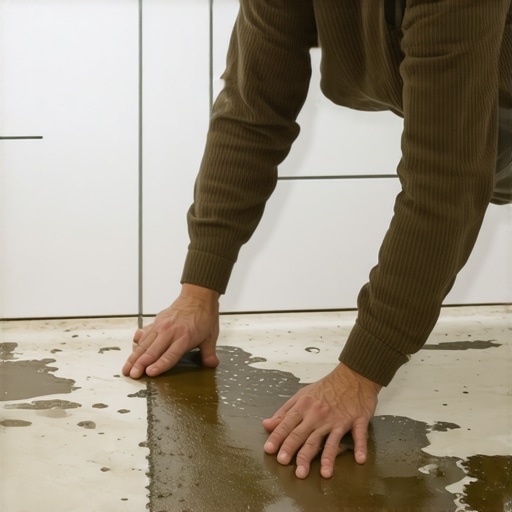
I have spent over twenty-five years on my knees with a trowel in hand and sawdust under my nails. I have seen the evolution of the flooring industry from simple mud-sets to the complex chemical engineering we deal with today. Most guys skip the leveling compound and think they can just wing it with epoxy. They think the underlayment or the grout will hide the dip. It won’t. I spent three days grinding concrete on a job last month just so the floor would not click like a castanet, and that same level of precision is exactly what is required for epoxy grout. If you treat epoxy like standard cementitious grout, you are going to end up with a sticky, tacky mess that ruins a twenty thousand dollar tile installation. I once walked onto a job site where the helper had mixed a three hundred dollar bucket of epoxy without scraping the sides of the container. The result was a floor that stayed soft for a week, attracting every bit of dust in the building until it looked like a gray, furry carpet. This is not a cosmetic issue. It is a structural failure of the chemical bond.
The chemistry of a failed bond
Sticky epoxy grout is the result of an incomplete chemical reaction known as cross-linking where the resin and hardener fail to bond at a molecular level. This occurs due to improper mixing ratios, temperature fluctuations below sixty degrees, or excessive moisture interference during the initial twelve-hour curing window. When you work with epoxy, you are not just a tile setter, you are a chemist. The two components, usually a bisphenol A resin and an amine hardener, must meet in a precise stoichiometric ratio to form a thermosetting polymer. If one molecule of resin does not find its partner molecule of hardener, it remains liquid. That unreacted liquid is the stickiness you feel. It will never fully cure on its own. It will sit there in the joints, catching hair, dirt, and mop water until the client calls you back to scream about their ruined bathroom. You can find more about maintaining these surfaces at grout restoration secrets for long lasting results to understand the long-term impact of a solid cure.
[IMAGE_PLACEHOLDER]
Why your mixing bucket is a crime scene
The mixing process for epoxy grout requires a high-shear mechanical paddle and a complete scraping of the bucket walls to ensure every drop of catalyst reacts with the base resin. Failure to incorporate the material clinging to the sides results in pockets of uncurable sludge that will never reach the required Shore D hardness. In my decades of experience, I have learned that the bucket is where most floors die. If you leave even a tablespoon of unmixed hardener on the wall of the pail, you have shifted the ratio. This is especially true for modern high-performance grouts used in showers that wow modern designs for 2025. You need to mix, pour the contents into a new clean bucket, and mix again. It sounds like overkill, but it is the only way to guarantee a uniform cure across the entire floor. Most installers are too lazy for the second bucket, and those are the guys who spend their weekends scrubbing sticky grout with denatured alcohol.
“A floor is only as good as the subfloor beneath it; deflection is the enemy of every joint, and chemical imbalance is the death of every resin.” – Master Flooring Axiom
The hidden humidity in your slab
High ambient humidity and moisture vapor emission rates from a concrete subfloor can cause amine blush, a sticky white film that forms on the surface of curing epoxy. This moisture reacts with the amine hardener to create a carbamate salt, which prevents the grout from achieving its intended chemical resistance and aesthetic finish. If you are working in a swampy environment like Houston or the coastal humidity of Florida, the air itself is your enemy. You cannot just open the windows and hope for the best. You need climate control. If the dew point is too close to the ambient temperature, moisture will condense on the grout line before it hardens. This is why checking your baseboards makeover ideas to elevate your space involves more than just paint; it involves ensuring the entire room environment is stable. A damp subfloor will push water vapor up through the joints, hitting the epoxy from behind and creating a permanent state of tackiness.
The physics of the film
The film left behind on the tile surface after a poorly executed epoxy wash is often confused with a bad cure, but it is actually a failure of the cleaning phase. This haze is a thin layer of resin that has bonded to the ceramic or stone surface and requires specific surfactants or alkaline cleaners to break the surface tension. It will not come off with a regular mop. You need to use the manufacturer-provided cleaning packets, which usually contain citric acid or similar agents designed to emulsify the resin. If you miss the window for the initial wash, you are looking at an acid-based haze remover and a lot of elbow grease. For those looking to fix an old mess, check out how to refresh grout without replacing it for tactical advice on reviving a compromised floor.
Epoxy Performance Metrics
| Condition | Cure Time (Hours) | Hardness (Shore D) | Risk Level |
|---|---|---|---|
| 70 Degrees / 40% Humidity | 12-24 | 85 | Low |
| 55 Degrees / 80% Humidity | 48-72 | 40 (Sticky) | Critical |
| 90 Degrees / 20% Humidity | 4-8 | 90 | High (Flash Set) |
The Master Installer Checklist for Epoxy
- Verify the ambient temperature is between 65 and 85 degrees for at least 24 hours prior to installation.
- Acclimate the grout buckets to the room temperature to avoid high viscosity.
- Use a digital scale if you are mixing partial batches to ensure a perfect 2 to 1 or 3 to 1 ratio.
- Scrape the bucket walls twice during the mixing process with a flat margin trowel.
- Keep a bucket of white vinegar or denatured alcohol nearby for cleaning tools immediately.
- Ensure the tile joints are bone dry by using a moisture meter or a heat gun if necessary.
“The installation of epoxy grout requires strict adherence to temperature ranges between 60 and 90 degrees Fahrenheit for proper cross-linking.” – TCNA Handbook Section EJ171
The ghost in the expansion gap
Expansion gaps at the perimeter of a room are vital for epoxy grout because the material is rigid and lacks the flexibility of siliconized caulk, meaning any structural movement will cause the epoxy to crack or delaminate. People think epoxy is indestructible. It is tough, yes, but it does not like to move. If you grout tight against a wall or a heavy piece of cabinetry, the floor has nowhere to go when the house settles or the humidity changes. This pressure can actually cause the grout to pop out of the joints or lead to the sticky residue being squeezed out of the microscopic pores of the material. When you are looking at chic baseboard designs that transform rooms in 2025, remember that those baseboards are hiding a necessary gap. Without that gap, the physics of the floor will eventually defeat the chemistry of the grout.
How to fix the sticky mess
To fix sticky epoxy grout, you must first determine if the issue is surface haze or a deep-set cure failure. Surface haze can be removed with an alkaline stripper, but a true cure failure requires the physical removal of the soft material using a grout saw or heat gun followed by a complete re-application. If the grout is soft all the way through the joint, there is no magic spray that will make it hard. You have to dig it out. Use a heat gun to soften the resin, but be careful not to scorched the tile edges. Scrape it out while it is warm. If it is just a sticky film on top, try a mixture of dish soap and warm water first. If that fails, move to denatured alcohol. Always test a small area first. You do not want to melt your tile cleaning tips for a sparkling bathroom in 2025 goals by using the wrong chemical on a sensitive natural stone. A floor is a performance surface. It requires respect. If you treat the chemistry with the gravity it deserves, you will have a surface that lasts for fifty years. If you rush the mix, you will be back on your knees next week, and I can tell you from experience, that is a place you do not want to be twice for the same job.