
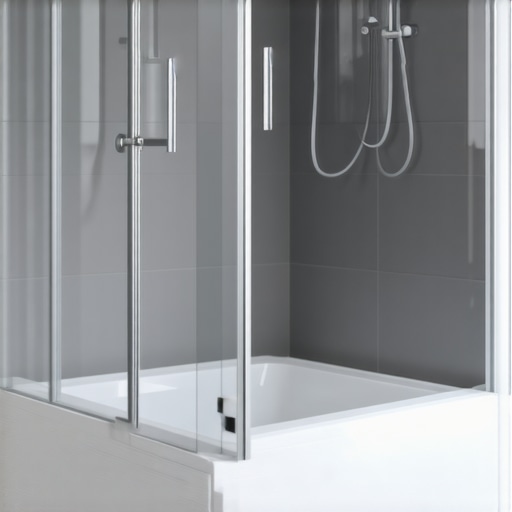
Most guys skip the leveling compound. They think the underlayment will hide the dip. It won’t. I spent three days grinding concrete on a job last month just so the floor wouldn’t click like a castanet. The homeowner thought the floor was just old. It was not. It was a failure of the foundation. When you see a shower door dragging on the tile, you are witnessing the physical manifestation of structural neglect. The glass does not just grow. The metal does not just stretch. The floor is moving or the wall is bowing.
Why your shower door hits the floor
A dragging shower door indicates a failure in the structural alignment between the heavy glass hinges and the tile substrate. This usually happens because of subfloor deflection, hinge fatigue, or the settling of the house frame. If the tile has shifted even a fraction of an inch, the door clearance vanishes. You need to inspect the hinge tension and the levelness of the curb immediately to prevent the glass from shattering against the porcelain or stone surface.
I have seen it a thousand times. A beautiful 3/8 inch tempered glass door starts to catch. The owner thinks they can just lift it. They can for a week. Then the scraping returns. This is not a ghost. It is the physics of weight distribution. A standard heavy glass shower door can weigh upwards of 80 pounds. That weight is concentrated on two or three small hinge points screwed into a vertical stud. If that stud is not doubled up or if the tile behind it was installed with a hollow spot, the door will sag. The tile is not just a pretty face. It is part of the wall assembly. When the grout starts to crumble around the hinges, you know the substrate is flexing. You can learn more about maintaining your surfaces through grout restoration secrets for long lasting results which often reveals the true state of your tile installation.
The physics of heavy glass tension
Gravity never sleeps. It pulls on the glass every second of the day. If the installer did not use long enough screws to bite into the framing, the door will move. But often, the problem is deeper. The subfloor under the shower pan might be rotting or shifting. If the shower curb was built with wood instead of a solid material like a Schluter curb or a pre-cast unit, the wood can swell. This swelling pushes the tile up into the path of the door. The clearance on these doors is often less than an eighth of an inch. There is no room for error. The chemistry of the thin-set is also a factor. If the installer used a cheap, non-modified thin-set on a large format tile, the bond might be failing. This allows the tile to tent slightly. It is a microscopic change that causes a macroscopic headache.
“A floor is only as good as the subfloor beneath it; deflection is the enemy of every joint.” – Master Flooring Axiom
When we talk about deflection, we are talking about how much a floor bends under a load. For tile, the standard is L/360. That means the floor should not bend more than the length of the span divided by 360. If you have natural stone, it is L/720. Most houses are built to the bare minimum. They bounce. When you step near the shower, the floor dips. The door stays still. Over time, this repetitive stress breaks the bond of the grout and the thin-set. You might notice the baseboards look odd too. Looking into chic baseboard designs that transform rooms in 2025 can help you see how trim should integrate with a stable floor system.
The subfloor secret of the clicking castanet
I remember a job in a high-rise where the contractor used a liquid leveler but did not prime the concrete. The leveler bonded to the dust, not the slab. Within six months, the entire floor was floating. Every time the shower door opened, you could hear the tiles clicking. It sounded like a castanet. That is the sound of money disappearing. If your door is dragging, check the grout lines. Are they cracked? Is there powder coming out? This is a sign of movement. You should also check the verticality of the wall. Use a four foot level. If the wall is out of plumb, the door will never stay adjusted. Modern bathroom aesthetics often prioritize showers that wow but they frequently ignore the boring stuff like the 2×6 blocking behind the tile.
Adhesion is a chemical process. The polymers in modern mortars create a bridge between the tile and the substrate. If that bridge is broken by moisture or movement, the tile becomes an island. Once it is an island, it can tilt. A tilted tile at the door opening is the primary cause of scraping. You cannot just sand down the tile. You have to fix the support. Sometimes this means removing the door and the hinges, cleaning out the old grout, and injecting a high-strength epoxy or specialized adhesive. If you want to keep the area clean while you work, follow these tile cleaning tips for a sparkling bathroom in 2025 to ensure no debris gets into the new bond.
Technical Specifications for Shower Door Stability
| Component | Requirement | Impact of Failure |
|---|---|---|
| Subfloor Deflection | L/360 or L/720 | Cracked grout and sagging doors |
| Glass Weight | 8 to 10 lbs per sq ft | Hinge pull-out and wall bowing |
| Mortar Type | ANSI A118.4 or higher | Tile delamination and height changes |
| Stud Blocking | Double 2×4 or 2×6 | Hinge sagging and glass misalignment |
The hidden chemistry of bathroom adhesives
Portland cement is a fascinating material. It does not dry. It hydrates. This is a chemical reaction that forms crystals. These crystals lock into the pores of your tile and your backer board. If the environment is too hot, the water evaporates before the crystals can form. This leads to a weak, soft bond. In a bathroom, the humidity is always fluctuating. This is why using a high-quality moisture barrier is essential. If water gets behind the tile, it can cause the thin-set to undergo a process called re-emulsification if the wrong products were used. This softens the bed and allows the tile to sink or shift under the weight of a heavy glass door. You must ensure your installation uses eco-friendly tile solutions for sustainable homes in 2025 that also meet the rigorous strength requirements of modern wet areas.
“Tile and stone are brittle materials that require a rigid substrate; without it, the system fails.” – TCNA Handbook Principles
The moisture in the air can also affect the hinges themselves. Brass hinges can corrode if the plating is thin. Stainless steel is better but more expensive. If the internal springs or gaskets of the hinge fail, the door will drop. This is often mistaken for a tile problem. However, if you see the door is lower on the side away from the hinges, it is the hardware. If the whole door seems to have moved, it is the wall or the floor. Checking the alignment is a three-step process. First, check the hinge screws. Second, check the wall for plumb. Third, check the curb for level. If the curb is not level, the door will always want to swing one way or scrape at the high point.
Checklist for fixing a dragging door
- Verify hinge screw tightness and depth into the wood framing.
- Inspect grout lines for hair-line cracks indicating substrate movement.
- Check the sweep at the bottom of the door for debris or hardening.
- Measure the gap at the top and bottom of the door to find the sag angle.
- Use a level on the curb to see if the floor has settled.
If you find that the grout is the culprit, you can often save the situation without a full remodel. There are ways to refresh grout without replacing it, but this only works if the structural movement has stopped. If the house is still settling, you are just putting a bandage on a broken bone. You need to address the root cause. Often, this involves going into the crawlspace or the basement and adding a lally column or a sister joist under the bathroom. It is not glamorous. It is not fun. But it is the only way to stop the door from scraping your expensive tile. Don’t be the homeowner who ignores the clicking castanet sound. It only gets louder and more expensive over time.