
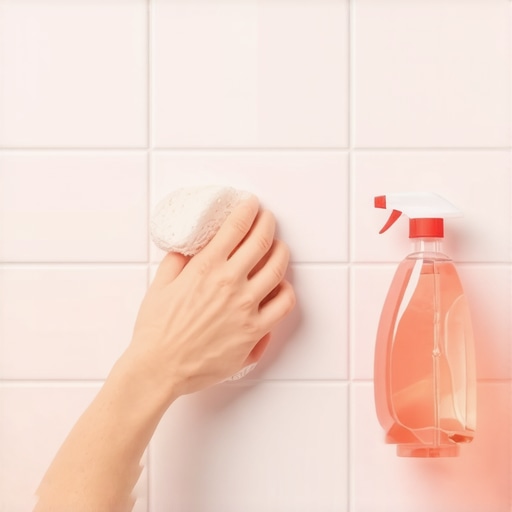
Most guys skip the leveling compound. They think the underlayment will hide the dip. It won’t. I spent three days grinding concrete on a job last month just so the floor wouldn’t click like a castanet. That experience taught me that the foundation dictates the finish. When homeowners look at a white, hazy film on their textured tile, they see an aesthetic nuisance. I see a chemical bond of calcium stearate that has anchored itself into the microscopic fissures of the porcelain or stone. This film is not just dirt. It is a geological layer created by the fusion of fatty acids from soap and mineral ions from your water supply. Dealing with this without acid requires a deep understanding of molecular physics and mechanical agitation. You have to respect the surface if you want it to last. Using acid on a shower floor is like using a sledgehammer to hang a picture. It works for a second, but you destroy the substrate in the process.
The microscopic reality of textured tile surfaces
Textured tile is engineered with a high Dynamic Coefficient of Friction or DCOF to prevent slips in wet areas. This texture is achieved through physical impressions or chemical etching during manufacturing. While this keeps you upright in the shower, it creates millions of tiny valleys on the surface. These valleys act as collection basins for soap scum. Unlike a polished surface where contaminants sit on top, textured surfaces allow the scum to embed itself deep within the tile profile. This is why a simple wipe never works. You are only cleaning the peaks of the texture while the valleys remain packed with a hardening slurry of soap and skin cells. To clean this, we must use chemistry to break the bond and kinetic energy to lift the material out of those valleys. If you are planning a renovation, looking at showers that wow modern designs for 2025 can help you see how these textures are applied in modern architecture.
Why acid is the enemy of your installation investment
Acidic cleaners are the primary cause of premature grout failure in residential showers. Most grout is cementitious, meaning it is a lime based product. Acid reacts with lime by dissolving it. Every time you spray a phosphoric or hydrochloric acid cleaner on your tile, you are eating away a microscopic layer of your grout. Over five years, your grout lines will recede, become brittle, and eventually crack. This leads to water intrusion behind the tile which rots the wall studs and creates mold. I have seen fifteen thousand dollar bathrooms ruined because someone used a cheap acidic spray every week. You must protect the integrity of the installation. For those with existing damage, learning how to refresh grout without replacing it is a better path than continued acid use.
“Cementitious grout is naturally porous and will absorb liquids through capillary action, leading to deep-seated staining if not sealed properly.” – TCNA Handbook for Ceramic Tile Installation
The chemical logic of alkaline degreasers
Alkaline cleaners sit on the opposite side of the pH scale from acids. Soap scum is essentially a wax or a fat. To remove it, you need a high pH cleaner that can emulsify these fats. This process is called saponification in reverse. An alkaline solution with a pH between 8 and 11 will soften the calcium stearate without attacking the cement binder in your grout. You need a cleaner that contains surfactants. These molecules have a hydrophobic tail that attaches to the scum and a hydrophilic head that attaches to water. This allows the water to pull the scum off the tile surface. This is how you achieve a clean finish without the risk of etching. It is about working with the chemistry of the mess rather than trying to burn it off. This approach is essential for eco friendly tile solutions for sustainable homes in 2025 where harsh chemicals are avoided.
The physics of steam as a kinetic tool
Steam is one of the most underrated tools in the flooring industry. When water is heated to 212 degrees Fahrenheit, it expands and carries massive amounts of kinetic energy. When a dry steam vapor hits a cold tile surface, it causes a rapid thermal expansion of the soap scum. This thermal shock breaks the adhesive bond between the scum and the tile. Because steam is composed of tiny water droplets, it can penetrate the deep valleys of textured tile that a brush might miss. The heat also liquefies the fats in the soap, making them easy to wipe away with a microfiber cloth. It is a mechanical solution that uses zero chemicals. I always tell my clients that a good steamer is the best investment they can make for their tile longevity. It preserves the grout and keeps the tile cleaning tips for a sparkling bathroom in 2025 relevant for years to come.
Mechanical agitation and brush shore hardness
The tool you use to scrub matters as much as the cleaner. You need a nylon brush with a specific stiffness. If the bristles are too soft, they will just bend and slide over the scum. If they are too hard, they can scratch the glaze of the tile or erode the grout. I look for a brush with a medium Shore A hardness rating. This provides enough torque to dislodge the softened scum from the textured valleys. You should always use a circular motion. This ensures that the bristles hit the valleys from every possible angle. Linear scrubbing often skips over the deeper pits in the tile. It is about mechanical efficiency. If you are also dealing with baseboards during your deep clean, consider these baseboards makeover ideas to elevate your space to ensure the whole room looks sharp.
“The dynamic coefficient of friction on a tile surface is altered by the presence of topical contaminants, increasing slip hazards.” – Tile Council of North America Standards
Comparing cleaning methods for textured surfaces
Choosing the right method depends on the thickness of the accumulation and the type of tile. Below is a breakdown of how different non-acidic approaches perform on the job site.
| Method | pH Level | Surface Impact | Residue Risk |
|---|---|---|---|
| Alkaline Degreaser | 8.0 to 11.0 | None | Moderate |
| Steam Vapor | 7.0 (Neutral) | Zero | Zero |
| Enzymatic Cleaners | 7.0 to 8.0 | Zero | Low |
| Baking Soda Paste | 8.0 to 9.0 | Mild Abrasive | High |
The 1/8 inch that ruins everything
Precision is everything in flooring. When you have soap scum buildup, it actually changes the height of your tile by a fraction of an inch. This might sound like nothing, but in a shower with a slope toward the drain, that buildup can disrupt water flow. It creates puddling. Puddling leads to more scum. It is a cycle of failure. You have to keep the surface flat and clean to ensure the drainage physics work as intended. This is especially true in showers with a style trendy ideas for small bathrooms where every millimeter of drainage counts. If the scum gets too bad, you might need to look into grout restoration secrets for long-lasting results to bring the system back to its original state.
Steps for non acidic soap scum removal
Follow this checklist to ensure you do not damage your tile or grout during the process.
- Assess the tile type to ensure it is not a sensitive natural stone like honed marble.
- Apply a high pH alkaline degreaser to the dry surface.
- Allow a dwell time of at least ten minutes to let the surfactants work.
- Agitate the surface using a medium stiffness nylon brush in circular patterns.
- Rinse the area with hot water to carry away the emulsified slurry.
- Dry the tile immediately with a microfiber towel to prevent water spots.
- Check the grout lines for any remaining residue and repeat if necessary.
The contrarian data point on underlayment and cleaning
While most people think the thickness of the material is the sign of quality, in both underlayment and cleaning, too much of a good thing causes failure. In flooring, too much cushion under LVP causes the locking joints to snap. In cleaning, using too much soap or cleaner actually creates a sticky residue that attracts more soap scum. You want the minimum amount of chemical necessary to achieve the result. If you leave a film of cleaner on the tile, you are just building the foundation for the next layer of scum. Always rinse twice. The second rinse is what actually finishes the job. This is the difference between a pro and an amateur. Professionals understand that the removal of the cleaning agent is just as vital as the removal of the dirt. For more expert guidance, you can always contact us for specific installation and maintenance questions.