
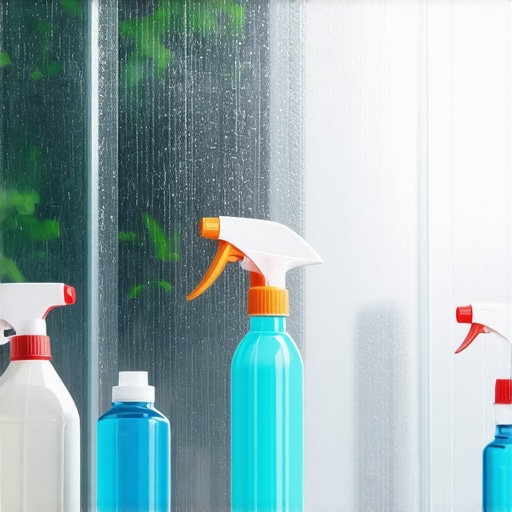
You do not look at a shower as a spa. You look at it as a structural environment where physics and chemistry are constantly trying to destroy your hard work. Most homeowners think a foggy piece of glass is just a cosmetic annoyance. They are wrong. It is a mineral invasion. Those white spots are calcium and magnesium carbonate ions that have chemically bonded to the silica in your glass. If you let them sit, they will eventually etch the surface. I have spent 25 years on my knees fixing floors and showers. I once spent three days grinding concrete on a job last month just so the floor wouldn’t click like a castanet. That same level of obsession belongs in your shower maintenance. Hard water is the enemy of every surface, from the glass to the grout. If you ignore the glass, the minerals will eventually migrate to your tile cleaning tips for a sparkling bathroom in 2025 routine, making your life a misery of scrubbing. You need to understand the molecular reality of the buildup to beat it.
The chemistry of calcium carbonate on glass
Hard water stains result from calcium and magnesium ions bonding to the silica surface of your shower glass through evaporation. These minerals create a crystalline structure that is physically harder than the glass itself over time. To remove them, you must use a pH-balanced acidic solution or a mechanical abrasive that outmatches the mineral’s Mohs hardness without scratching the glass pane. When water evaporates, it leaves behind a concentrated mineral residue. This residue is not just sitting on top of the glass. It is often wedged into the microscopic pores of the tempered surface. In regions like Houston where humidity is a constant factor, the glass never truly dries, leading to a perpetual state of mineral deposition. In drier climates like Phoenix, the rapid evaporation leaves behind a crust that is even harder to break. You need to approach this with the same precision you would use when checking the moisture content of a subfloor before laying wide-plank walnut. One mistake and you are looking at a permanent haze.
“A floor is only as good as the subfloor beneath it; deflection is the enemy of every joint.” – Master Flooring Axiom
The white vinegar and lemon juice method
Distilled white vinegar and lemon juice work as effective chelating agents because their high acidity breaks the ionic bonds of the mineral deposits. Applying a 50/50 mixture of vinegar and water directly to the glass allows the acetic acid to dissolve the calcium carbonate into a soluble form. This method is the safest for homeowners who want to avoid harsh industrial chemicals while preserving their grout. I always tell people that if it is safe for your salad, it is safe for your glass. However, do not get this stuff on your marble or natural stone. The acid that eats the water spots will also eat your stone. If you have natural stone in your shower, you need to look into eco-friendly tile solutions for sustainable homes in 2025 that handle acidic runoff better. Spray the glass, let it sit for ten minutes, but do not let it dry. If it dries, the minerals just re-crystallize in a new pattern. Scrub it with a soft cloth and rinse with cold water. It is a simple chemical reaction. The acid meets the base and the bond fails.
Using baking soda for mechanical abrasion
Mechanical scrubbing uses mild abrasives like baking soda or commercial glass polishes to physically shear the mineral deposits from the glass. This method is necessary when the water has begun to etch into the glass surface, creating a microscopic texture that traps more minerals. You must use a soft cloth or a non-scratch pad to ensure the structural integrity of the tempered glass remains intact during the process. Baking soda is a miracle for this. It has a Mohs hardness of about 2.5, which is much softer than glass but harder than many mineral deposits. Mix it into a paste with a little water. Apply it in circular motions. This is exactly how I polish out minor scuffs in a site-finished hardwood floor. It takes elbow grease, not magic. If you are designing showers with a style trendy ideas for small bathrooms, remember that large glass panels require more of this manual labor than smaller, tiled enclosures. You are fighting physics every time you turn on the faucet.
| Method | pH Level | Effort Level | Best For |
|---|---|---|---|
| Vinegar Spray | 2.5 | Low | Daily Buildup |
| Baking Soda Paste | 8.3 | Medium | Heavy Crust |
| Lemon/Salt Scrub | 2.2 | High | Corner Stains |
Industrial surfactants for heavy mineral crusts
Professional grade cleaners utilize concentrated phosphoric acid or sulfamic acid to handle extreme cases of hard water buildup that kitchen staples cannot touch. These chemicals penetrate the mineral layers faster but require strict safety protocols to protect the surrounding tile and metal fixtures. Always test a small area first to ensure the chemical reaction does not discolor your grout or pit the chrome hardware. These surfactants lower the surface tension of the water, allowing the acid to get underneath the mineral plate. If you find yourself needing these heavy hitters often, you should check your grout restoration secrets for long lasting results because that same hard water is likely eating your grout lines. I have seen guys use steel wool on glass. Never do that. It will leave microscopic scratches that will hold more water and more minerals, making the problem worse next month. Use a dedicated glass scraper if you must, but keep the blade flat. Angle it wrong and you have a permanent gouge that no amount of polishing will fix.
- Check the pH of your cleaning agent before application.
- Always wear gloves when handling phosphoric acid.
- Rinse the glass thoroughly to prevent chemical etching.
- Squeegee the glass after every single shower use.
- Avoid getting acidic cleaners on metal fixtures or natural stone.
The impact of humidity on bathroom baseboards
Moisture migration from a poorly ventilated shower will cause wood and MDF baseboards to swell and eventually rot. When you are cleaning your glass, you are also introducing moisture to the rest of the room. High humidity levels will cause your baseboards to expand. If you did not leave an expansion gap during installation, the boards will cup or pull away from the wall. I always recommend chic baseboard designs that transform rooms in 2025 that utilize PVC or moisture-resistant materials in the bathroom. Even if you have baseboards makeover ideas to elevate your space, they will fail if the moisture from your shower isn’t managed. The glass is just the first place you see the mineral buildup. The humidity is affecting everything, including the adhesive bonds of your floor tiles. If you see white powder on your grout, that is efflorescence, another mineral issue caused by moisture moving through the substrate. You might need to learn how to refresh grout without replacing it if the hard water has migrated into the floor joints. Every component of the bathroom is linked. The glass, the tile, and the wood all react to the water quality and the air moisture.
“Proper drainage is the first line of defense against calcium carbonate accumulation on vertical surfaces.” – Tile Council Standards
Preventing future mineral bonding
The best way to handle hard water is to never let it dry. Use a squeegee. It takes thirty seconds and saves hours of scrubbing later. You should also consider a hydrophobic coating for the glass. These coatings fill the microscopic pores of the glass with a polymer or a ceramic shield, making the surface so smooth that water cannot hang on. It is the same logic as a high-quality wear layer on luxury vinyl plank. If the surface is non-porous, the dirt cannot stick. If you are looking at showers that wow modern designs for 2025, make sure the glass is pre-treated. It will save your sanity. A floor installer knows that the finish is only as good as the maintenance. If you install a beautiful floor and then mop it with a bucket of salt water, it will fail. Your shower glass is the same. Treat it with respect, understand the chemistry, and keep it dry. That is the only way to win. If you have questions about your specific installation or need professional advice, you can always reach out via our contact us page. We have seen it all, from the worst cupping to the thickest mineral crusts. Stop letting the water win. Use the tools that work and follow the standards. Your shower should be a testament to engineering, not a science experiment gone wrong. Check our privacy policy if you need more details on how we handle your data when you reach out for help. Stick to the methods that respect the materials. Physics does not take a day off, and neither should your maintenance routine.