
I once walked into a luxury master suite where the homeowner had spent nearly twenty thousand dollars on Italian marble and custom fixtures, only to find them wearing a gas mask in their own bathroom. They thought a dead rodent was stuck in the pipes. I knew better the moment I stepped onto the tile. The floor felt slightly spongy under my work boots, a sensation no cured mortar bed should ever provide. I took a hammer to the drain area and found a black, viscous sludge sitting beneath the stone. The installer had completely ignored the pre-slope and buried the drain weep holes in thin-set. It was a swamp. This is not a plumbing failure, it is a structural engineering disaster. Most people assume the smell is coming from the sewer, but more often than not, it is coming from the biological rot happening inside your floor assembly.
The architectural sin of clogged weep holes
Shower drains smell like rotten eggs when the weep holes in the clamping ring are blocked, preventing water from escaping the secondary drainage system. This causes stagnant water to sit in the mortar bed, where anaerobic bacteria flourish and release hydrogen sulfide gas. Proper installation requires keeping these holes clear with crushed stone or specialized drainage spacers.
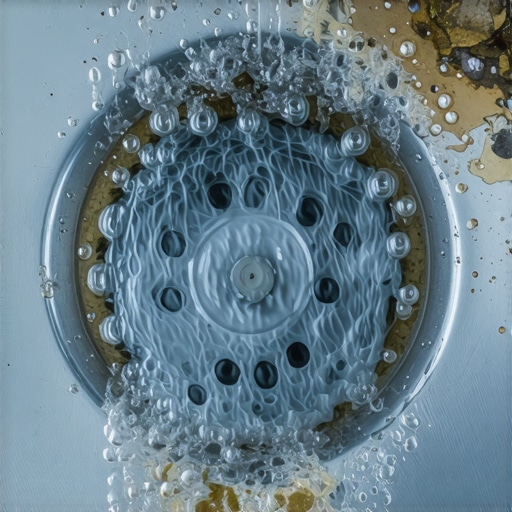
The mechanics of a traditional shower floor rely on a three-piece clamping ring drain. You have the bottom flange, the middle clamping ring, and the top strainer. Most installers who lack formal TCNA training think that water only goes down the drain through the top grate. This is a lie. Tile and grout are not waterproof. Water migrates through the grout lines and the thin-set through capillary action. It then hits the waterproof liner, usually a PVC or CPE sheet, and must travel down the slope to the drain. This is where the weep holes come in. These tiny orifices are located at the base of the drain assembly to allow that sub-surface water to exit. If the installer slaps thin-set directly over these holes, the water stays trapped in the mud bed. It rots. It stinks. It eventually destroys your subfloor. [IMAGE_PLACEHOLDER]
Why your P-trap is not the problem
If your shower smells like sulfur but the drain is holding water in the trap, the issue is not sewer gas bypass. A functional P-trap creates a water seal that prevents odors from the main line from entering the room. Therefore, the smell is originating from the biofilm and bacteria growing within the grout, thin-set, or the mortar bed itself.
Plumbers often get the first call when a bathroom stinks, but if they find the trap is full, they will walk away. The problem is flooring physics. When water remains stagnant in a porous environment like a cementitious mortar bed, it creates an anaerobic environment. This is the perfect breeding ground for bacteria that produce hydrogen sulfide. You can dump all the bleach you want down the drain, but if the bacteria is living in the mud bed surrounding the drain, the chemical will never reach the source. The smell persists because the source is structural, not mechanical. You have to address the moisture retention within the assembly to stop the cycle. This is why understanding tile cleaning tips for a sparkling bathroom in 2025 is only half the battle, the other half is the invisible engineering beneath the surface.
“A floor is only as good as the subfloor beneath it; deflection is the enemy of every joint.” – Master Flooring Axiom
Grout and the myth of waterproof barriers
Grout is a porous material that acts like a sponge, drawing moisture into the assembly rather than repelling it. Even when sealed, grout only resists water penetration for a limited time, meaning the sub-layers must be designed to handle constant saturation. Relying on grout for waterproofing is a fundamental mistake that leads to structural decay and odors.
We need to talk about the molecular reality of grout. Standard cementitious grout is essentially a network of microscopic voids. When you take a ten-minute shower, you are effectively saturating the entire floor system. If you are noticing persistent odors, it might be time to look at how to refresh grout without replacing it to see if a topical deep clean or a re-sealing process can mitigate the surface-level bacterial growth. However, if the smell is coming from deeper down, no amount of scrubbing will help. You are dealing with a saturated mud bed. This happens when the sand-to-cement ratio in the dry pack is off, or when the pre-slope, the slope underneath the liner, was skipped. Without a pre-slope, water sits flat on the liner. It cannot move toward the drain. It just festers.
The physics of the pre-slope
A proper shower build starts with a pre-slope of 1/4 inch per foot. This is a layer of mortar installed under the waterproof liner. Most lazy installers put the liner flat on the subfloor and then put a sloped mortar bed on top of it. This is a recipe for a rotten egg smell. The water that penetrates the tile will hit that flat liner and stop. It will never move toward the weep holes. It creates a permanent pond of grey water inside your floor. You are essentially standing on a septic tank every time you wash your hair.
| Material Type | Porosity Level | Moisture Retention | Odor Risk |
|---|---|---|---|
| Cement Grout | High | High | High |
| Epoxy Grout | Near Zero | Low | Very Low |
| Natural Marble | Moderate | Moderate | Medium |
| Porcelain Tile | Under 0.5% | Very Low | Low |
The chemistry of biofilm and anaerobic bacteria
Biofilm is a complex colony of microorganisms that adheres to surfaces and secretes a protective slime, making it highly resistant to standard cleaners. In the context of a shower drain, this biofilm traps organic matter like skin cells and hair, providing the fuel for anaerobic bacteria to produce sulfurous gases.
When we look at this through a microscope, the surface of your grout looks like a jagged mountain range. Skin cells and soap scum get caught in these crevices. Over time, bacteria form a biofilm that shields them from the hot water and soap you use. This biofilm can extend several millimeters down into the grout and even into the thin-set. If you have an older shower, you may need grout restoration secrets for long-lasting results to chemically break down this biofilm without destroying the integrity of the tile bond. The smell of rotten eggs is a byproduct of these bacteria consuming the organic material trapped in your floor. If the sub-surface drainage is failing, you are providing them with an infinite supply of water and food.
“Movement joints are not optional; they are a structural necessity for the longevity of tile assemblies.” – TCNA Handbook Section EJ171
The perimeter of the problem and baseboard integration
Odors often migrate from the shower floor to the perimeter walls, where moisture can wick into the wall studs or the baseboards if the waterproofing was not flashed correctly. If you smell rot at the floor-to-wall transition, it indicates that the shower pan is overflowing into the surrounding subfloor.
I have seen cases where the rotten egg smell was actually coming from the drywall behind the baseboards. If the shower liner was not integrated with the wall’s vapor barrier, moisture wicks upward. This can rot out the bottom plate of your wall. When designing your bathroom, looking at chic baseboard designs that transform rooms in 2025 is important for the look, but you must ensure the installation includes a proper moisture break. If your shower is leaking into the bathroom floor, your baseboards will be the first thing to show signs of swelling or mold. This is why I always recommend a solid surface threshold and high-quality silicone at every change of plane. It prevents the moisture from escaping the designated wet zone.
Structural solutions for a permanent fix
To permanently eliminate shower odors, the installation must ensure a clear path for water from the tile surface to the sub-surface weep holes. This involves using a topical waterproofing membrane or ensuring the traditional mortar bed is perfectly sloped and the weep holes are protected with gravel.
- Inspect the drain grate for hair and biofilm buildup monthly.
- Ensure the P-trap is always filled with water to block sewer gas.
- Use a pH-neutral cleaner to prevent eroding the grout.
- Verify that the weep holes are not obstructed by checking the drainage rate.
- Consider a topical membrane like Kerdi or Wedi for future renovations.
- Check the baseboards for signs of water wicking or discoloration.
If you are planning a remodel, look for showers that wow modern designs for 2025 and choose systems that use topical waterproofing. In these modern systems, the waterproofing is directly under the tile, so the mortar bed never gets wet. This eliminates the chance of stagnant water and the associated smells. It is a much cleaner, more efficient way to build a performance surface. For smaller spaces, check out showers with a style trendy ideas for small bathrooms to see how these advanced systems can be integrated into tight footprints without sacrificing drainage efficiency. If you need help diagnosing a failure, you can always contact us for a professional evaluation. Do not let a lazy installer turn your bathroom into a swamp. Demand that the TCNA standards for weep hole protection are followed. Your nose, and your subfloor, will thank you. If you have questions about how your data is handled while browsing for flooring solutions, please see our privacy policy.