
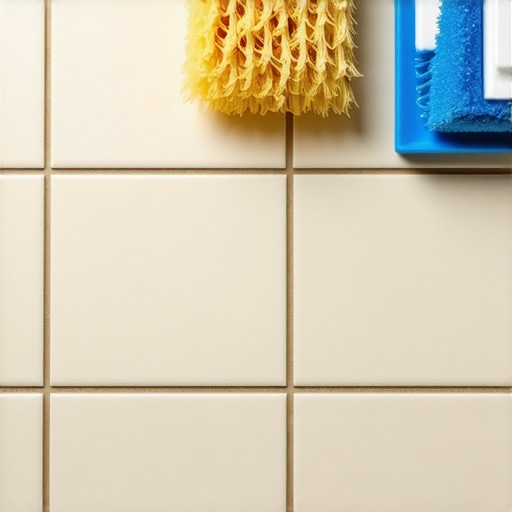
The microscopic residue on your tile surface
Grout haze consists of cementitious particles and polymer additives that remain on the tile surface after the installation process because of improper cleaning techniques or evaporation rates. This cloudy film is a physical byproduct of the hydration process where the minerals in the grout mixture fail to settle into the joint and instead bond to the ceramic or porcelain glaze. If the cleaning water is saturated with solids, you are simply redistributing the haze rather than removing it. I spent three days grinding concrete on a job last month just so the floor wouldn’t click like a castanet, but the owner was more upset about the haze. Most guys skip the leveling compound. They think the underlayment will hide the dip. It won’t. The same logic applies to grout. You cannot hide a bad wipe with more water. I have spent 25 years on my knees with a sponge. I know the smell of damp Portland cement better than my own kitchen. When you see that milky film, you are looking at a failure of timing and chemistry. It is not just dirt. It is a structural residue.
The chemical reality of polymer grout
Modern grout is not just sand and water. It is a complex cocktail of latex and polymers designed to resist water. These same chemicals make the haze incredibly difficult to remove once they have cured. When you wash the floor, the water evaporates. The minerals stay behind. The polymers act like a glue. They lock the dust to the tile. This is why your floor looks great while wet but turns white as it dries. The surface tension of the water holds the particles in suspension. As soon as that tension breaks, the film settles.
“A floor is only as good as the subfloor beneath it, deflection is the enemy of every joint.” – Master Flooring Axiom
Why your bucket is your worst enemy
The biggest mistake in tile installation is using the same bucket of water for more than twenty square feet. If the water is cloudy, the tile will be cloudy. You are essentially painting the floor with a thin wash of cement. You need two buckets. One for the initial wipe. One for the final polish. If you do not change the water every few minutes, you are wasting your time. The particles in the water are abrasive. They can scratch the surface of softer stones. I once walked into a project where the installer was using a sponge that looked like it had been through a war. The result was a disaster. The grout was uneven. The tiles were covered in a grey film. It took a week of acid washing to fix it.
The physics of the 1/8 inch gap
Spacing matters for more than just aesthetics. It affects how you clean. Small joints trap more haze because the sponge cannot reach the depths without pulling out the grout. Large joints bleed more material. If your baseboards are already installed, you will find haze trapped along the perimeter where the sponge cannot reach. This is a common failure in modern showers where tight corners prevent a clean sweep. You need to be precise. You need to be fast. The clock starts the moment the grout hits the tile.
A technical comparison of grout types
| Grout Type | Haze Risk | Cure Time | Removal Difficulty |
|---|---|---|---|
| Sanded Grout | High | 24 Hours | Moderate |
| Unsanded Grout | Medium | 24 Hours | Low |
| Epoxy Grout | Extreme | 4 Hours | Very High |
The ghost in the expansion gap
Expansion gaps are the lungs of a floor. If you fill them with grout, the floor will crack. If you leave them open but get grout haze in them, it looks like a mess. Professional grout restoration often involves cleaning these gaps meticulously. In high-humidity regions like Houston or Florida, the moisture in the air slows down the drying of the haze. This gives it more time to bond. In dry climates like Phoenix, the haze flash-dries. Both scenarios require different approaches. For a dry climate, you need more water. For a wet climate, you need more towels.
Steps to eliminate the haze for good
- Wait at least 24 hours after installation before heavy scrubbing.
- Use a pH-neutral cleaner to break the surface tension of the polymers.
- Employ a white nylon scrub pad for stubborn areas.
- Change your rinse water every 15 square feet.
- Buff the tile with a dry microfiber cloth immediately after washing.
Restoring the glory of your showers
Showers are the most difficult area to keep haze-free. The vertical surfaces cause the dirty water to run down and settle on the lower tiles. You must work from the top down. If you are looking for tile cleaning tips, remember that steam is your friend for loosening old haze. However, be careful with acidic cleaners. They can eat the grout right out of the joint if left too long.
“Curing is a chemical reaction, not just a drying process, respect the timeline of the mortar.” – TCNA Installation Manual
The chemical bond of modified thin-set
Sometimes the haze isn’t grout at all. It is thin-set. If the installer was messy, the adhesive used to stick the tile to the floor might have oozed up. Thin-set is much harder to remove than grout. It contains sand and high-strength binders. If you see grey spots that won’t budge, you need a professional. You can read more about how to refresh grout to see if your surface is salvageable. Usually, a specialized haze remover with sulfamic acid is the only answer. Do not use it on marble. It will melt the stone.
The final polish and baseboard protection
When you finish the floor, look at the transition to the walls. If you have chic baseboard designs, ensure the grout doesn’t bridge the gap between the wood and the tile. This is a rookie mistake. The wood will expand. The grout will crumble. The dust from that crumbling will create a perpetual haze. Clean it out with a utility knife. Use a matching caulk instead. This allows for movement. It keeps the floor looking sharp for years. Hardwood guys and tile guys often fight over this. I have seen it all. The tile guy wants the floor to be a solid slab. The wood guy knows the house moves. The house always wins. If you want a floor that lasts, listen to the physics. Stop looking at the color. Start looking at the bond. A clean tile is the sign of a patient installer. If yours is hazy, they were in a rush. They didn’t value the chemistry. They didn’t value your home. You can always contact us for a consultation on structural floor repairs. Proper maintenance is the only way to protect your investment in the long run. Use the right tools. Use the right water. Get off your knees only when the reflection is perfect.