
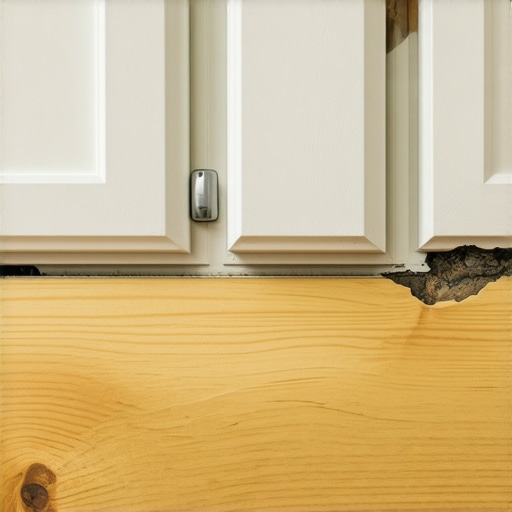
Why Your Bathroom Cabinet Baseboard is Swelling and How to Prevent It
I have spent twenty-five years on my knees with a moisture meter and a level. My hands are permanently stained with oak dust and I can smell a failing subfloor from the hallway. Most homeowners think a floor is just a pretty surface. It is not. It is a structural engineering challenge that fights against physics every single day. I once walked into a home where a high-end vanity looked perfect from the top. Underneath, the baseboard was puffing up like a marshmallow. The homeowner told me the floor was waterproof. I had to explain that waterproof does not mean vapor-proof. The moisture was migrating up from the concrete slab and getting trapped behind the MDF trim. It was a fifteen-thousand-dollar lesson in subfloor physics. When your bathroom cabinet baseboard starts to swell, it is a sign that your installation is failing. This is not just an aesthetic issue. It is a warning that mold, rot, and structural decay are taking hold in the one room where water is the constant enemy. You need to understand the chemistry of wood fibers and the mechanics of capillary action to fix this for good.
The invisible tide behind your vanity
Bathroom cabinet baseboard swelling occurs because of moisture absorption into the core material of the trim or the cabinet base itself. This happens through direct liquid contact, high ambient humidity, or hydrostatic pressure from the subfloor. When water molecules penetrate the porous structure of Medium Density Fiberboard (MDF) or solid wood, the internal fibers expand. This expansion is often irreversible. The adhesives holding the fibers together fail under the internal pressure. This results in the characteristic bubbling, peeling, or flaking you see at the floor line. Most people ignore the small gaps between their tile and their baseboards. Those gaps are the primary entry points for water. Whether it is from a mop, a splashing shower, or a slow leak from the P-trap, gravity pulls water down to the lowest point. Once it hits the end-grain of the wood or the unfinished bottom of the MDF, it wicks upward through capillary action. This is the same process a tree uses to pull water from its roots to its leaves. Your baseboard is effectively drinking your bathwater.
Why MDF acts like a sponge
The vast majority of modern bathroom cabinets and baseboards are made from Medium Density Fiberboard. This is a manufactured wood product made by breaking down hardwood or softwood residuals into wood fibers. These fibers are combined with wax and a resin binder, then formed into panels by applying high temperature and pressure. While it is stable and easy to paint, its structural integrity is entirely dependent on the resin binder. When water enters the mix, the wood fibers swell. The urea-formaldehyde resins used in many MDF products cannot withstand the internal expansion of the cellulose. Once the fibers expand, they do not shrink back to their original size when they dry. This creates a permanent, puffy deformity. Solid wood is slightly more resilient but it has its own problems. Solid wood baseboards have a cellular structure that moves with humidity. In a bathroom, the moisture content of the wood can fluctuate from 6 percent to 12 percent in a single day. This constant movement eventually breaks the caulk seal at the floor. Once that seal is gone, the wood is vulnerable to the liquid water on the floor. You can find better options in chic baseboard designs that transform rooms in 2025 that utilize moisture-resistant materials.
“A floor is only as good as the subfloor beneath it; deflection is the enemy of every joint.” – Master Flooring Axiom
The failure of the perimeter seal
The 1/8 inch that ruins everything is the gap between your floor and your cabinet. This gap is necessary for expansion. However, if it is not properly sealed, it becomes a reservoir for water. In a bathroom, you have two primary types of moisture. You have liquid water from splashes and cleaning. You also have water vapor from showers. When you take a hot shower, the air in the room becomes saturated. This vapor seeks out cool surfaces to condense on. The area behind the baseboard, tucked away in the shadows of the toe kick, is often cooler than the rest of the room. Condensation forms on the back of the trim. Since the back of the baseboard is rarely painted or sealed, it absorbs this moisture directly. This leads to back-side swelling that you might not notice until the front of the board starts to warp. I always tell my clients that the best looking floor is the one that was installed with a tube of high-quality silicone in hand. You must seal the bottom edge of the baseboard to the floor. But you also have to seal the end-cuts of the baseboard before they are installed. Most installers skip this step because it takes time. They cut the board to length and nail it up. That raw, cut end is a wide-open mouth waiting for water.
The myth of the waterproof floor
Homeowners always ask why their waterproof vinyl is buckling or why the baseboards next to it are failing. Usually, it is because they locked it under a heavy kitchen island or a bathroom vanity, killing the floor’s ability to breathe. Vinyl planks might be waterproof, but the space beneath them is not. If you have a concrete subfloor, that concrete is constantly releasing moisture. This is called Moisture Vapor Emission Rate (MVER). If you install a waterproof floor over a damp slab without a proper vapor barrier, that moisture gets trapped. It travels to the edges of the room. It then gets absorbed by the baseboards and the cabinet bases. This is why you see swelling even when you haven’t spilled a drop of water on the floor. The moisture is coming from underneath. You have to check the calcium chloride levels or use an in-situ RH probe before you ever lay a plank. If the slab is pushing out more than 3 pounds of moisture per 1000 square feet, you are going to have a bad time. You can learn more about maintaining your surfaces in tile cleaning tips for a sparkling bathroom in 2025 to ensure your maintenance routine isn’t contributing to the problem.
Grout is not a waterproof barrier
Many people assume that a tiled bathroom is naturally waterproof. This is a dangerous misconception. Grout is a porous material. Unless it is a high-performance epoxy grout, it will absorb water. If your grout lines are not properly sealed, water will migrate through the grout and settle into the thin-set. From there, it moves to the wall plates and the baseboards. This is why grout restoration is so vital. If your grout is cracked or crumbling, it is an open invitation for moisture to destroy your cabinets. Using grout restoration secrets for long-lasting results can help keep the water on the surface where it can evaporate or be wiped away. In showers, the problem is even more acute. If the waterproofing membrane behind the tile was not integrated with the floor pan, water will wick out into the dry area of the bathroom through the subfloor. This often manifests as swelling in the baseboards right outside the shower door. It is a structural failure disguised as a minor trim issue.
Comparing Baseboard Materials for Bathrooms
| Material | Moisture Resistance | Expansion Potential | Best Use Case |
|---|---|---|---|
| MDF | Low | High | Dry half-baths only |
| Primed Pine | Medium | Moderate | Well-ventilated bathrooms |
| PVC (Solid) | High | Low | Full baths and wet rooms |
| Porcelain Tile | Extreme | Zero | High-traffic wet areas |
The chemistry of the toe kick area
The toe kick is the recessed area at the bottom of a cabinet. It is a notorious trap for dirt, dust, and moisture. Because it is out of sight, it is often out of mind. When you mop the floor, the mop head hits the toe kick. The water pools at the joint between the floor and the cabinet. If the cabinet base is made of particleboard or MDF, the swelling starts almost immediately. Once the bottom edge of the cabinet base swells, it creates a ledge. This ledge catches even more water the next time you clean. It is a cycle of destruction. To prevent this, I recommend using a sacrificial baseboard made of PVC or a matching tile base. If you must use wood or MDF, you must seal the bottom edge with a high-quality oil-based primer or even a thin layer of clear silicone before it ever touches the floor. The goal is to break the capillary path. You can also look into baseboards makeover ideas to elevate your space for more durable material suggestions.
How to fix the swelling once it starts
Once a baseboard has swollen, you cannot sand it back down to a smooth finish. The internal structure of the wood fibers has been compromised. The only real fix is replacement. But replacement is useless if you don’t address the moisture source. First, you must determine if the water is coming from the top or the bottom. Use a moisture meter to check the subfloor. If the subfloor is dry, the problem is likely your cleaning habits or a lack of proper sealing. If the subfloor is wet, you have a leak or a vapor problem. When you replace the trim, choose a material that fits the environment. In a high-moisture bathroom, solid PVC trim is a lifesaver. It can be painted to look exactly like wood, but it will never swell, rot, or support mold growth. If you are dealing with tile, make sure you know how to refresh grout without replacing it to keep your seals tight.
Bathroom Moisture Audit Checklist
- Check the wax ring on the toilet for slow leaks that travel under the floor.
- Verify that the shower door sweep is effectively keeping water inside the pan.
- Inspect the silicone caulk line where the tub or shower meets the floor.
- Test the bathroom exhaust fan with a piece of tissue to ensure it has actual suction.
- Measure the relative humidity in the bathroom after a shower, it should drop below 50 percent within 20 minutes.
- Look for cracks in the grout lines near the cabinet bases.
The ghost in the expansion gap
Every floor needs an expansion gap. If you jam your tile or vinyl tight against the wall, the floor will buckle when the temperature changes. The baseboard covers this gap. However, that gap is also a direct tunnel to your wall studs and your cabinet bases. If water gets into that gap, it has nowhere to go but up into the wood. When installing baseboards in a bathroom, I always leave a tiny 1/32 inch gap between the board and the floor. I then fill that gap with a high-quality, color-matched 100 percent silicone sealant. This allows for movement while creating a waterproof dam. Never use acrylic caulk at the floor line in a bathroom. Acrylic caulk is water-based. Over time, it will re-emulsify and fail if it is frequently exposed to standing water. Silicone is the only way to go. It is harder to work with and it doesn’t take paint, so you have to be precise, but it is the only material that will hold the line against the invisible tide of bathroom moisture. For those looking for modern aesthetics that also offer protection, consider showers that wow modern designs for 2025 which focus on better water containment.
“Water doesn’t just sit; it seeks the path of least resistance, which is usually your most expensive wood trim.” – Master Flooring Axiom
Why your subfloor is lying to you
A subfloor can feel bone-dry to the touch while still being saturated. This is especially true with plywood or OSB. The top layer might dry out, but the core remains wet. This trapped moisture will eventually rot the bottom of your cabinets and cause the baseboards to swell. If you are seeing widespread swelling across multiple cabinets, you likely have a subfloor issue. This could be caused by a crawlspace with high humidity or a slab without a vapor barrier. In these cases, you might need to install a dehumidifier in the crawlspace or apply a topical moisture vapor barrier to the slab before reinstalling your floor. If you are planning a full renovation, look into eco-friendly tile solutions for sustainable homes in 2025 for materials that handle these stresses better. If you need professional advice on a complex moisture issue, you can always contact us for a consultation.
The final word on moisture management
Stopping baseboard swelling is about more than just buying better trim. It is about understanding the environment of the bathroom. It is about the physics of vapor and the chemistry of adhesives. You must ensure your exhaust fan is properly sized for the room. You must seal every joint. You must choose materials that can survive a flood, even if you never plan on having one. A master installer knows that the details you can’t see, like the sealant on the end-grain of a board or the moisture barrier under the tile, are the most important parts of the job. Don’t let a small gap ruin your high-end cabinetry. Take the time to seal it right the first time. If you want more design inspiration, check out showers with a style trendy ideas for small bathrooms to see how to integrate functional waterproofing with modern design.