
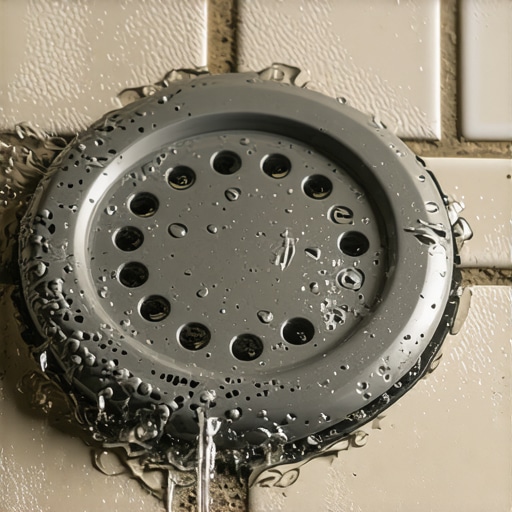
I once spent three days grinding concrete on a job just so the floor wouldn’t click like a castanet. Most guys skip the leveling compound because they think the underlayment will hide the dip. It won’t. I bring that same blunt honesty to bathrooms. Last Tuesday, a homeowner called me because their expensive matte black drain cover was turning a fuzzy, oily shade of midnight. They thought a quick wipe with bleach would fix it. I had to tell them the truth. That black gunk is not just a stain. It is a biological and chemical warning sign that your shower is failing to manage moisture at a structural level. If you see your drain cover changing color, you are likely looking at a combination of biofilm, oxidation, and chemical damage that starts long before you ever turn on the water. We are going to look at the physics of the drain assembly to understand why this happens and how to stop it for good.
The biological reality of biofilm in showers
A shower drain cover turns black primarily due to biofilm accumulation, galvanic corrosion, or chemical tarnishing from harsh acidic cleaners. These microbial colonies feed on soap scum and skin cells in the moist environment of the drain assembly, creating a dark, slimy residue that bonds to the metal surface. This is not just dirt. It is a living colony of bacteria and fungi that thrives in the humid microclimate of your plumbing. When we talk about showers, we are talking about a constant battle against Serratia marcescens and other organisms that love the fatty acids in your shampoo. These bacteria build a protective matrix that is incredibly difficult to penetrate once it anchors to the metal grate. If your tile was installed without the proper pitch, water sits in the throat of the drain, creating a stagnant pool that acts as a breeding ground. This is why tile cleaning tips for a sparkling bathroom in 2025 emphasize the removal of organic matter before it hardens into a bio-crust. You can scrub the top, but if the underside of that plate is ignored, the black will return within days.
“A floor is only as good as the subfloor beneath it; deflection is the enemy of every joint.” – Master Flooring Axiom
Why metal loses its fight with water
Metal drain covers turn black when the protective PVD coating or plating fails, exposing the underlying alloy to oxidation and galvanic corrosion. This chemical reaction occurs when minerals in hard water react with the metal, or when two dissimilar metals are in contact within a moist environment. Most modern drain covers are made of brass or stainless steel with a decorative finish. If you use a cheap cleaner that contains hydrochloric acid or high concentrations of bleach, you are literally eating the finish off the metal. Once that finish is compromised, the base metal begins to oxidize. This is especially true for oil-rubbed bronze or matte black finishes that are often just a thin layer of paint or powder coating rather than a durable Physical Vapor Deposition. I have seen thousand-dollar showers that wow modern designs for 2025 ruined because someone used a scouring pad on a delicate finish. The black you see is the metal basically turning back into its raw, oxidized state. If you are in a high-humidity area like Houston or Miami, this process accelerates because the metal never truly dries out between uses.
The 1/8 inch that ruins everything
The pitch of your shower floor determines how quickly water moves away from the drain cover, preventing the stagnant conditions that cause black mold. A standard shower pan should have a slope of at least one-quarter inch per foot toward the drain. If your installer was lazy and the slope is shallow, water hangs around the drain flange. This moisture is pulled into the grout lines by capillary action. If you used porous grout, you are basically living on a wet sponge. This is why grout restoration secrets for long lasting results always focus on sealing. When water sits, it reacts with the metals in the drain and feeds the biofilm. I always tell people to check their weep holes. In a traditional three-piece drain, there are tiny holes designed to let moisture from the mud bed escape into the pipe. If the installer choked those holes with thin-set or sand, the water stays trapped under the tile. It rots, it turns black, and it eventually migrates up to your drain cover. It is a structural failure disguised as a cleaning problem.
Drain Material Comparison
| Material | Corrosion Resistance | Durability | Common Issue |
|---|---|---|---|
| Chrome Plated Brass | High | Moderate | Pitting and Flaking |
| Stainless Steel | Very High | High | Surface Scratching |
| Oil Rubbed Bronze | Low | Moderate | Patina and Fading |
| PVD Matte Black | Very High | Very High | High Initial Cost |
The ghost in the expansion gap
Expansion gaps and the interface between the drain and the tile often harbor the highest concentrations of black mold and bacteria. Because the drain assembly and the tile are different materials, they expand and contract at different rates. If the installer filled the gap around the drain with hard grout instead of 100 percent silicone caulk, that grout will eventually crack. Those microscopic cracks become a sanctuary for black sludge. You cannot reach it with a brush. It sits there, feeding on the moisture trapped in the subfloor, and slowly creeps out across the metal. I have spent years telling homeowners that how to refresh grout without replacing it involves digging out that old, nasty material and doing it right. You need a flexible barrier that prevents water from getting behind the metal flange. If your drain is turning black at the edges, your seal is gone. Period. No amount of spray will fix a breached seal.
The maintenance checklist for a clean drain
Preventing the blackening of your shower hardware requires a disciplined approach to moisture management and chemical usage. Follow this checklist to keep your installation in professional condition:
- Remove the drain cover once a month to scrub the underside with a soft nylon brush.
- Avoid acidic cleaners or bleach which can strip the protective PVD coating from the metal.
- Dry the drain area with a microfiber towel after the last shower of the day to eliminate standing water.
- Check the silicone seal around the drain for cracks or peeling and replace it immediately if compromised.
- Use an enzyme-based cleaner to break down the organic biofilm without damaging the metal alloy.
The chemistry of cleaning mistakes
Using the wrong chemicals on your drain cover can cause a permanent blackening effect known as chemical charring. Many people see a little bit of black mold and immediately reach for the strongest bottle of bleach they can find. This is a mistake. Bleach is an oxidizer. On certain metals, it will actually accelerate the darkening process by reacting with the copper components in the brass base. Similarly, vinegar is an acid that can etch the surface of stone tile and eat away at the finish of a drain cover. If you are looking for eco-friendly tile solutions for sustainable homes in 2025, stick to pH-neutral cleaners. These will lift the biofilm without causing a chemical reaction with the metal. I have seen people try to use steel wool to scrub off the black gunk, only to leave behind tiny fragments of steel that then rust, making the problem ten times worse. You have to be smarter than the gunk. Use soft tools and neutral chemistry. If the black is inside the metal, you are looking at a replacement, not a cleaning. When you do replace it, make sure you look at showers with a style trendy ideas for small bathrooms to find a high-quality stainless steel or PVD finished grate that can actually handle the moisture load of a modern home.
“Water is the universal solvent, and it will eventually find a way to destroy any surface that is not properly pitched or sealed.” – Master Flooring Axiom