
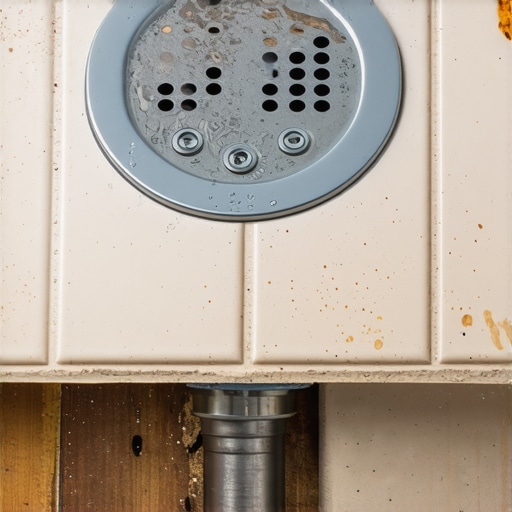
The sulfurous truth about shower odors
The rotten egg smell in your shower is caused by hydrogen sulfide gas which originates from sulfur-reducing bacteria living in the biofilm of your drain assembly or a failed P-trap seal. This chemical byproduct indicates a stagnant water environment where organic matter like skin cells and soap scum decomposes without sufficient oxygen or water flow. I spent three days grinding concrete on a job last month just so the floor wouldn’t click like a castanet, and that same level of precision is needed to diagnose a drain. A shower is a complex engineering site. When that metallic, sulfuric stench hits your nose, it is not just a cleaning issue. It is a structural warning. I once walked into a luxury master bath where the $20,000 marble floor was literally lifting. The owner complained about the egg smell for months. It turned out the weep holes in the drain flange were packed with thin-set. The water had nowhere to go, so it sat in the mud bed, turned into a swamp of anaerobic bacteria, and slowly dissolved the alkaline bonds of the tile adhesive. The smell was the only thing trying to save that house. It was the biological alarm bell of a failing subfloor.
The mechanics of the plumbing trap failure
A P-trap functions by maintaining a water seal that prevents sewer gases including methane and hydrogen sulfide from entering the bathroom envelope. If the water level in the trap drops due to evaporation, siphonage, or a venting issue, the gas barrier is breached, allowing the rotten egg odor to permeate the shower stall. You have to understand the physics of the U-shaped pipe. It is designed to hold a specific volume of water. In arid climates or bathrooms with radiant floor heating, that water evaporates faster than you think. If you do not use the shower for two weeks, you are inviting the city sewer system into your living space. This is not a plumbing glitch. It is a mechanical failure of the hydraulic seal. Sometimes the problem is more sinister. A clogged vent stack on your roof creates a vacuum every time you flush a toilet elsewhere in the house. This vacuum sucks the water out of your shower trap. You are left with a dry pipe and a room that smells like a chemical plant. It is a common oversight in new construction where plumbers rush the rough-in phase. If your drain pipe slope is too aggressive, the momentum of the water can actually carry the seal volume right past the trap. It is a physics problem disguised as a cleaning problem.
“A floor is only as good as the subfloor beneath it; deflection is the enemy of every joint.” – Master Flooring Axiom
The biological film growing in your drain
Biofilm is a structured community of microorganisms that adheres to the interior walls of the PVC piping and drain strainer, producing extracellular polymeric substances that trap sulfur-producing bacteria. This microbial colony feeds on body oils and shampoo residues, creating a thick sludge that emits hydrogen sulfide gas. This is not just dirt. It is a living organism. When you look down into your drain, you might see a black or orange slime. That is Serratia marcescens or similar pathogenic colonies. They thrive in the warm, moist environment of the shower drain. If your tile installation has poor pitch to the drain, water sits on the surface of the grout, further fueling this biological growth. You need to keep your showers clean and dry. Many people think a splash of bleach fixes it. It does not. Bleach often just slides over the waxy surface of the biofilm without penetrating the cellular matrix. You need enzymatic cleaners that actually digest the protein chains in the slime. For those looking for long-term maintenance, checking your tile cleaning tips for a sparkling bathroom in 2025 is a good start. tile cleaning tips for a sparkling bathroom in 2025 will help you understand the chemical balance required to keep these colonies at bay without damaging your sealants.
The hidden culprit in the water heater
The anode rod in your water heater is composed of magnesium or aluminum and reacts with sulfate-reducing bacteria in the water supply to produce hydrogen sulfide gas. If the egg smell is present in the hot water but not the cold water, the chemical reaction is occurring inside the tank rather than the drain. This is a metallurgical issue. The anode rod is there to sacrifice itself to prevent corrosion of the steel tank. When you have softened water, the conductivity of the water increases, which accelerates the deterioration of the magnesium rod. This creates an excess of electrons that sulfate-reducing bacteria use to convert sulfates into hydrogen sulfide. You might think your showers are the problem, but it is actually the mechanical room. Replacing a magnesium rod with an aluminum/zinc alloy rod can often neutralize the chemical reaction. If you are designing showers that wow modern designs for 2025, you have to consider the mechanical systems behind the wall. showers that wow modern designs for 2025 require pristine water quality to maintain the aesthetic integrity of glass and high-end fixtures. No one wants a luxury shower that smells like a swamp.
Structural impact on grout and baseboards
Moisture migration from a clogged or smelling drain can lead to capillary action that pulls contaminated water into the grout lines and behind baseboards, causing delamination and mold growth. When a drain is partially occluded, the hydrostatic pressure increases. Water finds the path of least resistance. Often, that path is through cracked grout. I have seen baseboards that looked fine on the outside but were rotted through because sulfuric water was wicking up the drywall behind them. This is why chic baseboard designs that transform rooms in 2025 are not just about style. They are about moisture management. chic baseboard designs that transform rooms in 2025 should be installed with a silicone bead at the floor-to-wall transition to prevent this wicking. If your grout is already compromised, you need to look into grout restoration secrets for long-lasting results. grout restoration secrets for long-lasting results are essential for keeping the structural envelope of the shower watertight. A porous grout is a highway for bacteria. You can try how to refresh grout without replacing it if the structural damage is minimal. how to refresh grout without replacing it offers a stop-gap measure, but if the subfloor is saturated, you are just painting over a disaster.
Physical properties of common shower materials
| Material Type | Porosity Level | Sulfur Resistance | Maintenance Needs |
|---|---|---|---|
| Glazed Ceramic | < 0.5% | High | Low |
| Natural Marble | High | Low | Very High |
| Epoxy Grout | 0% | Extreme | Minimal |
| Cementitious Grout | High | Poor | High |
The 1/8 inch that ruins everything
The slope of a shower pan must be exactly 1/4 inch per foot to ensure proper drainage and prevent the pooling of water that leads to bacterial odors. If the installer missed this tolerance by even an 1/8 of an inch, you get birdbaths. These are depressions in the tile surface where water sits. In these shallow pools, the shampoo and skin cells concentrate. This is the nursery for the rotten egg smell. I have seen contractors try to level a floor with extra thin-set. It never works. Thin-set shrinks as it cures. If it is too thick, it cracks. Those micro-cracks become veins for sulfuric water to travel straight to your plywood subfloor. Once that wood gets wet, the odor changes from eggs to wet dog and rot. It is a cascade of failure. You cannot aesthetic your way out of bad engineering. Even in showers with a style trendy ideas for small bathrooms, the geometry of the drain is the primary design constraint. showers with a style trendy ideas for small bathrooms must prioritize drainage efficiency over large-format tile because the fewer the grout lines, the harder it is to achieve a perfect slope.
Steps to eliminate the odor
- Flush the P-trap with a gallon of boiling water to dissolve soap fat.
- Remove the drain cover and scrub the biofilm with a stiff nylon brush.
- Apply an enzymatic cleaner specifically designed for urinals and drains.
- Check the water heater for anode rod degradation.
- Reseal grout lines using a penetrating solvent-based sealer.
Environmental factors and regional climate
In high-humidity regions, the moisture in the bathroom does not evaporate, leading to prolonged bacterial activity in the drain. If you live in a swampy climate, your shower is always under attack. The ambient humidity keeps the biofilm hydrated even when you are not using the shower. This is why eco-friendly tile solutions for sustainable homes in 2025 often include antimicrobial surfaces. eco-friendly tile solutions for sustainable homes in 2025 are becoming the standard for moisture-prone areas. You need materials that don’t just look green, but act green by inhibiting the growth of sulfur-producing colonies. If you are in a dry heat area like Phoenix, your baseboards will shrink, opening gaps that allow bathroom steam to enter the wall cavity. This moisture condenses on the cool studs, creating a hidden mold farm that contributes to the overall funk of the bathroom. It is a total system failure. You have to think like an architect. You have to manage the air as much as the water. Every 1/8 inch gap is a failure point. Every missing bead of caulk is an invitation for rot.
“The National Wood Flooring Association standards for subfloor flatness are not suggestions; they are the laws of physics applied to architecture.” – Structural Flooring Guidelines
The final word on sulfurous drains
You cannot ignore the smell of eggs. It is the chemical signature of decomposition and mechanical breakdown. Whether it is a dry trap, a rotting anode rod, or a biofilm colony in a poorly pitched shower pan, the solution is technical, not cosmetic. Stop buying scented candles and start looking at your plumbing schematics. If you are planning a makeover, check out baseboards makeover ideas to elevate your space to ensure your new finishes are protected from moisture. baseboards makeover ideas to elevate your space should always include waterproof backing in wet areas. If you have questions about your specific installation, you can contact us for professional guidance. contact us. We also have a privacy policy to protect your project data. privacy policy. Fix the mechanics and the smell will vanish. Ignore them and your subfloor will disintegrate.