
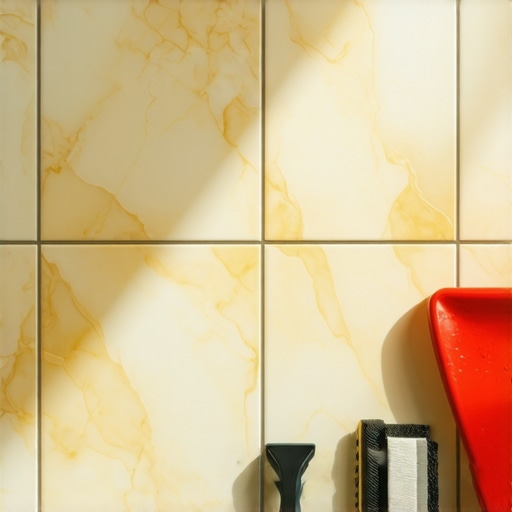
I spent three days grinding concrete on a job last month just so the floor wouldn’t click like a castanet, and that is exactly the kind of attention to detail that keeps a marble floor from turning into a yellowed mess. I once walked into a luxury penthouse where the owner had spent forty thousand dollars on white Carrara marble. Six months later, the whole bathroom looked like it had been soaked in cheap tea. The installer blamed the stone. The stone supplier blamed the cleaning crew. I walked in with a moisture meter and a pH strip and found the real culprit. It was not the stone. It was the moisture trapped in the mud bed that was pulling iron out of the marble and rusting it from the inside out. Marble is not just a pretty surface. It is a calcium carbonate sponge that reacts to every chemical and drop of water it touches. When people complain about yellowing, they are usually seeing the results of bad chemistry or lazy installation.
The iron ghost in the stone
Marble tiles turn yellow primarily because of iron oxidation, trapped moisture, or improper sealer application. When iron minerals within the stone meet water and oxygen, they rust. This chemical reaction occurs deep within the porous structure, often exacerbated by a failing moisture barrier or alkaline cleaning agents. If the yellowing is appearing in splotches or across the entire tile, you are likely dealing with an internal mineral reaction rather than surface dirt. This is the structural reality of metamorphic rock. It contains impurities. In white marble, those impurities include iron. If you keep that stone wet, that iron will oxidize. It is as simple and as devastating as a rusted car door. You cannot just wipe rust out of the crystal structure of a rock. You have to understand the physics of how it got there. Most homeowners treat marble like ceramic, but ceramic is a finished product. Marble is a living, breathing geological specimen that requires a stable environment.
| Cause of Yellowing | Diagnostic Sign | Primary Chemical Actor |
|---|---|---|
| Iron Oxidation | Deep amber or orange splotches | Ferric Oxide |
| Sealer Buildup | Sticky yellow film on surface | Urethane or Acrylic polymers |
| Dirty Grout | Discolored edges near joints | Bio-film and tannins |
| Alkaline Burn | Uniform yellowing after cleaning | High pH Sodium Hydroxide |
Why your sealer is trapping water
Sealants are often sold as a magic shield, but the wrong sealer is a death sentence for natural stone. If you use a non-breathable topical sealer on a marble floor, you are effectively wrapping your stone in plastic. Moisture from the subfloor or the crawlspace will rise through the slab. This is called moisture vapor transmission. When that vapor hits the underside of a topical sealer, it can no longer evaporate. It sits there. It dwells in the stone. This constant dampness triggers the oxidation of iron. You must use a high quality impregnating sealer that is vapor permeable. This allows the stone to breathe while still repelling liquid at the surface. I have seen countless showers where the marble turned yellow because the installer did not let the thin-set cure for a full week before sealing. They trapped the construction water inside the stone. This is why I always tell people to check showers that wow modern designs for 2025 to see how proper drainage and stone choice go hand in hand. If the water cannot get out, the stone will turn.
“A floor is only as good as the subfloor beneath it; deflection is the enemy of every joint.” – Master Flooring Axiom
The moisture meter never lies
Before you even think about reversing the yellow, you have to find out if the floor is still wet. I never go to a site without my pinless moisture meter. If I see a reading above 4 percent on a marble tile, I know I have an active moisture problem. This is usually due to a lack of a proper vapor barrier under the cement board or a leaking pipe behind the wall. In bathrooms, the grout is often the weak point. If you do not maintain your grout, water seeps behind the tile and sits in the mortar bed. This creates a micro-climate of humidity that fuels the yellowing process. You can learn more about maintaining these areas at grout restoration secrets for long-lasting results. If you do not stop the water, no amount of cleaning will fix the color. The yellow will just keep coming back like a bad habit.
The chemistry of the reversal process
To reverse yellowing caused by oxidation, you need a poultice. This is not a spray-on-wipe-off job. You are performing a chemical extraction. You need to mix a powdered absorbent, like diatomaceous earth or white flour, with a chemical agent, usually 12 percent hydrogen peroxide. You want the consistency of peanut butter. You spread this over the yellowed area, cover it with plastic wrap, and tape the edges. You poke a few small holes in the plastic to allow for slow evaporation. As the paste dries, it pulls the moisture and the oxidized iron out of the stone and into the poultice. This can take 24 to 48 hours. If the yellowing was caused by wax or sealer buildup, you need a heavy-duty alkaline stripper instead of peroxide. It is a tedious process. It requires patience and a steady hand. If you rush it, you risk etching the stone, which is a whole different nightmare to fix. For those looking to keep things clean after a restoration, check out tile cleaning tips for a sparkling bathroom in 2025.
- Test a small inconspicuous area with the poultice first to ensure no etching occurs.
- Clean the surface with distilled water to remove any surface minerals.
- Apply the poultice at least a quarter inch thick for maximum drawing power.
- Seal the edges of the plastic with painter’s tape to prevent the mixture from drying too fast.
- Once dry, remove the paste with a plastic scraper to avoid scratching the marble.
The 1/8 inch that ruins everything
When we talk about floor architecture, we talk about tolerances. A marble tile is rigid. A wood subfloor is flexible. If your subfloor has too much deflection, the marble will crack, but even before it cracks, the movement creates tiny fissures in the grout. These fissures are the highways for water. If your floor is out of level by more than an 1/8 inch over ten feet, you are asking for trouble. I have seen installers try to make up for a dip in the floor by piling up the thin-set. This is a amateur move. Thick thin-set shrinks as it cures. It creates voids. Voids hold water. Water turns marble yellow. You have to prep the slab. You have to use self-leveling underlayment. You have to ensure the baseboards are not pinching the floor, which can cause the tiles to tent. If you want to see how to integrate these structural needs with aesthetic choices, look at baseboards makeover ideas to elevate your space. It is all connected. The baseboard, the grout, the stone, and the slab are one single system.
“Natural stone must be allowed to breathe; vapor entrapment is the primary catalyst for mineral discoloration.” – TCNA Handbook Wisdom
Final inspection of the yellowing problem
Yellowing is a symptom. It is not the disease. The disease is usually a lack of moisture control or the use of improper chemicals. If you are cleaning your marble with floor soaps that contain oils or high-alkaline salts, you are slowly poisoning the stone. Those oils penetrate the pores and turn yellow as they age and oxidize. Switch to a pH-neutral cleaner specifically designed for stone. If you have already reversed the yellowing, you must reseal the stone with a high-quality penetrator. Do not buy the cheap stuff from the big-box store. Go to a stone supplier. Get the professional grade. This is an investment in your home. If you want to explore other options for your next project that might be easier to manage, consider eco-friendly tile solutions for sustainable homes in 2025. In the end, a floor is only as good as the man who put it down and the person who takes care of it. Marble is a commitment. It is a piece of the earth in your house. Treat it with the respect its chemistry demands and it will stay white for a lifetime. If you ignore the subfloor and the sealer, it will remind you of your mistake every time you look down. If you need professional help, you can always contact us for guidance on your specific flooring challenges.