
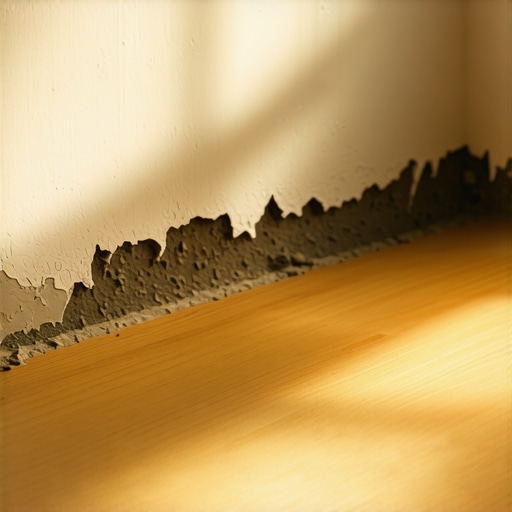
The failure of temporary adhesives in high moisture environments
Peel and stick baseboards fail in damp rooms because the pressure sensitive adhesive cannot maintain a structural bond when exposed to constant vapor pressure and hydrostatic changes. Humidity penetrates the interface between the wall and the vinyl strip which causes the chemical bond to emulsify and eventually release completely. I remember a job in a coastal condo where a homeowner tried to save a few bucks by slapping these adhesive strips over existing bathroom tile. Two weeks later the humidity from the shower had turned that bathroom into a sticky mess with the baseboards curling like old bacon. It was a disaster of poor planning and even worse physics. The adhesive used on these products is often a low-grade acrylic or rubber-based compound designed for ideal laboratory conditions. Real bathrooms are not laboratories. They are high-stress environments where steam and water droplets find every microscopic gap. If you think a thin strip of tape is going to hold back the relentless expansion of a damp wall you are mistaken. Flooring is a structural engineering challenge. When you treat it like a craft project you get craft project results. Most people ignore the subfloor and the wall condition. They think the finish product is what matters. In reality the prep is 90 percent of the work. If the wall is even slightly damp or if there is a hint of soap scum on the tile surface the adhesive is doomed before you even peel the backing off. This is why I always tell clients to look at the chemistry of the bond before they look at the price tag at the big box store. [image placeholder]
Why physics hates your peel and stick dream
Pressure sensitive adhesives rely on molecular contact with a clean dry surface to create a bond through van der Waals forces. In a damp room the presence of water molecules occupies the surface energy sites required for the adhesive to grab onto the substrate effectively. You have to understand the molecular reality of a bathroom. Every time you run a hot shower the air pressure in the room shifts. Steam is not just wet air. It is a gas that is looking for a place to condense. It will find the top edge of your peel and stick baseboard. Once a single molecule of water gets behind that strip it starts a chain reaction called capillary action. The water pulls itself deeper into the bond. It separates the glue from the wall bit by bit. You might not see it for a month but the failure is happening every single morning. I have seen guys try to use hair dryers to make the glue stick better. It does not work. You are just heating up a failure. In the trade we call this delamination. It is the same reason why cheap laminate floors swell up at the edges. If the material cannot handle the environment it will eventually surrender to it. People want the chic baseboard designs that transform rooms in 2025 but they do not want to do the heavy lifting of installing a rot-proof PVC or a tiled base. They want the easy way out. The easy way out usually leads to my phone ringing six months later when the mold starts growing in the glue. Mold loves the organic compounds found in many cheap adhesives. You are basically building a buffet for spores behind your baseboards. It is a recipe for a respiratory nightmare disguised as a home improvement project.
“A floor is only as good as the subfloor beneath it; deflection is the enemy of every joint.” – Master Flooring Axiom
The chemical bond of pressure sensitive adhesives
The chemical composition of peel and stick adhesives involves long chain polymers that remain in a semi-liquid state to provide tackiness. Moisture acts as a plasticizer that softens these polymers until they lose their shear strength and allow the baseboard to sag under its own weight. If you look at these adhesives under a microscope they look like a tangled mess of spaghetti. When the adhesive is dry and the surface is clean those strands are tight. They hold on. But add a little bit of humidity and those strands start to slide past each other. The bond becomes fluid. This is especially true if the wall has been painted with a high-gloss paint. Glossy paint has low surface energy. It is designed to repel things. That includes your baseboard glue. You are trying to stick something to a surface that was engineered to be unstickable. It is a fundamental conflict of materials. Most installers who care about their reputation will never touch these products. We use moisture-cured polyurethanes or specialized thin-sets because we know how water behaves. Water is the universal solvent. It will eventually win. You can spend your time fighting it or you can work with it. Working with it means using materials that are chemically inert and waterproof by nature. This is why baseboards makeover ideas to elevate your space should always prioritize moisture resistance over ease of installation. If you are working in a bathroom you need to think like a boat builder. Everything must be sealed. Everything must be durable. Peel and stick is the opposite of durable. It is a temporary solution for a permanent environment.
Surface energy and the tile interface
Tile surfaces are naturally non-porous and often coated with glazes that make adhesive bonding extremely difficult without mechanical abrasion or specialized primers. Applying peel and stick materials over tile results in a bond that is purely superficial and prone to sliding. When you are dealing with showers with a style you are usually dealing with high-quality ceramics or porcelain. These materials are fired at high temperatures to be dense. They do not want to bond with stickers. If your bathroom has grout restoration secrets for long-lasting results you know that the grout lines are the weak point for water. Now imagine putting an adhesive strip over those grout lines. The grout is porous. It holds moisture. That moisture will migrate out of the grout and right into the back of your peel and stick baseboard. It is like a slow-motion leak that never stops. I have pulled off adhesive baseboards where the grout underneath was black with mildew because the vinyl trapped the moisture against the wall. It could not breathe. It could not dry. It just sat there and rotted. If you want a baseboard in a wet area you should be looking at using the same tile you have on the floor. Cut it into four inch strips. Use a modified thin-set. It will be there in a hundred years. That is how a professional handles a damp room. We do not use stickers. We use masonry. We use chemistry that we trust. We use products that meet TCNA standards. Anything else is just pretending to renovate.
| Material Type | Adhesion Method | Moisture Rating | Lifespan in Bathroom |
|---|---|---|---|
| Peel and Stick Vinyl | Acrylic PSA | Poor | 1 to 2 Years |
| PVC Baseboard | Modified Polymer | Excellent | 20+ Years |
| Solid Pine | Nails and Caulk | Moderate | 5 to 10 Years |
| Tile Base | Thin-set and Grout | Superior | 50+ Years |
The 1/8 inch gap that lets the rot in
Expansion gaps are necessary for flooring but in a damp room they become entry points for liquid water if they are not properly sealed with high-grade silicone. Peel and stick products often lack the structural rigidity to maintain a clean seal at these critical junctions. When I install a floor I am always thinking about the perimeter. The perimeter is where the battle is won or lost. If you have an LVP floor it needs to move. But if you are in a bathroom that movement can open up a gap. If your baseboard is just a flimsy piece of peel and stick vinyl it will not provide the backer needed for a good bead of caulk. You need something solid to caulk against. Without a proper seal water from a splashed tub or a leaking toilet will go under the baseboard. It will sit under your floor. It will ruin your subfloor. I have seen plywood subfloors that were so soft you could poke a screwdriver through them because the baseboards were not sealed. Professionalism is about the details that no one sees until it is too late. You need to understand tile cleaning tips for a sparkling bathroom in 2025 to keep your surfaces clean but you also need to ensure that the cleaning water is not seeping into your walls. A real baseboard acts as a dam. It keeps the water on the floor where you can wipe it up. A sticker is just a decoration. It does nothing to protect the structure of your home. It is a liability. You should treat it as such. If you want a real solution you need to invest in real materials.
- Inspect the wall for any signs of existing moisture or peeling paint before installation.
- Clean the surface with a TSP solution to remove all oils and soap film.
- Scuff sand the area if you are applying over a glossy surface.
- Use a high-quality silicone caulk along the top and bottom edges.
- Ensure the room is kept at a stable temperature during the 24 hour curing phase.
The reality of long term maintenance
Maintenance of peel and stick products in damp areas requires constant monitoring for edge lifting and adhesive failure. Once the bond is compromised the material cannot be effectively reattached and must be replaced entirely to avoid moisture entrapment. You cannot just glue it back down. Once the dust and moisture hit that adhesive it is dead. I have seen people try to use super glue or liquid nails to fix a peeling corner. It always looks terrible. It creates a lump. It makes the problem worse. If you are looking for eco-friendly tile solutions for sustainable homes in 2025 you will find that durability is the most eco-friendly choice you can make. Replacing cheap plastic baseboards every two years is a waste of resources. It fills up landfills. A proper tile base is made from natural materials and lasts a lifetime. That is true sustainability. Do not get distracted by the latest DIY trend on social media. Those people are looking for views. I am looking for a floor that does not fail. I want to know that when I leave a job site my work will stand the test of time. That is the difference between an architect of floors and a handyman. One builds for the future. The other builds for the weekend. If you care about your home you will choose the path of most resistance because that is where the quality lives. It is hard work to do it right. It is messy. It involves thin-set and saws and dust. But the result is a bathroom that can handle anything. It can handle a flood. It can handle a steam shower. It can handle life. Use how to refresh grout without replacing it to keep your real tile looking new instead of trying to hide a bad wall with a sticker. This is the truth that big box stores do not want to tell you because stickers have a high profit margin. Real materials have a high value. Learn the difference. If you have questions about real installations you can always contact us for expert advice. We do things the right way. We do things once. That is the only way that matters in this trade. Stop looking for shortcuts. Start looking for standards. Your subfloor will thank you. Your wallet will thank you. And you will not have to smell the rot of a thousand failed stickers. Check our privacy policy for more information on how we handle your data when you reach out for help. Stick to the basics. Stick to the science. Leave the stickers for the kids. A real home deserves a real foundation. That is the bottom line. It is the only line that matters when the water starts to rise. Your floor is a system. Treat it like one. Invest in the best. Forget the rest. This is the way of the master flooring architect. This is the only way to win the war against moisture. It is a long war. It is a hard war. But with the right materials you can win it every single time. Just stay away from the peel and stick aisle. It is a trap. I have seen too many people fall into it. Do not be the next one. Use your head. Use your hands. Use real tools. Build something that lasts. Build something you are proud of. That is the true secret to a beautiful bathroom. It is not about the fashion. It is about the function. And the function of a baseboard is protection. Stickers do not protect. They just hide the damage until it is too late. Be smarter than the marketing. Be a master of your own domain. The truth is simple. Real work takes real effort. There are no shortcuts in a damp room. There is only the right way and the wrong way. Choose the right way. Your home is worth it. Stop settling for less. Start demanding the best. That is the end of the story. The rest is just sawdust and hard work. Get to it. “