
The stench of a failing system
I spent three days grinding concrete on a job last month just so the floor wouldn’t click like a castanet. I have spent twenty five years on my knees with a moisture meter and a level. I know when a floor is lying to you. Most guys skip the leveling compound. They think the underlayment will hide the dip. It won’t. This same negligence applies to your shower. I once walked into a luxury master suite where the homeowner was ready to rip out a twenty thousand dollar marble installation because of a phantom smell. The drain was perfectly clear. The trap was full of water. Yet the room smelled like a stagnant pond in the middle of a heatwave. The problem was not the plumbing. The problem was the physics of the subfloor and the chemistry of the mortar bed. A floor is a performance surface. When you treat it like a decoration you end up with structural rot that speaks to you through your nose. Most people assume a smell means a clog. It does not. A smell is a signal that the structural engineering of your wet area has failed at a molecular level.
The invisible biofilm inside your plumbing
Biofilm is a complex colony of bacteria and organic waste that adheres to the internal walls of your drain pipe and shower assembly. This gelatinous layer consists of millions of microorganisms that thrive on a steady diet of soap scum, body oils, and skin cells. Even if water flows freely, this sludge produces a persistent odor that no amount of boiling water can fully eradicate. This is not just a surface issue. It is a chemical bond. The bacteria produce extracellular polymeric substances that act as a glue. This glue anchors the colony to the PVC or cast iron walls. You can pour all the bleach you want down there but the core of the biofilm remains protected. It requires mechanical agitation or specific enzymatic cleaners to break the bond. I have seen drains that looked clean from the top but were coated in a quarter inch of black slime just three inches down. This slime is an ecosystem. It lives in the threads of the drain flange. It lives in the crevices of the grout. If you want to fix it you have to understand the anatomy of the drain itself. For more on maintaining these surfaces you can look at tile cleaning tips for a sparkling bathroom in 2025 which covers the maintenance of the visible portions of your shower.
The mechanics of the sewer gas seal
The P-trap is a U-shaped pipe designed to hold a specific volume of water that acts as a physical barrier against sewer gases. If this water seal evaporates or is siphoned away, methane and hydrogen sulfide can enter your home freely. This often happens in guest bathrooms that are rarely used. The water simply dries up. However, a more insidious cause is a clogged vent stack on your roof. If air cannot move through the plumbing vents, the vacuum created by a flushing toilet can suck the water out of your shower trap. You will hear a gurgle. That gurgle is the sound of your seal breaking. It is a mechanical failure of the DWV system. I have seen installers put in a beautiful floor but forget to check the pitch of the drain lines. If the pipe is too flat the water does not move with enough velocity to clear solids. This leads to standing water in the horizontal runs. That water rots. It creates a sulfur smell that drifts back up through the grate. You can find out more about modern shower configurations at showers that wow modern designs for 2025 to see how updated plumbing layouts prevent these issues.
“A floor is only as good as the subfloor beneath it; deflection is the enemy of every joint.” – Master Flooring Axiom
The weeping holes that nobody cleans
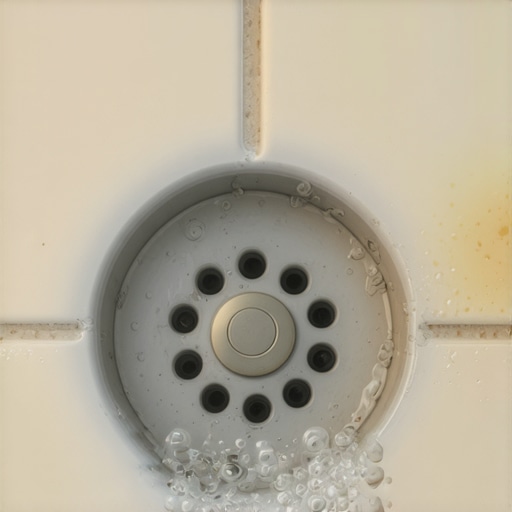
Weeping holes are essential drainage ports located in the drain flange beneath the tile and mortar bed that allow trapped moisture to escape. If an installer is sloppy with the thin-set or the mortar bed, these holes get plugged. When water permeates through the grout, it becomes trapped in the mud bed. It has nowhere to go. It sits there for months. This is what we call a stagnant mud bed. It turns into a literal swamp under your tile. The smell is unmistakable. It is the smell of anaerobic bacteria. This is why I tell people that the tile is not the waterproof layer. The waterproofing is underneath. If the pre-slope was not done correctly, gravity works against you. Water pools at the perimeter. It wicks up into the wall studs. It rots the baseboards. This is a structural catastrophe. I have seen entire subfloors turned to mush because a guy forgot a handful of pea gravel around the weep holes. You can see how quality materials make a difference in eco-friendly tile solutions for sustainable homes in 2025. If the moisture gets to your trim, you might need baseboards makeover ideas to elevate your space to repair the damage.
Odor Identification Matrix
| Scent Profile | Probable Cause | Severity Level |
|---|---|---|
| Rotten Eggs | Hydrogen Sulfide / Biofilm | Moderate |
| Damp Earth | Saturated Mortar Bed | High |
| Sewage / Fecal | P-trap Failure / Venting | Critical |
| Musty / Old Socks | Mold behind Tile / Grout | Moderate |
| Chemical / Sharp | Cleaning Agent Residue | Low |
The molecular failure of cementitious grout
Grout is naturally porous and acts like a hard sponge that absorbs organic matter and moisture over time. Standard cement-based grout is full of microscopic voids. When you wash your hair, the fats and proteins in your shampoo get driven into these voids. Over time, these materials putrefy. This is why your shower smells even when the drain is clear. The smell is coming from the walls and the floor itself. Most homeowners never seal their grout. Even if they do, the seal wears off in six months. I advocate for epoxy grout in high moisture areas. Epoxy is non-porous. It does not absorb. It is a chemical resin that creates an impenetrable barrier. If your grout is already failing, you might need grout restoration secrets for long-lasting results to fix the odor at the source. If you are looking for a quicker fix for the aesthetics, check out how to refresh grout without replacing it. But remember, if the smell is deep, refreshing the surface is just a bandage on a gunshot wound.
Moisture traps behind the baseboards
Baseboards in a bathroom often hide the gap between the tile floor and the drywall where moisture accumulates and breeds mold. If the shower pan leak is slow, water travels via capillary action along the subfloor. It hits the wall. It goes up. You will see the paint bubbling on your baseboards. You will smell a musty odor. This is often misdiagnosed as a drain smell because it is concentrated near the floor. I have ripped out baseboards and found black mold colonies four feet long. This happens because the installer did not use a waterproof transition. They used a standard wood baseboard in a wet environment. That is a mistake. You need PVC or highly sealed materials. For better design choices, look into chic baseboard designs that transform rooms in 2025. The physics of evaporation dictate that moisture trapped behind a board will stay there. It cannot escape. It rots the wood. It rots the drywall. It creates a health hazard.
“Cementitious materials are not waterproof; they are water-resistant, and there is a massive engineering difference between the two.” – TCNA Handbook Insight
The 1/8 inch that ruins everything
A deviation of as little as one eighth of an inch in the slope of a shower floor can cause water to pool and stagnate. I am a stickler for the NWFA and TCNA standards. A shower floor must have a pitch of 1/4 inch per foot toward the drain. If the subfloor has settled, or if the installer did not level the area properly, you get birdbaths. These are small puddles that never quite drain. They evaporate slowly. As they evaporate, the minerals and organic matter concentrate. This creates a crust. This crust is a breeding ground for pink mold. It is actually a bacteria called Serratia marcescens. It smells like a locker room. It is persistent. It is slippery. It is the result of bad geometry. If you have a small space, you can see how to manage these slopes in showers with a style trendy ideas for small bathrooms. You have to get the physics right before you worry about the tile pattern.
Diagnostic Checklist for Shower Odors
- Check P-trap water levels by shining a flashlight down the drain.
- Inspect grout lines for pinholes or cracks that suggest water infiltration.
- Smell the baseboards at the floor line to check for wicking moisture.
- Verify that the roof vent is clear of bird nests or debris.
- Use a enzymatic cleaner to see if the smell dissipates temporarily.
- Check the weep holes in the drain flange for obstructions.
The ghost in the expansion gap
Expansion gaps at the perimeter of a tile floor are required to handle structural movement but often become reservoirs for dirty water. If these gaps are not filled with 100 percent silicone caulk, they collect water. This water sits against the plate of the wall. It never dries. It develops a thick bacterial load. I see this in every