
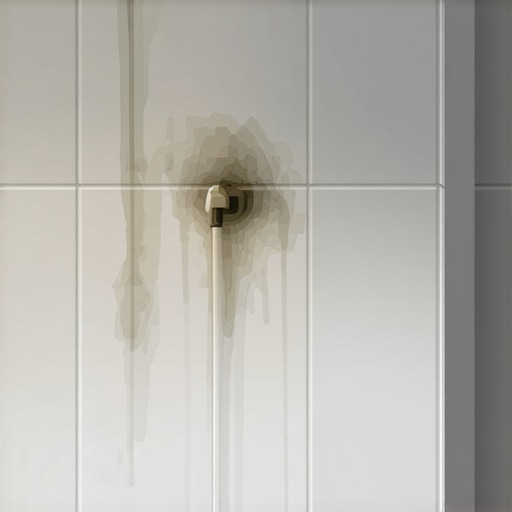
I spent three days grinding concrete on a job last month just so the floor wouldn’t click like a castanet. That is the kind of detail most installers ignore because it is hidden work. It is the same story with shower liners. I once walked into a luxury bathroom where the homeowner had spent forty thousand dollars on Carrara marble, only to find the subfloor was a sponge. The installer had skipped the pre-slope and simply laid the PVC liner flat on the plywood. This caused water to pool and rot the joists. If you do not understand the physics of water migration, you have no business building a shower. A floor is a structural performance surface, not a decoration. When a shower liner fails, it does not always start with a flood. It starts with a whisper of moisture that eventually screams through your ceiling.
The silent failure of the shower waterproofing system
A leaking shower liner occurs when the waterproof membrane beneath the mortar bed fails due to mechanical puncture, chemical degradation, or clogged weep holes. This failure allows hydrostatic pressure to force water into the wood subfloor or concrete slab, leading to structural rot and mold growth behind the tile. Most people believe that tile and grout are waterproof. They are wrong. Grout is a sieve and tile is just a hard surface. The real shower is the liner underneath. If that liner is installed incorrectly, the clock is ticking on your bathroom floor.
“A floor is only as good as the subfloor beneath it; deflection is the enemy of every joint.” – Master Flooring Axiom
The chemistry of these liners is often the first point of failure. Modern PVC liners are susceptible to chemical reactions if they come into contact with certain adhesives or even the alkaline nature of the concrete if the barrier is not thick enough. We measure these liners in mils, typically forty mils for a standard residential application. If the installer used a thirty mil liner to save ten bucks, they bought you a ticket to a demolition. You need to look for darkening grout lines that never seem to dry. This is a sign of saturation in the mud bed that has nowhere to go because the weep holes in the drain are clogged with mortar. When the water sits, it becomes a swamp. You can read about how to refresh grout without replacing it, but if the liner is gone, no amount of grout cleaning will save the structure.
The physics of the pre-slope and water stagnation
The pre-slope is a layer of deck mud or sloped mortar installed beneath the waterproof liner to ensure gravity-driven drainage toward the weep holes. Without this 1/4 inch per foot incline, stagnant water sits on the liner, creates hydrostatic pressure, and eventually finds pinhole leaks in the solvent-welded seams. This is the most common mistake in residential construction. If the liner is flat, the water stays. If the water stays, the bacteria grows. This leads to the characteristic “rotten egg” smell of a failing shower pan. The physics are simple. Water must move or it will destroy.
| Material Type | Thickness (Mils) | Installation Method | Common Failure Point |
|---|---|---|---|
| PVC Liner | 40 mil | Solvent Weld | Corner Folds |
| CPE Membrane | 40 mil | Chemical Bond | Wicking at Curb |
| Liquid Membrane | 20 mil (dry) | Roll-on | Pinholes/Thin Spots |
| Hot Mop | 3-Layer | Asphaltic | Cracking with Age |
We see a lot of failures at the curb. The curb is the transition point where the floor of the shower meets the main bathroom floor. Installers often nail their lath or backer board directly through the top of the curb, puncturing the liner. This is architectural malpractice. Every nail hole is a potential leak. If you see your baseboards swelling outside the shower, the water is already traveling. You might want to look at baseboards makeover ideas to elevate your space once the structural issues are fixed, but you must stop the leak first. The water wicks through the wood and ruins the gypsum board. It is a slow, steady destruction of your home.
How baseboards reveal the hidden moisture in your walls
The baseboard telegraphing effect is the physical expansion of wood or MDF trim caused by capillary action drawing moisture from a leaking shower pan into the wall cavity. When the shower liner fails at the threshold, water migrates laterally, saturating the bottom plate of the wall and causing the baseboard finishes to bubble, peel, or warp. If you touch your baseboard and it feels soft, or if the paint is flaking off in a specific spot near the shower, you have a leak. This is not a plumbing leak in the pipes. This is a failure of the waterproofing system. You are looking at a structural engineering challenge now. The humidity in the wall cavity will eventually lead to dry rot in the studs. In areas like Houston or Florida, this moisture is compounded by the high ambient humidity, making the rot occur at twice the speed of a dry climate like Phoenix.
“Waterproofing is not about stopping water; it is about managing its inevitable movement through the assembly.” – TCNA Technical Manual
The transition from the shower to the main floor should be a defense line. When we build showers that wow, we ensure that the membrane extends at least six inches up the wall and over the curb. We use a flood test to verify the integrity. We plug the drain and fill the pan with water for twenty four hours. If the water level drops, the liner is leaking. It is the only way to be sure. Most guys skip this because they are in a hurry. They want to get the tile down and get paid. But if they skip the flood test, they are gambling with your house. You should demand a flood test on every new installation. It is the gold standard of the industry.
The chemical breakdown of the solvent welded seams
A solvent weld failure occurs when the tetrahydrofuran based cement used to join PVC liner sections is applied improperly or in cold temperatures, preventing a molecular bond between the sheets. This creates a seam failure where capillary action pulls water through the gap and into the joist bays below. You have to understand that this is not glue. It is a chemical weld. If the installer did not clean the surfaces or if they used an expired cement, the bond will fail. I have pulled up liners where the seams just peeled apart like a post-it note. That is why I prefer single-sheet installations wherever possible. The fewer seams you have, the fewer points of failure you have to worry about. Physics always wins. Water will find the path of least resistance every single time.
- Inspect the grout lines for persistent dampness twenty four hours after the last shower.
- Check the ceiling below the bathroom for brown circular staining.
- Feel the bathroom floor near the shower for soft spots or clicking sounds.
- Smell the drain for a musty or sulfurous odor indicating stagnant water.
- Perform a 24 hour flood test to confirm liner integrity.
If you suspect a leak, do not ignore it. The longer you wait, the more the subfloor degrades. I have seen floors that were so far gone I could push my finger through the plywood. That is not just a cosmetic issue. That is a safety hazard. Your shower pan weighs hundreds of pounds. If the wood supporting it turns to mush, you are looking at a catastrophic failure. Take the time to inspect your grout and your baseboards. The signs are there if you know how to look for them. Do not let a bad installation ruin your home. Structure comes first. Aesthetics come second. That is the only way to build a floor that lasts a lifetime.