
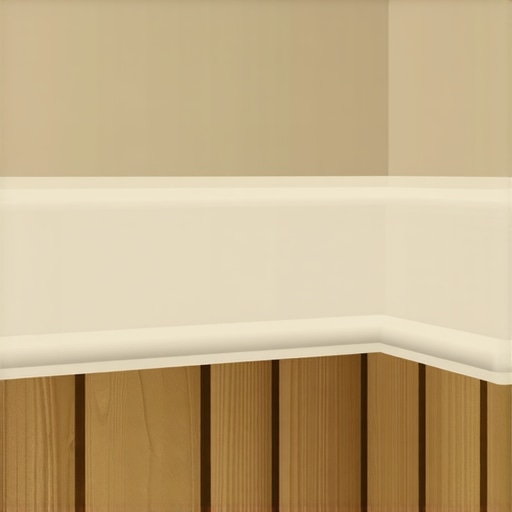
I have spent twenty-five years on my knees with a moisture meter and a level. I have seen every possible failure that can happen at the junction where a floor meets a wall. Most people treat baseboards as a final decorative touch. They are wrong. In a high-moisture environment like a bathroom, that trim is a structural component of your water management system. If you choose a standard wood baseboard for a room that sees steam from showers and spills on the tile, you are essentially installing a slow-motion wick for rot. I have smells of sawdust and WD-40 etched into my skin, and I can tell you that the molecular reality of wood does not care about your aesthetic preferences. Wood is hygroscopic. It wants to drink. When it sits in a bathroom, it drinks the humidity until the paint peels and the drywall behind it begins to crumble. This is why a professional architect or a seasoned installer will point you toward a cove base, whether it is made of rubber, vinyl, or ceramic. It is about creating a monolithic barrier that wood simply cannot provide.
The hidden rot behind the paint
Cove base is superior because it creates an impervious seal at the wall-floor junction, preventing water from reaching the vulnerable subfloor or the base of the drywall. Unlike wood, which relies on a mechanical fit and a bead of caulk, cove base is often chemically bonded or integrated into the floor material itself. This prevents the capillary action that pulls water upward through wood fibers. I once walked into a house where a expensive wide-plank walnut floor was cupping so bad it looked like a potato chip because the installer didn’t check the crawlspace humidity, but the real damage was in the master bath. The homeowner had insisted on matching wood trim. I pulled one piece of that trim and the wall behind it was black with mold. The wood had been absorbing overspray from the shower for three years. It acted like a sponge, holding moisture against the paper facing of the drywall. If they had used a proper cove base, that moisture would have stayed on the surface where it could evaporate or be wiped away during regular maintenance. You can find better options for your home by looking at chic baseboard designs that transform rooms in 2025, but for wet areas, the physics dictate a different approach.
“A floor is only as good as the subfloor beneath it; deflection is the enemy of every joint.” – Master Flooring Axiom
Molecular reality of capillary action
Wood trim fails in bathrooms because of the cellular structure of tracheids and vessels that naturally transport water in trees. Even when kiln-dried and painted, wood remains a biological material that expands and contracts based on ambient humidity. In a bathroom, the relative humidity can spike from 30 percent to 90 percent in twenty minutes. Wood cannot keep up with that. The paint eventually develops micro-fissures. Water enters those fissures and travels deep into the grain. Once water is inside, it cannot escape easily. This leads to the breakdown of lignin and the eventual structural failure of the trim. In contrast, rubber and vinyl cove base are made of non-porous polymers. These materials are inert. They do not react to steam or puddles. They provide a “toe” that curves out over the floor, creating a radius that is easy to clean. If you are worried about the look, there are baseboards makeover ideas to elevate your space that incorporate waterproof materials without looking like a hospital hallway.
The structural superiority of ceramic and vinyl
Ceramic tile cove base offers the highest level of protection because it shares the same expansion coefficient as the floor itself. When you use a tile cove, you are using thin-set and grout to create a continuous surface. This is a structural engineering solution. The grout acts as a secondary barrier, and when properly sealed, it makes the entire room a waterproof basin. This is why high-end showers often feature a wrap-around tile base. It is not just for show. It prevents the 1/8 inch gap that ruins everything. Most guys skip the leveling compound. They think the underlayment will hide the dip. It won’t. I spent three days grinding concrete on a job last month just so the floor wouldn’t click like a castanet. That same level of precision is required at the wall. If the floor isn’t level, a rigid wood baseboard will leave gaps. A flexible rubber cove base will follow the contours of the floor, maintaining a seal even if the slab has slight undulations.
| Material Type | Moisture Resistance | Installation Method | Maintenance Level |
|---|---|---|---|
| Solid Wood | Low | Nails/Caulk | High |
| MDF Trim | Zero | Nails | Replace Often |
| Vinyl Cove | Extreme | Adhesive | Low |
| Ceramic Tile | Maximum | Thin-set | Moderate |
The 1/8 inch that ruins everything
The gap between a flat wood baseboard and an uneven floor is the primary entry point for moisture that destroys subfloors. Even if you use a shoe mold, you are just adding more organic material that can rot. A cove base has a flared bottom, known as the toe, which is designed to be pressed firmly into the floor material. This creates a tension-fit seal. When you apply a high-quality acrylic or pressure-sensitive adhesive to the back of a rubber base, you are creating a chemical bond that water cannot penetrate. This is vital in areas near showers where water tends to pool. If you want a modern look, check out showers that wow modern designs for 2025 to see how integrated drainage and wall transitions work together. The chemistry of the bond is what matters. You want an adhesive that remains flexible so it can handle the building’s natural settling without cracking the seal.
“Proper substrate preparation is the single most important factor in the success of a tile installation.” – TCNA Handbook
Why your subfloor hates your baseboards
Subfloors are often made of plywood or OSB, both of which will swell and lose structural integrity if they get wet. When you install wood trim in a bathroom, you are providing a path for water to travel from the floor surface directly to the subfloor. The water creeps under the trim, bypasses the floor covering, and soaks into the wood substrate. I have seen 3/4 inch plywood turn into something resembling wet cardboard because of a leaky toilet and wood baseboards. A vinyl or rubber cove base prevents this by being completely waterproof from top to bottom. It acts as a flashing. Just like you flash a chimney on a roof, you are flashing the walls of your bathroom. This is even more important if you have showers with a style that might involve open concepts or low-profile curbs where splashing is common. You can learn more about these designs at showers with a style trendy ideas for small bathrooms.
- Inspect the subfloor for any dips greater than 1/8 inch over 10 feet.
- Use a moisture meter to ensure the concrete slab is below 4 percent moisture content.
- Apply adhesive to the wall, not just the baseboard, for a full-spread bond.
- Ensure the “toe” of the cove base is compressed against the floor during curing.
- Seal the top edge with a bead of high-grade silicone to prevent steam entry.
Maintenance and the longevity of the seal
Keeping a bathroom clean is significantly easier with cove base because the curved radius prevents the buildup of dust and grime in sharp corners. Wood trim has a 90-degree angle where it meets the floor. This is a trap for hair, skin cells, and moisture. Over time, this mixture creates a breeding ground for bacteria. Cleaning this area usually involves scrubbing, which can damage the paint on wood trim and lead to more moisture absorption. With a ceramic or rubber cove, you can use standard cleaning agents without fear of damage. For those with tile floors, following tile cleaning tips for a sparkling bathroom in 2025 will keep the entire system looking new. If your grout is starting to look tired, you should look into how to refresh grout without replacing it to maintain that waterproof barrier. Remember that a floor is a performance surface. It has to handle the traffic, the water, and the cleaning chemicals. Wood trim is a weak link in that performance chain. Choosing a cove base is an investment in the structural health of your home. It might not be what the “aesthetic” influencers are pushing, but it is what a master installer would put in his own house. If you have questions about your specific project, you can always contact us for expert advice on material selection. The goal is a floor that lasts thirty years, not three. Don’t let a piece of decorative wood stand in the way of a dry and healthy home. The physics of water always win in the end, so you might as well build a wall it cannot climb. For more sustainable options, consider eco-friendly tile solutions for sustainable homes in 2025.”