
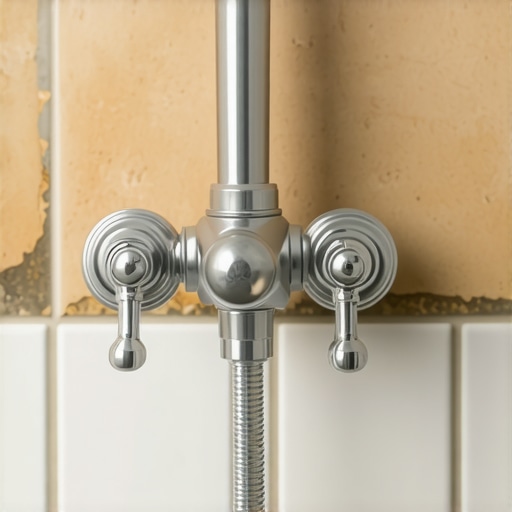
I spent three days grinding concrete on a job last month just so the floor wouldn’t click like a castanet. That job reminded me that the things you cannot see are usually the things that destroy a home. My hands still smell like WD-40 and oak dust from the transition strips I was cutting this morning. Most guys skip the leveling compound. They think the underlayment will hide the dip. It won’t. The same logic applies to the plumbing behind your shower tile. When you hear a violent thud every time you turn off the water, it is not just an annoyance. It is a structural failure in progress. This noise, known as water hammer, is a high-pressure shock wave that travels through your pipes when water flow is suddenly interrupted. In a properly built shower, those pipes are secured. When they are not, they vibrate against the studs, the backer board, and the very tile you spent thousands of dollars to install. If you ignore it, the vibration will eventually crack your grout and compromise the waterproofing of your entire bathroom system.
The physics of the hydraulic shock wave
Water hammer occurs when the kinetic energy of moving water is forced to stop instantly, creating a pressure spike that can reach over 500 PSI. This energy pulse travels at the speed of sound through the copper or PEX tubing. If the plumbing is not anchored with heavy-duty straps every few feet, the pipe will physically jump. This jump creates a mechanical impact against the wall framing. This is why you hear that rhythmic banging. In the world of high-end showers that wow modern designs for 2025, we often see large format tiles. These tiles are heavy. They require a rigid substrate. When a pipe hammers against that substrate from the inside, it creates microscopic stress fractures in the mortar bed. You might not see it today, but in two years, that tile will sound hollow when you tap it. The bond has been broken by the constant mechanical vibration of the plumbing.
“A floor is only as good as the subfloor beneath it; deflection is the enemy of every joint.” – Master Flooring Axiom
Why your subfloor hides the truth
The subfloor and the wall cavity are part of a continuous structural loop that transfers vibration throughout the bathroom floor. If your shower valve is hammering, the vibration does not stay in the wall. It travels down the vertical stack into the floor joists. If you have installed a high-end floor, you may notice the sound echoing in the crawlspace or the basement. This is because the floor acts as a resonator. I have seen cases where a loose shower valve caused the baseboards in the hallway to rattle. People think they have a ghost. They actually have a loose pipe strap. When I install chic baseboard designs that transform rooms in 2025, I always check for these vibrations first. If the wall is moving, the baseboard will eventually pull away from the drywall, leaving a gap that no amount of caulk can fix. You have to address the plumbing before you can perfect the finish work.
The structural cost of a loose pipe
A hammering pipe creates lateral forces that can shear the bond of your thin-set and cause grout to crumble into powder. Most homeowners think grout is just for looks. It is actually a structural component that locks the tile assembly together. When the wall vibrates, the grout is the first thing to fail. You might find yourself looking for grout restoration secrets for long lasting results because your grout keeps falling out in chunks. The reality is that no grout can withstand a 500 PSI shock wave hitting the back of the wall every time you take a shower. The movement of the pipe creates a lever effect. The shower valve is the fulcrum. Every time the valve shuts, the pipe acts like a hammer hitting the back of your expensive tile. This eventually leads to water intrusion. Once water gets behind that tile, your subfloor starts to rot. I have replaced entire plywood decks because a small plumbing rattle was ignored for five years.
| Pipe Material | Vibration Transfer | Expansion Rate | Anchor Requirement |
|---|---|---|---|
| Copper | Very High | Low | Every 4 Feet |
| PEX Tubing | Medium | High | Every 32 Inches |
| CPVC | High | Medium | Every 3 Feet |
Concrete slabs and the resonance problem
On a concrete slab, the vibration from a hammering valve has nowhere to dissipate, which increases the risk of tile delamination. Wood joists have some natural flex. They can absorb a bit of that energy. Concrete is unforgiving. If your shower is on a slab and the pipes are hammering, the energy is reflected back into the tile assembly. This is particularly dangerous for modern thin-bed installations. The chemical bond of the adhesive is strong, but it is brittle. It does not like high-frequency vibration. I have walked into jobs where the homeowner complained about a clicking sound when they walked near the shower. It turned out the water hammer had shaken the tile loose from the slab. We had to rip out the bottom three rows of tile and the baseboards just to reach the pipes and secure them. If you are worried about your maintenance, you should check out tile cleaning tips for a sparkling bathroom in 2025, but remember that clean tile won’t stay stuck if the wall is shaking it off.
Grout failure as a diagnostic tool
Cracks in the grout lines around the shower handle are a primary indicator that your valve is not properly braced. Grout is the canary in the coal mine. It tells you when something is moving. If you see vertical cracks in the grout joints near the plumbing fixtures, stop looking for how to refresh grout without replacing it and start looking for a plumber. You can regrout every weekend, but the crack will return within days. The physics are simple. The pipe moves, the valve moves, the valve pushes the tile, and the grout snaps. This is why the TCNA (Tile Council of North America) has strict guidelines for pipe penetrations. There should be a small gap between the pipe and the tile, filled with flexible 100 percent silicone caulk, not rigid grout. This allows for thermal expansion and minor vibration without destroying the surrounding tile. But even silicone cannot save a tile from a full-blown water hammer shock wave.
“The movement of plumbing fixtures within a wall cavity can exert lateral forces on the tile assembly, leading to shearing at the bond coat.” – Tile Structural Dynamics Manual
The 1/8 inch that ruins everything
A gap as small as 1/8 inch between a pipe and a wood stud is enough to create a deafening bang when the water pressure fluctuates. This is the tolerance we deal with. In flooring, an 1/8 inch dip in the subfloor over 10 feet is the limit for LVP. In plumbing, an 1/8 inch of play in a pipe is a disaster. When that pipe jumps, it gains momentum. That momentum is what creates the noise. To fix this, you often have to go through the back of the wall. I always tell people to check their plumbing before they do a baseboards makeover ideas to elevate your space. It is much easier to cut a hole in the drywall in the bedroom behind the shower than it is to tear out a single piece of custom porcelain tile. Once you have access, you can install plastic isolators or copper straps to pin that pipe down. You want it so tight that you cannot move it with your hand. If it can move a millimeter, it can hammer.
Water pressure and the chemistry of adhesives
High house water pressure over 80 PSI is a leading cause of both water hammer and premature adhesive failure in wet areas. Most people think higher pressure is better for showers. It’s not. It’s a death sentence for your fixtures and your tile bonds. When the pressure is too high, the velocity of the water increases. This makes the hydraulic shock even more violent when the valve closes. Over time, this pressure forces water into the microscopic pores of your grout. If you are looking for eco-friendly tile solutions for sustainable homes in 2025, start by installing a pressure-reducing valve. This protects your plumbing and prevents the structural damage caused by hammering. It also saves water. A sustainable home is a home where the walls aren’t shaking themselves apart from the inside out.
- Install a water pressure gauge to check for readings above 80 PSI.
- Inspect the air chambers or water hammer arrestors in your plumbing system.
- Ensure all plumbing penetrations are sealed with flexible silicone rather than grout.
- Verify that pipes are strapped every 3 to 4 feet within the wall cavity.
- Check the integrity of the tile bond around the main shower valve handle.
Securing the stack behind the substrate
Correcting water hammer requires a combination of mechanical anchoring and the installation of air chambers or arrestors. If you are building a new shower or remodeling an old one with showers with a style trendy ideas for small bathrooms, do not let the plumber leave until those pipes are rock solid. I have walked onto jobs and seen pipes hanging by a single plastic zip tie. I refuse to tile over that. I make them use copper straps and wood blocking. We build a cage around that valve. It should be part of the house’s skeleton. When that water stops, the energy should be absorbed by the entire framing of the house, not just the back of the tile. This is the difference between a floor that lasts 50 years and one that fails in five. It is about the physics of energy transfer. If you handle the energy, the aesthetics will take care of themselves. If you have questions about your specific layout, you can always contact us for a structural consultation. Never settle for a noisy house. A bang in the wall is a sign of a failing system.