
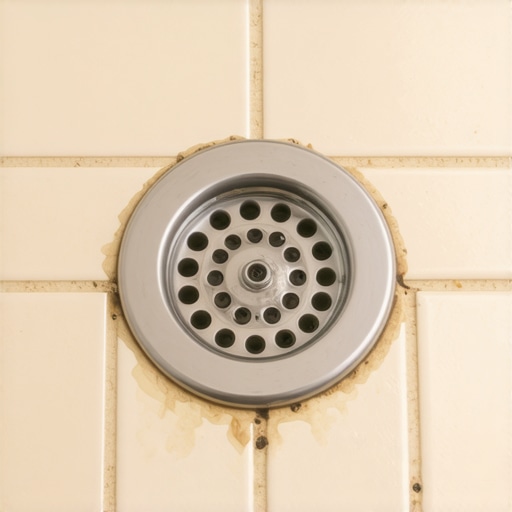
The Mistake That Makes Your Shower Drain Smell Like Sewage
I spent three days grinding concrete on a job last month just so the floor would not click like a castanet. That is the reality of this trade. Most guys skip the leveling compound because they think the underlayment or the tile will hide the dip. It won’t. I have seen it a thousand times. You walk into a beautiful bathroom that looks like it belongs in a magazine, but it smells like a literal swamp. The homeowner is scrubbing the tile with bleach until their hands are raw, but the smell persists. It is not on the surface. It is the physics of the subfloor and the chemistry of the mortar bed failing in unison. Flooring is not a cosmetic choice, it is a structural engineering challenge that starts under the floorboards. When you ignore the microscopic reality of moisture and slope, you are just building a very expensive petri dish.
The hidden swamp beneath your feet
A shower floor must maintain a consistent slope of one quarter inch per foot toward the drain to prevent water stagnation. When installers skip the pre-slope beneath the waterproofing liner, water sits in the mortar bed, rots, and creates a permanent sulfurous odor regardless of how clean the surface appears. Most people assume the tile is the waterproof layer. That is the first lie. Tile and grout are porous. They are the decorative skin. The real work happens in the mud bed and the liner. If the subfloor is flat, the water that penetrates the grout will just sit on the liner. It has nowhere to go. It sits there, anaerobic bacteria move in, and suddenly your morning shower feels like a trip to the local water treatment plant. You need to understand the capillary action of water within a cementitious matrix. Water does not just sit still, it migrates. Without a slope on the subfloor itself, that migration stops and the rot begins.
The chemical bond of modified thinset
Modified thinset uses polymers to increase bond strength and flexibility which is vital for preventing grout cracks and moisture seepage. If an installer uses the wrong adhesive for the specific tile type, the bond fails and creates voids where moisture accumulates and breeds mold. I have seen guys try to use standard mastic in a wet area. It is a disaster. Mastic is organic. It is basically food for mold. In a shower, you need the crystalline structure of a high-quality thinset. We are talking about calcium silicate hydrate forming a lock with the ceramic or porcelain. If that bond is interrupted by air pockets, you get ‘hollow’ spots. Those hollow spots are reservoirs for stagnant water. When we talk about showers that wow modern designs for 2025, we are talking about the engineering behind the aesthetics. You cannot have a beautiful shower if the adhesive chemistry is failing at a molecular level. The polymers must cross-link effectively to create a hydrophobic barrier.
“A floor is only as good as the subfloor beneath it; deflection is the enemy of every joint.” – Master Flooring Axiom
The physics of the P-trap failure
The P-trap is designed to hold a small amount of water that acts as a seal against sewer gases entering the home. If the shower is poorly ventilated or the drain is partially blocked by hair and biofilm, the pressure changes can siphon that water away, letting the smell in. However, the most common mistake is actually the ‘weep holes’ in the drain assembly. In a traditional thick-bed installation, the drain has tiny holes designed to let water that has seeped into the mortar bed escape into the pipe. If the installer is sloppy and covers those weep holes with thinset or mortar, the water is trapped. It is like a bathtub with no drain. It just sits there, saturating the sand mix, turning into a black, stinking sludge. I have pulled up floors where the mortar bed was so saturated it looked like wet charcoal. That is what happens when you ignore the mechanical requirements of a drain assembly. You need to protect those weep holes with crushed stone or a specialized plastic spacer.
Why your grout is a porous liar
Grout is a cement-based product that naturally absorbs water through capillary action unless it is an epoxy-based variety. Standard cementitious grout requires periodic sealing to maintain its integrity and prevent the subfloor from becoming a breeding ground for bacteria. Many homeowners forget that grout is essentially a hard sponge. If you are not using tile cleaning tips for a sparkling bathroom in 2025, you are likely letting acidic cleaners eat away at the seal. Once the seal is gone, the water moves through the grout lines and into the substrate. If you are smelling sewage, check the consistency of your grout. If it is soft or crumbling, the moisture has already won. We often recommend grout restoration secrets for long lasting results to prevent this exact scenario. Epoxy grout is the gold standard because it is non-porous and chemically resistant, but it is a nightmare to install if you do not know what you are doing. It sets fast and requires a level of precision that most DIYers just do not have.
| Feature | Traditional Mortar Bed | Liquid Membrane System | Foam Board System |
|---|---|---|---|
| Waterproofing | Secondary (under bed) | Primary (topical) | Integrated |
| Installation Speed | Slow (24-48 hours) | Moderate | Fast |
| Weight per Sq Ft | 12-15 lbs | 3-5 lbs | 2-3 lbs |
| Vapor Permeance | High | Low | Very Low |
The 1/8 inch that ruins everything
Expansion gaps at the perimeter of a tile installation are required to allow for the natural movement of the house without cracking the grout or tile. Filling these gaps with hard grout instead of 100 percent silicone caulk creates a bridge for moisture to reach the wall studs. I see this in every ‘builder-grade’ home. They run the tile right up to the wall and grout the corner. The house shifts, the grout cracks, and water starts sneaking behind the baseboards makeover ideas to elevate your space. Once water gets behind the baseboard, it hits the drywall and the bottom plate of the wall framing. This is where the ‘musty’ part of the sewage smell often originates. It is the smell of wet wood and moldy gypsum. You must use a flexible sealant in all change-of-plane joints. That means corners, and where the floor meets the wall. It is the law of the TCNA for a reason. Physics does not care about your aesthetic preference for matching grout colors.
“Adhesion is not just about stickiness; it is about the mechanical interlock of the mortar into the substrate’s pores.” – Master Flooring Axiom
The moisture meter never lies
A moisture meter is the most important tool in a floor installer’s kit because it reveals the invisible water content within a subfloor before the first tile is laid. Installing tile over a plywood subfloor with more than 12 percent moisture content will inevitably lead to bond failure and rot. I have walked off jobs because the homeowner wanted the floor done today but the concrete was still green. Concrete needs 28 days to cure, and even then, it might be holding too much vapor. If you trap that vapor under a tile floor, it will blow the tile right off the slab. We call it osmotic pressure. It is a powerful force that can lift hundreds of pounds of stone. Before we even talk about chic baseboard designs that transform rooms in 2025, we have to talk about the anhydrous calcium chloride test. We need to know exactly how many pounds of vapor are leaving that slab every 1,000 square feet. If you skip this, you are just gambling with the client’s money.
- Verify the pre-slope is 1/4 inch per foot before the liner.
- Ensure weep holes in the drain are protected with gravel.
- Use a moisture meter to check the subfloor saturation.
- Apply a topical waterproofing membrane for double protection.
- Seal all change-of-plane joints with 100 percent silicone.
- Check the Janka hardness of the subfloor if using wood.
The structural reality of deflection
Floor deflection refers to the vertical movement of the floor under a load and it must be limited to L/360 for ceramic tile and L/720 for natural stone. Excessive bounce in a floor joist will snap grout lines and break the waterproof seal of a shower pan. You cannot put a heavy marble floor on 2×8 joists spaced 24 inches apart. It will fail. The floor will flex, the grout will pop, and the moisture will find its way into the structure. If you are smelling sewage, it might be that the movement has actually cracked the drain pipe itself under the floor. This happens more often than people realize. I have had to sister joists and add blocking just to make a bathroom stable enough for tile. It is about the modulus of elasticity of the materials. You are putting a rigid material (tile) on a flexible material (wood). Something has to give. If you do not build the subfloor correctly, the thing that gives will be your waterproofing. Once that is gone, the smell is just the beginning of your problems.