
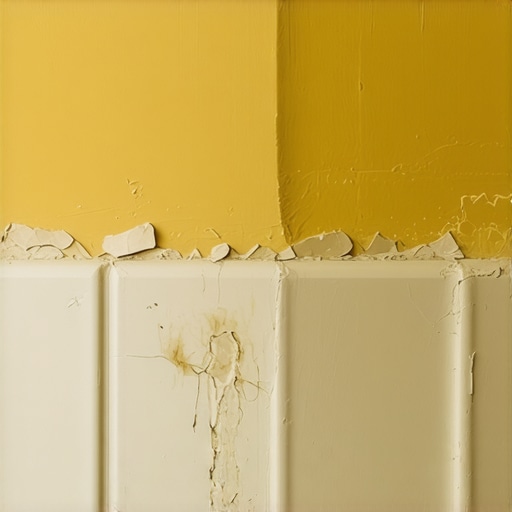
I spent three days grinding concrete on a job last month just so the floor wouldn’t click like a castanet, and while I was down there, I saw exactly why the homeowner called me. Their baseboards were flaking off in chunks like a cheap sunburn. Most guys skip the leveling compound and they definitely skip checking the vapor transmission through the slab. They think the underlayment will hide the dip or that the paint will seal the wood. It won’t. If you have moisture migrating up from the subfloor or humidity spiking from your showers, those boards are doomed from the day they are nailed in. You see this everywhere in new builds where they use the cheapest materials possible and slap them together before the house even settles. Flooring is a structural engineering challenge, and your baseboards are the first point of failure when that engineering fails. You can find better options for your home at chic baseboard designs that transform rooms in 2025 if you want to avoid these common traps.
The phantom moisture beneath your feet
Bathroom moisture is not just about the water you see splashing out of the tub; it is about the invisible vapor pressure that moves through your tile and grout. When you take a hot shower, the air pressure in the room changes, and the relative humidity spikes toward one hundred percent. This water vapor finds its way into the smallest pores of your trim. Most modern homes use Medium Density Fiberboard, also known as MDF. This material is essentially pressed sawdust held together with resin. When vapor hits it, the fibers expand like a sponge. This expansion is microscopic at first, but it puts massive stress on the paint film. Once that bond is broken, the paint begins to lift and peel. You might think your showers that wow are the problem, but the real issue is how that moisture interacts with the porous materials around the perimeter.
“A floor is only as good as the subfloor beneath it; deflection is the enemy of every joint.” – Master Flooring Axiom
Why pressed sawdust was a mistake
MDF baseboards are the primary culprit for peeling because they have a high hygroscopic rate which means they absorb water from the air. In a bathroom environment, using MDF is like building a boat out of crackers. Even if you prime the front, the back of the board is often raw. The vapor travels through the wall cavity or through the gap between the floor and the wall, attacking the board from the rear. Once the moisture content of the MDF exceeds twelve percent, the internal bonds start to fail. The material swells, and since the paint cannot stretch as much as the wood fiber, the paint shears off. This is why you see peeling specifically at the bottom edge where the board meets the tile. If your grout is not sealed, it acts like a wick, pulling water from the floor directly into the base of the trim. Understanding grout restoration secrets for long lasting results can help mitigate some of this wicking, but the material choice remains the most significant factor.
| Material | Moisture Resistance | Expansion Rate | Typical Lifespan |
|---|---|---|---|
| MDF | Low | High | 2-5 years |
| Solid Pine | Moderate | Moderate | 15-20 years |
| PVC Trim | High | Low | 50+ years |
Capillary action in the mortar bed
Capillary action describes how water moves through porous tile grout and into the structural elements of your bathroom walls. When you mop your floors or step out of the shower, water sits on the grout lines. Grout is cementitious, meaning it is full of tiny tunnels. If that grout was not properly mixed or sealed, it pulls water under the baseboard. This is the structural reality that most