
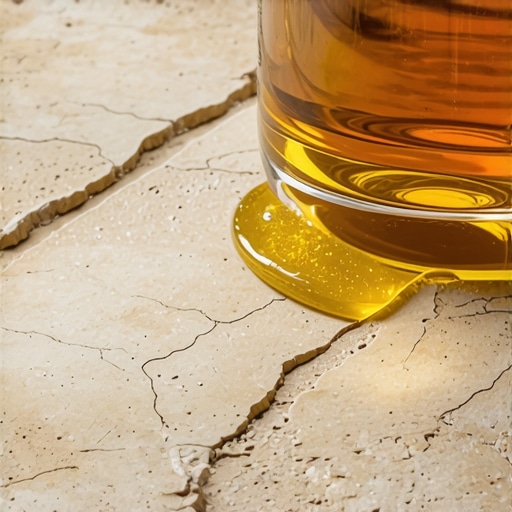
I have spent forty years in this shop surrounded by the smell of floor wax and the weight of inventory. Every Tuesday, like clockwork, a homeowner walks through that door with a look of utter defeat. They hold a piece of marble or a chunk of grout that looks like it has been through a war. Usually, they followed a piece of advice from a lifestyle blogger who thinks a pantry staple is the answer to everything. I once walked into a house where a twenty thousand dollar master bathroom floor was completely etched because the owner used a vinegar and water mix for six months. They thought they were being eco-friendly. Instead, they were performing a slow chemical peel on their limestone. This is the reality of the flooring world. Aesthetics are fine, but if you do not understand the chemistry of what is under your feet, you are just waiting for a disaster. People think waterproof means indestructible. They think natural means safe. In my shop, we deal in facts, not fairy tales. If you want a floor that lasts decades, you need to stop treating your shower like a salad bowl.
The chemical war on your bathroom floor
Vinegar is a diluted form of acetic acid that aggressively reacts with calcium carbonate found in natural stones like marble, travertine, and limestone. This chemical reaction, known as etching, dissolves the surface of the stone on contact. It leaves behind dull spots, white marks, and a rough texture that cannot be simply wiped away. This is not a stain that you can lift. It is a physical change in the stone structure. When the acid touches the stone, it breaks the molecular bonds of the minerals. For those looking for tile cleaning tips for a sparkling bathroom in 2025, the first rule is to keep the vinegar in the kitchen. Even a small concentration can ruin a polished finish in seconds. The stone literally loses its ability to reflect light because the smooth surface becomes a microscopic mountain range of craters. This is especially true in high moisture areas like showers that wow, where the steam helps the acid penetrate deeper into the pores of the stone.
Why your grout is falling apart
Standard grout is a cement-based product that is highly alkaline by nature and extremely porous. When an acid like vinegar is applied, it neutralizes the cement binders that hold the sand particles together. This leads to the grout becoming sandy, brittle, and eventually washing away entirely during regular cleaning. You might see the grout start to crack or flake. That is not a product failure; it is a maintenance failure. I spent three days grinding concrete on a job last month just because the previous installer did not explain this to the client. The grout had turned into a soft paste because they used vinegar to fight hard water stains. If you need to fix this, look into grout restoration secrets for long lasting results rather than reaching for the spray bottle. Once the cement binder is dissolved, the structural integrity of the joint is gone. This allows water to seep behind the tile, which can rot the wall studs or the subfloor. It can also cause issues where the tile meets the baseboards, leading to unsightly gaps and moisture damage in the drywall.
“Grout is a porous material that requires pH-neutral cleaners to maintain structural integrity over time; acid is the architect of its demise.” – Master Flooring Axiom
The molecular reality of stone sensitivity
Different stones have varying levels of sensitivity based on their mineral composition and the way they were formed millions of years ago. Marble and limestone are at the top of the risk list because they are primarily made of calcite. Slate and granite are more resistant but their grout joints and sealers remain vulnerable to acidic erosion. To understand why your floor is failing, you have to look at the pH scale. A neutral cleaner sits at 7. Vinegar usually sits around 2.5 or 3. Every time you spray that on a floor, you are introducing a substance that is thousands of times more acidic than what the stone can handle. Even if the stone is tough, the sealer you paid a premium for is being stripped away. Most sealers are sacrificial barriers. They are designed to sit in the pores and repel oil and water. Acid eats right through them. If you are interested in eco-friendly tile solutions, use specialized stone soaps that are biodegradable but pH-neutral. It is about the right tool for the right job. You would not use a chainsaw to trim your fingernails. Stop using acetic acid to clean your expensive investment.
| Material Type | Mineral Base | Vinegar Sensitivity | Recommended pH |
|---|---|---|---|
| Carrara Marble | Calcite | Extreme | 7.0 – 8.5 |
| Travertine | Sedimentary | High | 7.0 – 8.0 |
| Cement Grout | Portland Cement | High | 7.0 – 9.0 |
| Granite | Silicates | Moderate | 7.0 – 7.5 |
| Slate | Metamorphic | Moderate | 6.0 – 8.0 |
The ghost in the expansion gap
Movement is the silent killer of every tile installation and using the wrong cleaner accelerates the failure of the perimeter joints. In a proper installation, the gap between the tile and the wall should be filled with a flexible sealant, not hard grout. Vinegar makes the surrounding grout so weak that it cannot handle the natural expansion and contraction of the home. This leads to tenting and cracking. I see it all the time in showers with a style where the transitions look beautiful on day one but fail by month six. The acid seeps into the corners and eats the bond between the tile and the substrate. When the house moves, the grout has no strength left to resist. It just crumbles into the drain. You end up with a floor that clicks like a castanet when you walk on it. This is why proper maintenance is not just about looks; it is about keeping the system together. If your grout is already failing, you should learn how to refresh grout without replacing it using professional-grade colorants and epoxy-based products that can withstand more abuse.
“A floor is only as good as the subfloor beneath it; deflection is the enemy of every joint and acid is the enemy of every bond.” – Master Flooring Axiom
- Never use vinegar on marble, limestone, or travertine.
- Avoid lemon juice or any citrus-based cleaners on grout.
- Always use a pH-neutral cleaner specifically labeled for natural stone.
- Check the integrity of your sealer every six months with a water drop test.
- Ensure that your chic baseboard designs are protected from moisture wicking.
- Wipe up spills immediately to prevent the acid from dwell time.
Protecting your investment from home remedies
The best way to clean natural stone and grout is to use warm water and a microfiber mop for daily maintenance and a dedicated alkaline cleaner for deep cleaning. Alkaline cleaners are the opposite of acidic ones and are much better at breaking down body oils and soap scum without damaging the stone. In a humid climate like Houston or Miami, the temptation to use vinegar to kill mold is high. Do not do it. Use a mold inhibitor that is safe for stone. If you treat your floors with respect, they will outlive you. If you treat them like a science experiment, you will be back in my shop buying a replacement sooner than you think. Proper flooring is an engineering challenge. It requires the right subfloor, the right adhesive, and the right maintenance. Do not let a five dollar bottle of vinegar ruin a fifty thousand dollar renovation. It is that simple. Stick to the standards set by the professionals and ignore the hacks you see online. Your floor will thank you. Your wallet will too. For any questions on how to maintain these surfaces, you can always contact us for expert advice.