
Why your subfloor is lying to you
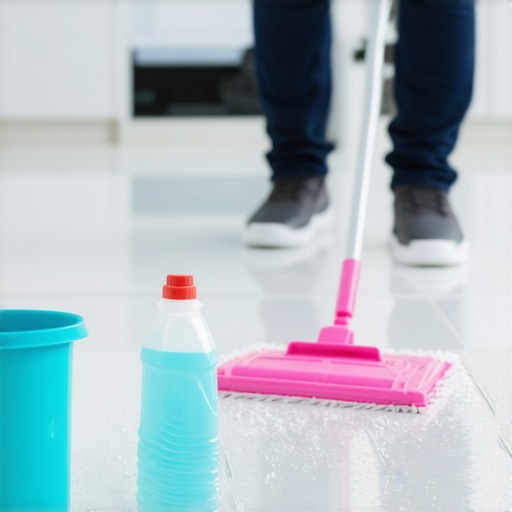
Cleaning tile floors with dish soap is a fundamental mistake that results in a sticky surfactant film which attracts dirt and leads to long term grout degradation. Most guys skip the leveling compound. They think the underlayment will hide the dip. It won’t. I spent three days grinding concrete on a job last month just so the floor wouldn’t click like a castanet. That job taught me that shortcuts always surface. Whether it is the subfloor or the cleaning solution, if you ignore the physics of the materials, the installation fails. Most people treat their floors like a dinner plate. A dinner plate is a non-porous vitrified surface that you rinse under high-pressure hot water. Your floor is a massive structural system with thousands of linear feet of porous grout and expansion gaps. When you mop with dish soap, you are not cleaning. You are applying a thin layer of animal fats or synthetic surfactants that never fully rinse away. I have seen fifteen thousand dollar porcelain installations look like a gas station bathroom within six months because the homeowner thought a squirt of blue soap was a life hack. It is not. It is a slow-motion disaster for your flooring investment.
The residue trap hidden in plain sight
Dish soap contains surfactants designed to lower the surface tension of water so it can bind to grease and oil for easy removal. On a floor, the absence of a high-pressure rinse cycle means these surfactant molecules remain on the surface. As the water evaporates, the soap molecules concentrate. This creates a microscopic adhesive layer. Every piece of dust, every pet hair, and every skin cell that touches that floor becomes bonded to the surface. You end up in a cycle where the floor looks dirty an hour after mopping, so you mop again with more soap. You are essentially building a sandwich of dirt and detergent. This is why professional installers always recommend pH-neutral cleaners specifically engineered for stone and ceramic. These cleaners are designed to suspend soil without leaving a film. When you look at tile cleaning tips for a sparkling bathroom in 2025, you will see that the focus is always on removing the cleaner as much as the dirt. If the cleaner stays, the dirt returns. It is a simple chemical equilibrium that most homeowners ignore until their floors look grey and greasy.
“A floor is only as good as the subfloor beneath it; deflection is the enemy of every joint.” – Master Flooring Axiom
Grout is a vertical sponge
Cementitious grout is a porous matrix of calcium silicate hydrate and sand that acts as a filter for any liquid applied to the floor. When you mop with dish soap, the soapy water travels deep into the grout pores via capillary action. Once inside, the water evaporates but the soap remains. Over time, these soap solids build up and begin to chemically interact with the grout minerals. This can lead to efflorescence or the weakening of the grout structure. I have seen grout that you could scrape out with a fingernail because it had been saturated with acidic or overly alkaline household soaps for years. If your grout is already looking rough, you should look into how to refresh grout without replacing it before the structural integrity of the tile bond is compromised. Grout is not just a filler. It is a structural component that manages the expansion and contraction of the tile field. If you rot it out with dish soap, you are inviting moisture to get under the tile and rot the thin-set. That is when tiles start to pop. That is when you call me, and that is when it gets expensive.
| Cleaning Agent | pH Level | Residue Risk | Grout Impact |
|---|---|---|---|
| Dish Soap | 8.0 – 9.5 | Very High | Pore Clogging |
| Vinegar | 2.4 – 3.0 | Low | Acidic Erosion |
| Neutral Cleaner | 7.0 | Zero | Safe |
| Bleach | 11.0 – 13.0 | Moderate | Pigment Bleaching |
Baseboards and the silent rot
Water and soap mixtures used during mopping often migrate to the perimeter of the room where they are absorbed by the bottom edge of baseboards. Most modern baseboards are made of MDF or medium-density fiberboard. This material is essentially a compressed sponge. When you mop with too much water and soap, that liquid sits in the expansion gap required by TCNA standards. The baseboard wicks it up. The soap keeps the moisture trapped longer than plain water would. Eventually, the baseboard begins to swell and the paint starts to flake. If you are seeing this at the bottom of your walls, you might need baseboards makeover ideas to elevate your space to fix the damage. A proper floor technician knows that the perimeter is the most vulnerable part of the installation. You have to keep it dry. You have to keep it clean. You cannot just slop a bucket of soapy water around and expect the wood and drywall to survive the humidity. In places with high ambient humidity, like Florida or the Gulf Coast, this rot happens twice as fast because the moisture never has a chance to evaporate from the tight gaps behind the trim.
Shower surfaces demand structural integrity
The physics of a shower floor are entirely different from a kitchen floor because of the constant volume of water and the presence of body oils. Using dish soap in a shower might seem like a good way to cut through soap scum, but it actually contributes to the problem. Soap scum is a combination of mineral deposits from hard water and the fatty acids found in soaps. When you add more soap to the mix, you are just feeding the beast. For those looking at showers that wow modern designs for 2025, understand that the beauty is in the maintenance. A shower floor is a specialized environment where the slope to the drain is the most important factor. If soap residue builds up, it creates a slip hazard and slows the drainage of water. This leads to standing water in the grout joints and eventually mold growth. Professional grout maintenance involves using alkaline cleaners to strip the soap and then sealing the grout with a high-quality penetrating sealer. You can find more details on this process by reading about grout restoration secrets for long lasting results. Do not let a five dollar bottle of dish soap ruin a five thousand dollar shower pan.
“The TCNA Handbook states that improper cleaning agents can lead to permanent discoloration and structural degradation of grout joints.” – Tile Industry Standard
- Sweep or vacuum the floor first to remove abrasive grit that can scratch the tile glaze.
- Use a microfiber mop rather than a string mop to limit the amount of water introduced to the grout.
- Mix a pH-neutral cleaner with distilled water if you have hard water in your area.
- Change the cleaning solution every two hundred square feet to prevent redepositing dirt.
- Dry the floor with a clean towel to ensure no minerals or cleaners dry on the surface.
The myth of the mild detergent
Homeowners often think that because a soap is mild on their hands it must be mild on their floors. This is a logical fallacy. Your skin is a living, regenerating organ with an acidic pH mantle. Your tile floor is a dead, mineral-based surface that relies on chemical stability. Dish soap is designed to emulsify fats. Most tile sealers are oil or solvent-based. Over time, the surfactants in dish soap can actually strip the sealer off your grout. Once the sealer is gone, the grout is wide open to staining. I have seen white grout turn black in a year because the homeowner was using a popular grease-cutting dish soap. They thought they were being thorough. In reality, they were stripping the protection off the floor and then injecting dirty water into the pores. It is a heartbreak to tell someone their floor needs a full professional restoration because they were trying to save ten dollars a year on cleaning supplies. Stick to the chemistry that was designed for the materials. Use a professional grade neutral cleaner and keep the dish soap in the kitchen sink where it belongs. Your floors will stay cleaner, your grout will stay stronger, and your baseboards will stay dry.