
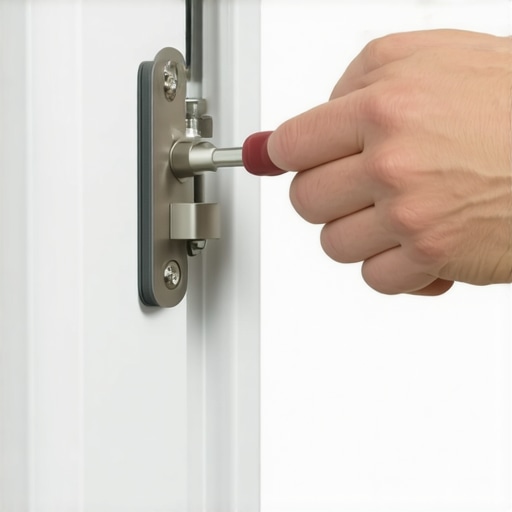
The physics of the screeching hinge
Friction is the primary cause of squeaks in shower hinges, occurring when the internal pivot pin loses lubrication or the metal leaves rub against each other. This often signals a lack of alignment or the buildup of calcified minerals from hard water, which acts as an abrasive against the metal. Most people hear a noise and grab a bottle of whatever oil is under the sink. That is a mistake. I have spent twenty-five years looking at floors and bathrooms and let me tell you a squeaky shower door is not just a noise. It is a mechanical failure waiting to happen. I once walked into a house where a custom glass door shattered because a hinge was so bound up with calcium that the torque eventually snapped the mounting screws right out of the wall. Most guys skip the leveling compound and they think the underlayment will hide the dip. It won’t. I spent three days grinding concrete on a job last month just so the floor wouldn’t click like a castanet. The same logic applies to your hardware. If your tile is not level or your blocking is weak the hinge will groan under the weight of that heavy glass.
“A shower door is only as stable as the blocking behind the tile; mechanical failure starts where the screw meets the stud.” – Master Flooring Axiom
The ghost in the expansion gap
Expansion and contraction of materials around the shower enclosure can put immense pressure on door hardware leading to audible groans and structural stress. When the humidity in a bathroom spikes the wall studs may swell slightly causing the tile surface to shift a fraction of a millimeter. This movement is why we obsess over expansion joints. If your door is mounted directly onto a tile surface without proper gaskets the metal will grind against the porcelain or stone. You need to understand the relationship between the tile and the showers structural frame. If you notice your baseboards are pulling away from the wall in the same bathroom it is a sign that your moisture levels are out of control. High humidity does more than just make the door squeak. It softens the subfloor and compromises the grout. You can find out more about chic baseboard designs that transform rooms in 2025 to see how to handle transitions when humidity is an issue.
The chemical war on hard water
Hard water deposits are the silent killers of shower door functionality because they introduce microscopic grit into the hinge mechanism. Calcium and magnesium carbonates crystallize within the pivot points creating a sandpaper effect that wears down the metal plating and causes the hinge to seize. You cannot just spray a lubricant over the top of this. You have to dissolve the minerals first. If you don’t clean the tile and hardware properly before lubricating you are just making a sticky paste that will attract more hair and dust. I always tell my clients that maintenance is cheaper than replacement. Check out these tile cleaning tips for a sparkling bathroom in 2025 to keep the entire area pristine. A clean hinge is a quiet hinge. If you see white crusty buildup on your grout it is a guarantee that the same stuff is inside your hinges.
| Lubricant Type | Durability | Water Resistance | Best Use Case |
|---|---|---|---|
| Silicone Spray | Medium | High | Plastic or Rubber Gaskets |
| White Lithium Grease | High | High | Metal-on-Metal Pivots |
| PTFE (Teflon) Dry Lube | High | Medium | Dust-Prone Areas |
| Petroleum Jelly | Low | Low | Emergency Only |
Why your subfloor is lying to you
A squeak in the shower door often starts at the floor because the weight of the glass puts a specific shear force on the wall anchors. If the subfloor is not rigid the wall itself can deflect a tiny bit every time the door swings open. This deflection causes the hinge to rub in ways it was never designed for. Most installers ignore the physics of the glass. A three-eighths inch thick glass door is heavy. If the wall wasn’t built with double studs or solid blocking the hinge is going to pull. This is why I insist on checking for deflection. I’ve seen showers where the door was perfectly silent for six months then started screaming because the tile started to settle. If you see cracks in your grout near the hinge it means the wall is moving. You might need grout restoration secrets for long-lasting results to fix the aesthetic damage but the structural issue remains.
“Moisture migration through grout joints can compromise the integrity of the substrate, leading to hardware deflection and audible friction.” – Master Flooring Axiom
The 1/8 inch that ruins everything
Precision alignment is the difference between a silent door and a catastrophic glass failure. If a hinge is off by even an eighth of an inch it creates uneven torque on the glass panels. This torque forces the metal pin inside the hinge to press harder on one side of its housing. That is where the squeak comes from. It is the sound of metal being slowly eaten away. To fix this you have to loosen the screws and realign the door with plastic shims. Never use metal shims as they will scratch the finish. While you are at it check the baseboards nearby for any signs of water damage. If the door isn’t closing right water is likely leaking out and rotting your floor. Look at baseboards makeover ideas to elevate your space to see how to replace water-damaged trim with something more resilient.
The hinge maintenance checklist
- Inspect the hinge for visible mineral deposits or white crusty buildup.
- Tighten all mounting screws to ensure the wall anchors have not backed out.
- Clean the internal pivot points with a vinegar and water solution to dissolve calcium.
- Dry the hardware completely before applying any lubricant.
- Apply a high-quality white lithium grease or silicone-based lubricant to the pivot.
- Swing the door multiple times to distribute the lubricant through the internal mechanism.
- Wipe away any excess oil to prevent it from staining the grout or tile.
Metals that hate each other
Galvanic corrosion occurs when two different types of metal are in contact in a moist environment. If your hinge screws are a different grade of stainless than the hinge itself they will corrode and eventually start to squeak. This is the chemistry of the bathroom. I always recommend using 316-grade stainless steel for showers because it has higher molybdenum content which resists the chloride in your tap water. If you used cheap builder-grade hardware it will fail. It is that simple. I hate seeing beautiful showers that wow modern designs for 2025 ruined by cheap five-dollar hinges. Spend the money on solid brass or high-grade stainless. If your hardware is already corroded no amount of WD-40 will save it. You need to replace the internals or the whole unit. If you are starting a new project consider eco-friendly tile solutions for sustainable homes in 2025 to pair with high-quality durable hardware.
How to handle a stubborn screech
Sometimes the squeak is not the hinge but the clear plastic sweep at the bottom of the door rubbing against the tile or the shower curb. This friction can be mitigated by adjusting the door height or applying a thin layer of silicone grease to the sweep. If the sweep is dragging it will sound exactly like a metal squeak. Check the clearance. You need at least a sixteenth of an inch for a clean swing. If your tile was laid unevenly the door might hit a high spot halfway through its arc. This is where I go back to my obsession with subfloors. A flat floor makes everything else work. If the curb is out of level the door will never be right. You can try to how to refresh grout without replacing it to clean up the look around the curb but you cannot hide a bad slope. If you have questions about your specific layout you can always contact us for expert advice on structural integrity. For those dealing with tight quarters check out showers with a style trendy ideas for small bathrooms to see how to maximize space without sacrificing mechanical performance.