
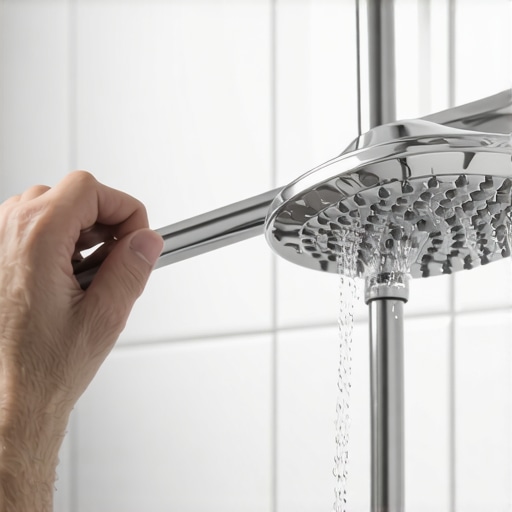
I smell like WD-40 and oak dust most days. Twenty-five years of crawling into crawlspaces and leveling concrete has taught me one thing. Water is a patient killer. You think that rhythmic drip in your shower is just an annoying sound keeping you awake. I see it differently. I see a constant moisture load hitting your grout lines, soaking into the substrate, and eventually rotting the subfloor I spent three days prepping. I once walked into a luxury master bath where a $20,000 marble floor was lifting. The culprit was a shower head that had been weeping for six months. The water followed the supply line behind the wall, bypassed the poorly sealed flange, and saturated the plywood beneath the tile. It turned the wood into mush. Fixing the drip is not just about your water bill. It is about defending the structural integrity of your home from the microscopic reality of water tension and capillary action.
The hidden danger of fixture failure
Fixing a dripping shower head requires identifying if the leak stems from a worn-out rubber washer, a cracked O-ring, or a failed valve cartridge behind the wall. Most homeowners can resolve this by cleaning mineral deposits with acetic acid or replacing the internal compression components to restore a watertight seal. You have to understand that every drop of water that hits your shower floor adds to the humidity levels in the room. If your ventilation is not perfect, that moisture begins to degrade your grout restoration secrets for long-lasting results effort before the sealant even has a chance to cure. We are talking about a constant 100 percent humidity micro-climate right at the base of your shower. This leads to mold spores anchoring themselves into the cementitious pores of your grout. It is a structural nightmare disguised as a plumbing nuisance. When I install showers that wow modern designs for 2025, I tell my clients that the fixture is the first line of defense. A leak at the top means trouble at the bottom.
“A floor is only as good as the subfloor beneath it; deflection is the enemy of every joint.” – Master Flooring Axiom
Why your shower head refuses to stop weeping
A persistent drip usually signals a failure in the mechanical seal where the water supply meets the shower head body or within the handle valve itself. Mineral buildup from hard water creates abrasions on rubber gaskets which prevents a flush fit and allows pressurized water to escape the assembly. If you live in an area with hard water, you are dealing with calcium and magnesium carbonates. These minerals do not just sit there. They crystallize. These crystals act like sandpaper on the soft rubber components inside your fixture. When you turn the handle to the off position, you are trying to compress a piece of rubber against a metal seat. If that seat is covered in jagged mineral scales, the rubber gets shredded. It does not matter how hard you turn the handle. In fact, turning it harder just embeds the minerals deeper into the washer. This is why your tile cleaning tips for a sparkling bathroom in 2025 will not matter if the water is constantly dragging new minerals onto the surface. You are fighting a losing battle against chemistry.
Tools for a surgical plumbing repair
The essential kit for stopping a shower leak includes an adjustable wrench, needle-nose pliers, a screwdriver, thread seal tape, and a replacement washer kit specific to your fixture brand. Using a soft cloth to protect the chrome finish while applying torque prevents cosmetic damage during the disassembly process. I always keep a roll of PTFE tape in my pocket. People call it plumbers tape, but I call it insurance. When you are reassembling the shower arm, that tape fills the microscopic gaps in the threads. Without it, the vibration of the water flow will eventually loosen the connection. I also suggest having a small tub of plumber’s grease. This is a silicone-based lubricant that keeps the new rubber gaskets supple. If you put a dry O-ring into a metal housing, it can tear during the first use. That creates a new leak path immediately. You have to be precise. This is not about brute force. It is about the physics of the seal.
| Material Type | Durability Rating | Chemical Resistance | Best Application |
|---|---|---|---|
| Buna-N Rubber | High | Moderate | Standard cold water valves |
| EPDM | Very High | High | Hot water shower systems |
| Silicone | Extreme | Very High | High-end luxury cartridges |
| Neoprene | Moderate | Low | Temporary emergency repairs |
The chemical war against mineral deposits
Soaking a clogged shower head in a solution of fifty percent white vinegar and fifty percent distilled water dissolves the calcium bonds without damaging the finish. This process restores the internal flow dynamics and ensures that water pressure does not build up behind the seals. I see it all the time. People think they need a new shower head when they just need a chemistry lesson. The acetic acid in the vinegar breaks down the alkaline mineral deposits. If the holes in your shower head are blocked, the back pressure increases. This pressure pushes against the internal washers. It can actually cause the gaskets to deform or blow out entirely. After soaking, I use a small needle to clear the individual nozzles. You want the water to flow freely. When water flows without resistance, there is less stress on the valve body. This protects your how to refresh grout without replacing it projects by preventing erratic spray patterns from hitting your dry walls.
The checklist for a permanent fix
- Shut off the main water supply or the local isolation valves.
- Cover the shower drain with a rag to prevent losing small screws.
- Remove the handle cap and unscrew the internal handle assembly.
- Inspect the cartridge for cracks or eroded rubber seals.
- Clean the valve seat inside the wall with a small wire brush.
- Apply plumber’s grease to all new rubber components before installation.
- Flush the lines before putting the shower head back on to remove debris.
“Water is the universal solvent, and given enough time, it will find the path through the smallest fissure in your grout.” – Master Installer Observation
The ghost in the expansion gap
A leak that appears behind the wall plate often indicates a failure of the thread seal tape or a cracked shower arm. This type of leak is dangerous because it stays hidden behind the tile and can saturate the wall cavity leading to structural rot. This is the one that keeps me up at night. If the leak is behind the wall, you might not see it until your chic baseboard designs that transform rooms in 2025 start to swell and discolor. By then, the damage is done. The water has traveled down the studs and pooled on the subfloor. I always tell people to check the flange. That is the metal plate against the wall. If you see water trickling from behind that plate, do not ignore it. It is not just a drip. It is a flood in slow motion. I use high-quality silicone caulk around the top and sides of the flange, but I leave a small gap at the bottom. Why? Because if there is a leak inside the wall, I want that water to come out where I can see it. If you seal it perfectly, the water just stays in the wall and eats your house from the inside out.
Why your subfloor is lying to you
Even if the bathroom floor feels solid, a long-term drip can cause subfloor delamination that only becomes apparent when the tile begins to crack. Moisture meters are the only reliable way to verify that a leaking fixture has not compromised the substrate. I have seen guys try to hide a soft spot with more thin-set. It does not work. The bond will fail. If your shower has been dripping onto the floor for months, that moisture has likely moved into the transition area. You might notice the grout between your floor tiles starting to turn dark or crumble. That is the moisture trying to escape. If you are planning a baseboards makeover ideas to elevate your space, you must ensure the wall-to-floor junction is dry. A leaky shower head creates a high-humidity environment that prevents adhesives from ever truly reaching their full tensile strength. It is all connected. The plumbing, the tile, the grout, and the wood. You cannot fix one without respecting the others.