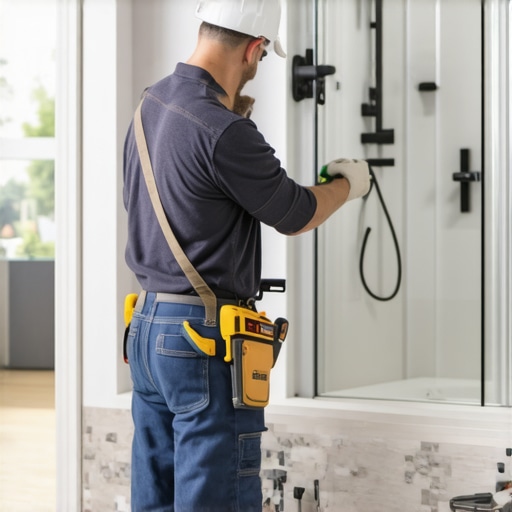
Mastering the Art of Shower Enclosure and Baseboard Durability Amid Evolving Material Science
As industry professionals strive for impeccable bathroom renovations in 2025, understanding the nuanced interplay of grout technology, tile selection, and baseboard craftsmanship has become paramount. The focus extends beyond aesthetics, emphasizing longevity and resistance against moisture infiltration, which are crucial in humid environments. Leveraging cutting-edge materials like epoxy grouts and antimicrobial coatings not only enhances durability but also addresses common maintenance woes.
Synergizing Grout Formulations with Modern Tile Designs for Optimal Performance
Advanced grout compounds, such as flexible, color-matched epoxy mixtures, offer superior adhesion and stain resistance, aligning with the sleek lines of contemporary tiles. A detailed grasp of substrate preparation and proper curing techniques is essential to prevent future cracks or discoloration. Industry standards, as outlined in Architectural Digest, emphasize integrating moisture barriers beneath tile installations for enhanced longevity.
The Role of Customizable Baseboards in Achieving Unified Bathroom Aesthetics
In a competitive market, the evolution of baseboard design emphasizes not just style but also functional enhancements like water resistance and ease of cleaning. Expert installers now incorporate high-density polyurethane or PVC variants, which resist swelling and mold growth. Incorporating these elements with strategic sealants and precise fitting techniques leads to a seamless transition between tiles and walls, elevating the overall space.
What Are the Most Surprising Innovations in Shower and Baseboard Materials That Guarantee Longevity?
Recent breakthroughs include nanotechnology-infused coatings that impart self-cleaning and anti-microbial properties to surfaces. These developments showcase a significant shift towards smarter, maintenance-free bathroom fixtures capable of resisting the prevalent issues of mold, mildew, and grout deterioration. For comprehensive insights, visit our tile cleaning tips for 2025.
Strategic Approaches to Installation that Counteract Environmental Challenges
Professional applications now involve meticulous moisture management—such as the use of vapor barriers and appropriate thinset mortars—to prevent moisture ingress behind tiles and baseboards. Additionally, adopting rapid-curing grouts and flexible sealants minimizes joint stress, especially in high-traffic or variable temperature zones. Examining these practices within the context of a holistic bathroom waterproofing plan ensures enduring performance.
Invitation for Professional Engagement and Knowledge Sharing
If you’re an industry expert, contributing insights on material innovations or installation techniques can significantly impact collective standards. Explore our contact page to share your expertise or inquire about collaborative opportunities.
Adopting Advanced Installation Techniques for Maximum Moisture Protection
In today’s competitive renovation landscape, ensuring that your shower bases and moldings withstand the test of time requires a meticulous approach to installation. Professionals now prioritize the use of high-quality vapor barriers beneath tiles and baseboards, which act as frontline defenses against moisture infiltration. Incorporating flexible, waterproof membranes such as liquid-applied sealants can further supplement these barriers, adapting seamlessly to surface movements and preventing future deterioration.
Understanding the significance of proper substrate preparation cannot be overstated. Surface leveling, eliminating any trapped air or debris, and applying primer ensures enhanced adhesion of subsequent waterproofing layers. This meticulous process minimizes the risk of delamination, which can be a silent culprit in compromising the structural integrity of shower enclosures and baseboards over time.
Embracing Smart Materials for Long-Term Benefits
Emerging material innovations are revolutionizing bathroom fixture durability. For instance, nanotechnology-enabled coatings now provide surfaces with self-cleaning and anti-microbial properties, dramatically reducing maintenance requirements and preventing mold or mildew buildup. Such advancements are particularly beneficial for grout lines and baseboards exposed to persistent moisture, ensuring ongoing cleanliness and structural resilience.
Incorporating these materials into your projects aligns with industry best practices highlighted by trusted sources like the Architectural Digest. Their emphasis on sustainable, durable solutions underscores the relevance of these cutting-edge innovations for professional applications.
Can Integrating Smart Materials and Precise Installation Techniques Transform Bathroom Longevity?
By combining these progressive approaches, professionals can significantly extend the lifespan of bathroom fixtures, reducing the frequency of repairs and replacements. For practical guidance, explore the detailed strategies outlined in our expert insights on durable shower baseboards and learn how tailored solutions can meet specific project demands.
If you’re interested in elevating your renovation expertise and staying at the forefront of industry advancements, don’t hesitate to connect with us through our contact page for tailored advice or collaborative opportunities. Sharing such knowledge fosters collective growth and innovation within the professional community.
Harnessing Nano-Technology for Unmatched Moisture Defense in Bathrooms
Superlative bathroom longevity increasingly hinges on innovations stemming from nano-engineered coatings that deliver self-healing and anti-microbial properties. By integrating these advanced surface treatments, professionals can create environments where grout lines and baseboards are inherently resistant to mold, mildew, and staining, drastically reducing maintenance efforts. Such coatings work at a molecular level, forming a protective barrier that not only repels water but also actively neutralizes microbial growth, ensuring pristine surfaces over years of service.
Can nano-coatings truly outperform traditional waterproofing methods in high-moisture zones?
According to research published in Surface & Coatings Technology, nano-coatings possess self-healing abilities by autonomously repairing microcracks caused by surface stress or thermal movement. This self-maintenance attribute negates the need for frequent reapplications, which is a common challenge with standard sealants. Consequently, adopting nano-technology not only enhances durability but also aligns with sustainable building practices by prolonging material lifespan.
Interested professionals should consider the compatibility of such coatings with existing grout materials and surface types to optimize performance. Consulting with manufacturers like NanoShield or Nanovere can provide tailored solutions that meet specific environmental demands.
Integrating Hybrid Waterproofing Solutions for Maximum Enclosure Security
Recent industry trends favor hybrid waterproofing systems combining liquid-applied membranes with robust vapor barriers. These dual-layer defenses offer comprehensive protection against moisture ingress, especially in complex shower constructions where thermal expansion and surface movement are prevalent.
For instance, a combination of a liquid waterproof membrane like HydroSeal with a high-quality polyethylene vapor barrier can be strategically installed to accommodate dynamic loads and minimize joint vulnerabilities. Such approaches demand meticulous surface preparation, precise membrane application, and rigorous testing—factors that seasoned installers must master to prevent future issues.
Implementing advanced moisture management strategies involves understanding the intricacies of vapor pressure differentials and ambient humidity levels, guided by standards such as ASTM E96 and relevant building codes. This ensures that moisture does not accumulate behind surfaces, thereby preserving structural integrity and preventing mold proliferation.
Enhancing Aesthetic Integration Through Custom, Water-Resistant Baseboards
The evolution of baseboard manufacturing now emphasizes not just visual appeal but also functional resilience. High-density, water-resistant polymers like PVC and polyurethane are available in a spectrum of styles, mimicking traditional wood while resisting swelling, warping, and mold.
Strategic detailing—such as seamless joints and color-matched sealants—facilitates a cohesive aesthetic that also forms a moisture barrier. smart installation techniques involve using specialized fasteners and sealants to accommodate surface expansion, thereby maintaining design integrity over time. For projects prioritizing both style and durability, selecting these premium materials becomes a decisive factor in achieving a professional-grade finish.
What role does surface preparation play when integrating multiple waterproofing layers with decorative finishes?
Surface preparation is paramount in ensuring that waterproofing systems adhere properly and function effectively. Removing dust, grease, and loose particles, along with applying appropriate primer layers, creates a stable foundation for subsequent coatings. Proper curing and inspection of each layer—guided by manufacturers’ specifications—maximizes bond strength and prevents delamination, which can compromise the entire enclosure’s integrity.
Professionals should also consider environmental factors such as humidity and temperature during installation to optimize curing times and adhesion quality. Regular training on advancements in surface prep techniques ensures that installers remain equipped to handle complex waterproofing assemblies with confidence.
Future-Proofing Bathrooms: The Horizon of Smart, Self-Maintaining Materials
Looking ahead, the advent of intelligent materials integrated with IoT (Internet of Things) capabilities promises to redefine bathroom maintenance. Sensors embedded within grout or baseboard surfaces can monitor moisture levels and surface integrity in real time, alerting homeowners or facility managers to potential issues before visible signs appear.
Such developments are exemplified by prototypes utilizing conductive nanomaterials that transmit data to connected devices, enabling predictive maintenance. As these technologies mature, industry professionals should stay informed through publications like the
Advanced Science News for insights on integrating smart materials into their renovation workflows.
Embracing these innovations requires not only technical knowledge but also a strategic mindset geared toward sustainable, low-maintenance solutions that deliver long-term value. For dedicated practitioners eager to pioneer these advancements, collaborating with material scientists and participating in ongoing training sessions is essential.
Unlocking the Next Generation of Waterproofing Solutions for High-Humidity Environments
Contemporary bathroom design demands more than aesthetic appeal; it necessitates resilient systems capable of withstanding prolonged exposure to moisture. The integration of hybrid waterproofing techniques—combining liquid-applied membranes with sheet vapor barriers—represents a paradigm shift toward ensuring enclosure integrity. These multilayer systems adapt dynamically to surface movements and thermal fluctuations, significantly mitigating the risk of moisture infiltration that can compromise structural longevity.
Why Substrate Preparation Transcends Routine for Expert Installations
At the pinnacle of durability is meticulous substrate preparation, which extends beyond mere cleaning. It involves assessing substrate elasticity, implementing surface leveling with rapid-curing compounds, and applying bonding primers tailored to specific material compositions. Such precision prevents microcracks and delamination, particularly crucial when employing advanced waterproof coatings and sealants that require optimal adhesion. This foundational step forms the backbone of long-lasting shower enclosures and baseboards, directly correlating with decreased maintenance costs over time.
Nano-Engineered Coatings: Are They the Future of Mold-Resistant Surfaces?
Emerging nanotechnology-infused coatings introduce a transformative approach to moisture management. Capable of self-healing microcracks and providing antimicrobial properties at a molecular level, these coatings extend surface lifespan and reduce microbial growth. Researchers in material science, as documented in Surface & Coatings Technology Publications, affirm their superior performance over traditional sealants, making them highly attractive for high-moisture zones.
Can Smart, Self-Maintaining Materials Eliminate Routine Bathroom Upkeep?
Innovative materials embedded with IoT sensors are poised to revolutionize bathroom maintenance routines. These smart surfaces detect moisture anomalies, surface integrity deviations, or microbial colonization, transmitting real-time data to homeowner apps or maintenance dashboards. Such proactive monitoring minimizes damage from undetected leaks or mold proliferation, enabling intervention before repairs become costly. Professionals integrating these solutions position themselves ahead of the curve in sustainable, high-performance bathroom design.
Refining Sealant Technology for Seamless Surface Transitions
Effective sealing techniques have evolved beyond simple caulk application. Today, the focus is on elastomeric, moisture-curing sealants with high elongation capacity, suitable for dynamic surfaces subject to expansion and contraction. Precise application methods—such as backer rods combined with joint profiling—ensure the longevity of grout and sealants in bathrooms exposed to frequent temperature shifts. Mastery of these details minimizes joint failure and preserves aesthetic continuity, essential for premium renovations.
Harnessing Data-Driven Insights to Elevate Bathroom Construction Standards
The intersection of data analytics and material science ushers in a new era of precision in bathroom construction. Thermographic analysis, coupled with moisture mapping, guides smart material application, while predictive modeling anticipates failure points. Industry portals like Construction Dive highlight case studies where integrated data systems successfully enhance durability benchmarks. For professionals, leveraging such insights means delivering bespoke solutions with unprecedented reliability.
Is It Time to Rethink Your Approach to Shower Enclosure Durability?
Embracing the latest advancements in nano-engineered coatings, hybrid waterproofing, and smart materials positions forward-thinking contractors at the forefront of industry innovation. By adopting these sophisticated techniques and materials, you not only elevate your craftsmanship but also provide clients with bathrooms that stand the test of time. To explore tailored strategies that integrate seamlessly into your projects, connect with industry pioneers via our contact page.
Expert Insights & Advanced Considerations
Invest in Self-Healing Coatings to Minimize Maintenance
Emerging nanotechnology-infused coatings create surfaces capable of repairing microcracks and resisting microbial growth, significantly extending the lifespan of grout lines and baseboards while reducing upkeep efforts.
Prioritize Dynamic Moisture Management Solutions
Combining liquid-applied membranes with high-quality vapor barriers offers adaptable, multilayer defenses that accommodate surface movements and thermal fluctuations, preventing moisture ingress and structural deterioration.
Harness Intelligent Materials for Proactive Detection
Integrating IoT-enabled smart surfaces within bathrooms enables real-time monitoring of moisture levels, facilitating early intervention and preventing costly damage through predictive maintenance technologies.
Utilize Hybrid Waterproofing Techniques for Superior Enclosure Security
Implementing layered waterproof systems—merging flexible membranes with rigid vapor barriers—ensures comprehensive protection against moisture infiltrations in complex shower constructions, even under high humidity exposure.
Adopt Strategic Surface Preparation for Long-Lasting Results
Meticulous substrate assessment, cleaning, and priming are foundational to achieving optimal adhesion of advanced waterproof coatings, ultimately fortifying the enclosure’s integrity over time.
Curated Expert Resources
- Surface & Coatings Technology Publications – Offers in-depth research on nanotechnology-enabled surface treatments that promote durability and antimicrobial properties in bathroom environments.
- ASTM E96 Standard – Guides moisture testing and vapor permeability assessments crucial for designing robust waterproofing systems.
- NanoShield and Nanovere – Leading manufacturers providing customized nanocoatings tailored for high-moisture areas, supported by technical insights and application guidelines.
Final Perspective on the Future of Bathroom Durability
Advanced material science, particularly innovations like self-healing nanocoatings and smart moisture sensors, is transforming the way professionals approach bathroom renovation, ensuring structures withstand moisture and microbial challenges over decades. Embracing these technologies not only enhances quality but also reinforces the importance of strategic installation practices in fostering long-term resilience. For further engagement and to explore innovative solutions tailored to your projects, consider reaching out via our contact page. Continuous learning and adaptation to emerging materials will define the next generation of bathroom excellence.