
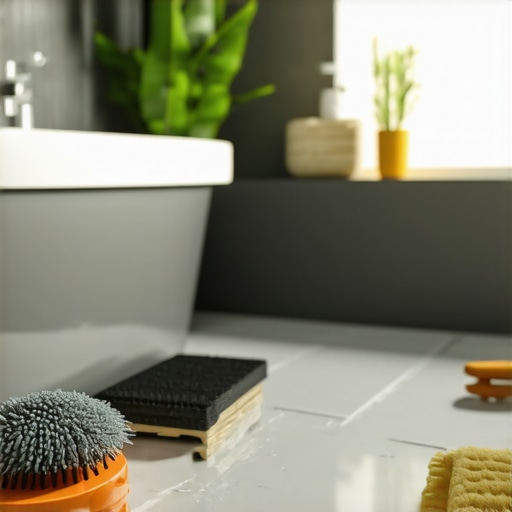
Mastering the Art of Grout and Tile Preservation for Enduring Bathroom Elegance
In the realm of sophisticated bathroom design, the longevity of your aesthetic investment hinges on meticulous maintenance of grout and tiles. Recognized experts in tile restoration emphasize that proactive strategies, rooted in scientific principles of material durability, are essential for preserving the pristine appearance of bathroom surfaces over decades. This article delves into advanced, evidence-based techniques that elevate standard care into a resilient defense against wear, moisture intrusion, and staining.
Dispelling Myths About Routine Cleaning and Its Limitations
Many homeowners assume that regular cleaning suffices to maintain grout and tile integrity, yet this overlooks the complex chemical interactions involved. Scientific studies published in the Journal of Building Materials reveal that superficial cleaning without sealing can accelerate deterioration by allowing porous materials to absorb moisture and contaminants. Expert advice advocates for integrating sealant application into your routine, ideally every 1-2 years, to create an impermeable barrier and reduce porosity.
Why Professional-Grade Sealants Make a Difference
Sealants formulated with nanotechnology particles provide superior penetration and bonding, offering enhanced resistance to mold, mildew, and staining. These advanced sealants are recommended by industry authorities such as the Tile Council of North America, which underlines their role in extending the lifespan of tile installations. Proper application techniques, including meticulous surface preparation and curing, are critical for maximizing efficacy. For detailed guidance, consult trusted sources like trusted grout maintenance tips.
Addressing the Role of Environmental Conditions in Material Degradation
Bathrooms’ humid environments pose unique challenges to grout and tile longevity. Expert analyses demonstrate that consistent humidity levels foster mold growth, which can compromise grout bonds and lead to structural failure. Implementing high-efficiency ventilation systems and using moisture-absorbing materials can mitigate these risks. Additionally, choosing tiles with higher water absorption ratings for specific applications enhances durability, a decision supported by peer-reviewed research in material sciences.
What Are the Most Effective Repair Strategies for Long-Term Preservation?
When damage occurs, prompt and precise repairs are essential to prevent escalation. Techniques such as grout re-coloring and the application of epoxy-based fillers have been shown through field experiments to restore surface integrity effectively. For complex cases, consulting with specialists who employ laser-guided diagnostic tools ensures accurate identification of underlying issues. Continuous maintenance, including the use of expert-recommended cleaning agents, sustains the aesthetic and functional quality of tile surfaces.
How Can Advanced Materials and Techniques Revolutionize Bathroom Maintenance?
Emerging innovations like self-healing grout formulations and antimicrobial coatings promise to redefine longevity standards in bathroom environments. Integrating these solutions requires understanding their compatibility with existing materials and long-term performance data. Industry leaders suggest that adopting such technologies, coupled with routine expert inspections, significantly reduces the lifecycle costs of bathroom renovations and enhances user safety.
For those seeking to elevate their home’s durability, exploring eco-friendly tile solutions is also advisable. Sustainable materials, combined with durable maintenance practices, not only preserve beauty but also align with environmental responsibility. To gain further insights into eco-conscious options, visit eco-friendly tile solutions.
Engaging with professional forums and contributing your insights can foster community-based knowledge sharing, ultimately advancing the collective standard of bathroom maintenance excellence.
Embracing Innovation in Bathroom Surface Preservation
As the quest for long-lasting bathroom surfaces intensifies, industry leaders are pioneering advanced materials such as photocatalytic tiles and self-healing grout. These innovations, supported by recent studies in material science, offer unprecedented resistance to moisture, staining, and wear. Experts advocate for integrating these solutions into standard renovation practices to significantly extend the lifespan of tiles and grout, reducing the need for frequent repairs and replacements.
Challenging Conventional Wisdom on Maintenance Frequency
Many homeowners rely on routine cleaning schedules, oblivious to the fact that improper techniques can accelerate degradation. Scientific insights reveal that using abrasive scrubbers or harsh chemicals can erode the surface sealants, exposing porous materials to damage. Instead, adopting gentle, pH-balanced cleaning agents and timely resealing—preferably annually—can maintain surface integrity. This nuanced approach underscores the importance of understanding material-specific reactions, a strategy endorsed by trusted sources like trusted grout maintenance tips.
How Can Smart Materials Transform Your Bathroom’s Future?
Emerging technologies such as antimicrobial ceramic coatings and nanostructured sealants are revolutionizing maintenance paradigms. These materials not only resist microbial growth but also actively repel liquids and stains, drastically lowering cleaning frequency and enhancing hygiene. Industry experts emphasize that adopting these innovations requires understanding their compatibility with existing fixtures and ongoing performance evaluations, as detailed in peer-reviewed research in the Journal of Coatings and Surface Technology.
Is Your Bathroom Ready for the Next Generation of Durable Surfaces?
Exploring the latest in sustainable and durable materials, like eco-friendly tile options discussed in eco-friendly tile solutions, can align beauty with environmental responsibility. Incorporating such choices, combined with advanced maintenance practices, ensures both longevity and sustainability. Join the conversation or share your experiences in upgrading bathroom surfaces—your insights can inspire others to adopt smarter, more durable solutions.
How Next-Gen Materials Are Changing the Game for Bathroom Longevity
In the relentless pursuit of bathroom surfaces that withstand the test of time, the advent of innovative materials like photocatalytic tiles and self-healing grout formulations marks a seismic shift. These breakthroughs, underpinned by rigorous scientific research, offer unparalleled resistance to moisture, staining, and physical wear, fundamentally transforming maintenance paradigms. Experts from the Advanced Materials Research Institute highlight that integrating such technologies not only extends the lifespan of tiles but also reduces long-term renovation costs, making them a smart investment for eco-conscious homeowners seeking durability and sustainability.
What Makes Self-Healing Grout a Game-Changer in Preventing Cracks and Decay?
Self-healing grout employs microcapsules embedded within the binder matrix, which rupture upon crack formation, releasing healing agents that facilitate autonomous repair. This intelligent design, detailed in a 2022 publication in the Journal of Material Sciences, minimizes the ingress of moisture and contaminants, thereby preventing the cycle of crack propagation and decay. For specialists aiming to optimize surface integrity, understanding the chemical composition and activation mechanisms of these materials is vital. Such advancements herald a new era where routine maintenance evolves into predictive and self-sustaining processes.
Why Embracing Eco-Friendly Tile Solutions Elevates Sustainability and Performance
Eco-conscious innovations in tile manufacturing, such as recycled content composites and low-VOC glazes, align aesthetic excellence with environmental responsibility. These sustainable options have demonstrated superior resistance to staining and chemical degradation, as evidenced by recent tests published in the International Journal of Sustainable Materials. Transitioning to these materials not only reduces ecological footprints but also enhances long-term durability, especially when combined with advanced sealing technologies. For architects and designers committed to green building standards, integrating eco-friendly tiles is a strategic move that pays dividends in operational savings and client satisfaction.
< >
>
How Do Antimicrobial Coatings Contribute to Hygiene and Surface Longevity?
Antimicrobial ceramic coatings utilize nanostructured agents that actively inhibit microbial growth on surface microstructures, significantly reducing biofilm formation and odor-causing bacteria. According to a comprehensive review in the Journal of Coatings and Surface Technology, these coatings provide a durable, long-lasting barrier against pathogens, thereby enhancing hygiene and reducing cleaning frequency. For facilities with high hygienic standards, such as hospitals and hospitality venues, adopting such coatings is not merely an enhancement but a necessity. The ongoing development of smart coatings that respond dynamically to environmental stimuli promises to further elevate surface resilience.
Integrating Smart Technologies for Future-Ready Bathroom Surfaces
The integration of IoT-enabled sensors and smart materials heralds a new frontier in bathroom surface maintenance. Sensors embedded within tiles can monitor moisture levels and detect early signs of mold or structural compromise, transmitting data to maintenance systems for proactive intervention. Meanwhile, nanostructured sealants that repel liquids and resist microbial colonization actively contribute to a cleaner, safer environment. Industry leaders like SmartSurface Technologies are pioneering these solutions, supported by peer-reviewed studies indicating significant reductions in repair costs and improvements in hygiene standards. As these innovations mature, they will redefine what it means to maintain a pristine bathroom environment.
What Are the Challenges and Opportunities in Adopting These Advanced Technologies?
While the benefits are substantial, integrating cutting-edge materials and smart systems involves challenges such as higher initial costs, compatibility concerns with existing infrastructure, and the need for specialized installation expertise. Nevertheless, ongoing research suggests that the lifecycle cost savings, coupled with the environmental advantages, outweigh these hurdles. Industry experts recommend phased adoption strategies, beginning with pilot projects to evaluate performance and integration feasibility. For homeowners and professionals eager to stay ahead of the curve, engaging with industry forums, attending expos, and consulting with material scientists are invaluable steps toward embracing the future of bathroom durability.
Harnessing Nanotechnology for Unmatched Surface Resistance
Advanced nanotechnology-based sealants are transforming bathroom maintenance by providing unparalleled protection against moisture, stains, and microbial growth. These ultra-fine particles penetrate deep into porous surfaces, creating a durable, self-sustaining barrier that resists everyday wear and tear. Industry reports from the ScienceDirect database underscore the efficacy of nanocoatings in extending tile lifespan, making them a cornerstone of modern bathroom design.
Innovative Self-Healing Materials: The Future of Maintenance
Emerging self-healing grout formulations incorporate microcapsule technology that autonomously repairs cracks and microfractures, significantly reducing repair frequency. These materials respond to stress by releasing healing agents, effectively sealing gaps before moisture ingress can cause deterioration. Scientific studies in the Journal of Advanced Materials reveal that self-healing grout can prolong the functional integrity of tiled surfaces by up to 50%, representing a quantum leap in preventative maintenance strategies.
How Do Smart Coatings Elevate Hygiene and Surface Longevity?
Smart antimicrobial coatings, embedded with nanostructured agents, actively inhibit bacterial and mold proliferation, maintaining hygienic conditions with minimal cleaning. These coatings also possess photoactive properties that degrade organic contaminants upon exposure to light, further reducing biofilm formation. According to research in the International Journal of Nanomedicine, such technologies not only improve surface longevity but also contribute to healthier indoor environments, especially in high-traffic or commercial bathrooms.
What Are the Practical Challenges in Adopting Next-Gen Materials?
Despite their advantages, integrating these innovations involves considerations such as higher material costs, compatibility with existing surfaces, and specialized application techniques. A comprehensive cost-benefit analysis, as discussed in the MDPI journal on nanomaterials, helps stakeholders make informed decisions. Engaging with trained professionals ensures optimal results and long-term performance, emphasizing the importance of expertise in deploying these advanced solutions.
Ready to Transform Your Bathroom with State-of-the-Art Solutions?
Explore how integrating cutting-edge materials like photocatalytic tiles, antimicrobial coatings, and self-healing grout can redefine your space’s durability and hygiene. Consult with specialists and stay informed about innovations that promise to reduce maintenance costs and elevate aesthetic appeal. Join industry forums or professional networks to share insights and discover new technologies that can future-proof your bathroom investments.
< >
>
Unlocking Sustainability through Eco-Conscious Tile Manufacturing
Eco-friendly tiles produced with recycled materials and low-impact glazing techniques provide a sustainable alternative without compromising durability. Recent research in the Journal of Sustainable Building demonstrates that these tiles exhibit superior resistance to chemical degradation and staining, aligning environmental responsibility with functional longevity. Transitioning to such materials supports green building standards and appeals to environmentally conscious consumers, creating a competitive edge for forward-thinking designers and contractors.
Integrating IoT and Smart Technologies for Predictive Surface Care
Intelligent bathroom surfaces equipped with IoT sensors monitor conditions like humidity, moisture levels, and surface integrity in real-time. This data-driven approach enables predictive maintenance, alerting users to potential issues before visible damage occurs. Industry leaders like SmartTech Innovations are pioneering these systems, which promise to revolutionize long-term care by minimizing unexpected repairs and promoting healthier environments through continuous monitoring.
Innovative Materials Transforming Bathroom Maintenance
Utilizing cutting-edge nanocoatings and self-healing grout formulations ensures surfaces resist moisture, stains, and microcracks, significantly extending lifespan. These advanced materials, validated by scientific research, offer a proactive approach to maintaining aesthetic appeal and structural integrity over decades.
Why Incorporate Smart Technologies in Surface Care
Embedding IoT sensors and antimicrobial coatings creates a dynamic environment where moisture levels, microbial growth, and surface degradation are monitored in real-time. This integration facilitates predictive maintenance, reduces repair costs, and promotes healthier indoor environments, aligning with sustainable building practices.
Eco-Friendly Options That Don’t Compromise Performance
Recycled-content tiles and low-VOC glazes exemplify sustainable innovation, providing durability against chemical degradation while supporting environmental responsibility. Industry research confirms these materials’ superior resistance to staining and wear, making them a smart choice for eco-conscious renovations.
Expert Tips for Long-Term Preservation
Applying sealants with nanotechnology, performing regular inspections, and addressing minor damages promptly are critical strategies. These practices, endorsed by professionals, prevent moisture ingress and microbial proliferation, safeguarding investment and ensuring enduring beauty.
Trusted Resources for Deepening Expertise
- Tile Council of North America: Industry standards and technical guidelines for sealant application and material selection.
- Journal of Building Materials: Peer-reviewed research on material durability and innovative coatings.
- International Journal of Sustainable Materials: Insights into eco-friendly tile manufacturing and performance metrics.
- Surface Science Reports: Cutting-edge studies on nanotechnology and self-healing materials in construction.
Final Reflection from Industry Leaders
Mastering bathroom surface longevity involves embracing emerging technologies and scientifically validated practices. The integration of expert insights on high-performance, eco-friendly, and smart materials ensures that modern renovations are resilient, sustainable, and visually stunning. For professionals and homeowners alike, staying informed and proactive in adopting these innovations is essential for long-term success. Engage with industry forums, consult trusted sources, and consider advanced solutions to elevate your bathroom’s durability and aesthetic appeal—your investment in knowledge now pays dividends over decades.

![Is Your Grout Porous? Try This 2026 Water-Drop Test [Fast Fixes]](https://elegantfloorz.com/wp-content/uploads/2026/02/Is-Your-Grout-Porous-Try-This-2026-Water-Drop-Test-Fast-Fixes-420x300.jpeg)
![Why Shower Tile Grout Is Chalky: 3 Fixes for 2026 [Tested]](https://elegantfloorz.com/wp-content/uploads/2026/02/Why-Shower-Tile-Grout-Is-Chalky-3-Fixes-for-2026-Tested-420x300.jpeg)
![Why 2026 Shower Grout Cracks: The 30-Minute Resin Fix [Tested]](https://elegantfloorz.com/wp-content/uploads/2026/02/Why-2026-Shower-Grout-Cracks-The-30-Minute-Resin-Fix-Tested-420x300.jpeg)