
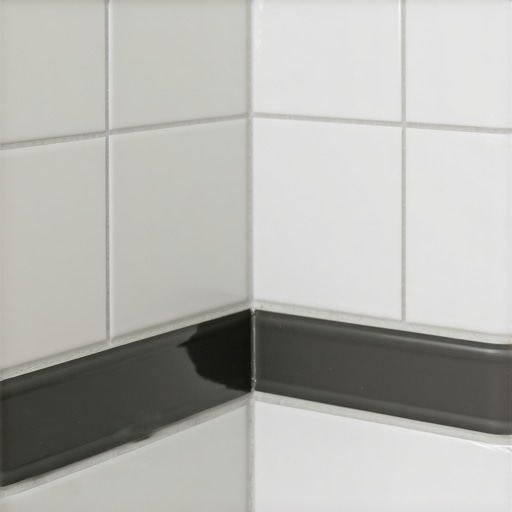
The Death of Bullnose and the Rise of Precision Metal Profiles
Most guys skip the leveling compound. They think the underlayment will hide the dip. It won’t. I spent three days grinding concrete on a job last month just so the floor wouldn’t click like a castanet. That same level of obsessive detail is what separates a shower that looks like a cheap motel from a high-end architectural masterpiece. When you are looking at the finish edges of a tile installation, you are looking at the soul of the installer. For decades, we relied on bullnose tile to turn the corner. We took a piece of clay, rounded the edge, and sprayed a little glaze on it. It was a compromise. Today, I don’t use it. I use Schluter strips and other metal profiles because the physics of the modern home demands more than what a piece of rounded ceramic can provide. My knees are shot from thirty years on the slab, but my eyes still see every 1/32 of an inch that is out of plumb. If you want a shower that survives the next decade, you need to understand why metal is the only way forward. My van smells like WD-40, oak dust, and the stale coffee of a man who hasn’t seen a weekend in two months. I have seen every failure in the book. I have seen bullnose glaze pop off like a scab after a single impact from a shampoo bottle. I have seen grout lines in corners turn into black mold colonies because the bullnose didn’t allow for a proper movement joint. We are going to examine the chemistry and the geometry that makes metal profiles the superior choice for your project.
The fragile nature of ceramic glazing and edge protection
Schluter strips and metal profiles protect the exposed edges of porcelain tile and ceramic tile better than traditional bullnose pieces. By creating a mechanical barrier, these anodized aluminum or stainless steel edges prevent glaze chipping and structural cracking at the most vulnerable point of any shower installation or backsplash.
When a factory makes a bullnose tile, they are essentially taking a standard flat tile and grinding one side down to a radius. This process thins the clay body significantly. The glaze that is applied to that curve is often thinner than the glaze on the face of the tile. In the world of materials science, this creates a high-stress point. If you drop a heavy glass bottle of conditioner in your shower, that bullnose edge is the first thing to shatter. I have spent countless hours in 2025 performing grout restoration secrets for long-lasting results because the edges of bullnose tiles have chipped away, leaving the grout exposed to moisture infiltration. A metal profile, however, is a solid piece of structural material. It does not chip. It does not crack. It absorbs the impact and distributes the force across the thin-set bed. The chemistry of the bond between a metal profile and the mortar is also more reliable. We use polymer-modified mortars that create a tenacious grip on the perforated leg of a Schluter strip. This leg is embedded deep into the mortar bed behind the tile, creating a unified structural assembly that a simple piece of trim tile can never match. You are not just choosing a look. You are choosing a defense system for your walls. The edge of your tile is the frontline in the war against wear and tear.
Why your grout line is a lie in corners
Grout lines in a shower or bathroom wall act as expansion joints that manage thermal expansion and structural shifting. Using Schluter profiles allows for a uniform grout joint that is perfectly aligned with the tile edge, which is impossible to achieve with the variable radius of a ceramic bullnose piece.
The problem with bullnose is the radius. Because the edge is curved, the grout joint becomes wider and more irregular as it wraps around the corner. This creates a massive trap for soap scum and skin cells. I tell my clients that if they want a clean bathroom, they need to minimize the amount of grout exposed at a 90-degree angle. When you use a metal strip, the tile butts up against a vertical flange. This flange creates a crisp, 1/16-inch or 1/8-inch channel that is easily filled and wiped clean. If you are looking for tile cleaning tips for a sparkling bathroom in 2025, the first tip is to install floors and walls that don’t have deep, rounded grout pockets. Bullnose tile also forces the installer to make a choice. Do you align the grout joint with the flat of the tile or the start of the curve? Either way, it looks like a mistake. Metal profiles eliminate this geometric conflict. They provide a hard stop. This is vital in modern design where clean lines are the baseline requirement. I have seen $50,000 bathroom remodels ruined by sloppy bullnose corners that look like they were finished by a blind apprentice. A metal profile ensures that the line remains straight from the floor to the ceiling. It is about the math of the room. If the room is out of square, a bullnose edge will highlight that flaw. A metal strip can be adjusted slightly to hide the deviation, tricking the eye into seeing perfection where none exists.
“A floor is only as good as the subfloor beneath it; deflection is the enemy of every joint.” – Master Flooring Axiom
The geometry of a perfect corner and material availability
Modern tile designs and large format porcelain often lack matching bullnose pieces from the manufacturer. Using metal trim solves the inventory problem while providing a minimalist aesthetic that complements contemporary showers and baseboard transitions without the need for specialty ceramic orders.
We are living in the era of the large format tile. People want 24-by-48-inch slabs on their walls. Very few of these high-end Italian or Spanish porcelain lines even make a bullnose. If they do, it’s a special order that takes six weeks to arrive and costs $30 a linear foot. It is a logistical nightmare. When I’m working on showers that wow modern designs for 2025, I can’t wait for a boat to cross the Atlantic because the warehouse forgot three pieces of trim. Metal profiles are available in every finish imaginable, from brushed nickel to matte black to copper. You can match the profile to your shower hardware, creating a cohesive design. The geometry of the Schluter strip also allows for zero-threshold entries. If you are doing a curbless shower, you cannot use bullnose to transition from the shower floor to the bathroom floor. You need a metal ramp or a square edge profile to manage that height difference. The thickness of the tile is another factor. Modern tiles come in various thicknesses, from 3mm slim slabs to 20mm pavers. There is a metal profile for every single one of them. Bullnose is typically only made in one standard thickness, which leads to awkward lippage when paired with non-standard tile. You are fighting the material instead of working with it. Metal profiles work with the tile, not against it.
Comparison of Edge Finishing Methods
| Feature | Ceramic Bullnose | Schluter Metal Profiles |
|---|---|---|
| Impact Resistance | Low (Glaze chips easily) | High (Structural metal) |
| Grout Joint Precision | Variable and wide | Uniform and narrow |
| Color Matching | Limited to tile dye lot | Matches hardware finishes |
| Installation Speed | Slow (requires miter cuts) | Fast (integrated with thin-set) |
| Moisture Protection | Moderate | Superior (integrated flange) |
The 1/8 inch that ruins everything in moisture management
Waterproof showers require a continuous moisture barrier that is not compromised at the corners. Schluter strips integrate with waterproofing membranes and uncoupling mats to ensure that water infiltration does not occur at the edge of the tile assembly, unlike bullnose trim which relies solely on grout and caulk.
In a wet environment, water is a liquid architect. It will find every crack and every void. When you use bullnose, you are relying on the density of the clay and the integrity of the grout to keep water out of your wall cavity. We all know that grout is porous. Even with sealer, it will eventually let moisture through. Metal profiles are designed to work with waterproofing systems. The anchoring leg of the profile is perforated with holes. When you embed that leg into the thin-set, the mortar squeezes through the holes and creates a mechanical lock. This also allows the waterproofing membrane to sit tighter against the edge. If you are looking at showers with a style trendy ideas for small bathrooms, you have to realize that in a small space, the shower spray hits every wall. There is no dry zone. The corners are under constant hydraulic pressure. A metal profile provides a non-porous surface that sheds water instantly. It doesn’t soak it up like a sponge. I have torn out showers from the 1990s where the bullnose was literally falling off the wall because the moisture had delaminated the glaze from the clay body. The metal profiles I install today will still be there in fifty years. They are chemically inert in a residential environment. They don’t rust, they don’t rot, and they don’t fade. You are building a vault, not just a bathroom.
A better way to finish your baseboards and floor transitions
Baseboards and floor transitions are the most common areas for mechanical failure in a tiled room. Using a square-edge metal profile instead of a traditional baseboard or bullnose tile creates a flush finish that eliminates dust collection and provides a durable impact zone for vacuum cleaners and foot traffic.
I hate bulky baseboards. They are nothing but dust shelves. In a modern kitchen or bath, I prefer to run the floor tile right up to the wall and finish it with a slim metal profile. This is part of the baseboards makeover ideas to elevate your space that I recommend to all my high-end clients. It creates a sleek, industrial look that is incredibly easy to maintain. If you use bullnose as a baseboard, you end up with a thick, clunky piece of tile that sticks out from the wall. It looks dated. A metal profile can be recessed into the wall or sit flush with the plaster, creating a beautiful transition. It also protects the bottom of the drywall from moisture when you mop the floors. The physics of the transition are also better. When you walk from a hardwood floor to a tile floor, the metal strip provides a crisp line that doesn’t wear down. Bullnose at a floor transition is a tripping hazard because of the rounded edge. It doesn’t give your foot a clear signal of where the surface change occurs. A metal L-angle is the professional way to handle this. It is about the integrity of the transition. I’ve spent too much time fixing chic baseboard designs that transform rooms in 2025 because the previous installer used the wrong trim. Get it right the first time.
“Precision in the layout is the difference between a craftsman and a laborer; use the tools that allow for a perfect margin.” – TCNA Handbook Commentary
Checklist for Installing Metal Edge Profiles
- Select a profile height that matches the tile thickness plus 1/32 inch for the mortar bed.
- Use a miter box or a non-ferrous metal blade on a chop saw for clean 45-degree corner cuts.
- Apply a generous amount of thin-set to the area where the anchoring leg will be embedded.
- Press the anchoring leg firmly into the mortar and check for levelness immediately.
- Butter the back of the edge tile to ensure 100 percent coverage against the profile flange.
- Clean any excess mortar off the face of the profile before it cures to avoid scratching the finish.
- Leave a small gap for grout between the tile and the profile to allow for expansion.
The movement toward metal profiles is not just a trend. It is a response to the way we build houses now. Our homes are tighter and our materials are more sophisticated. We are no longer limited by the constraints of traditional ceramics. When you choose a Schluter strip, you are embracing the engineering of the 21st century. You are choosing a material that matches the hardness of your porcelain and the precision of your layout. Don’t let a salesperson talk you into bullnose just because they have it in stock. Demand the metal. Your shower, your grout, and your sanity will thank you in a decade. If you need help figuring out the exact mil-thickness of your wear layer or the chemical compatibility of your adhesive, you can always reach out via our contact us page. I’ll be the one with the dusty boots and the level, making sure the world stays square, one tile at a time.