
I spent three days grinding concrete on a job last month just so the floor would not click like a castanet. That is the reality of this industry. Most guys skip the leveling compound and think the underlayment will hide the dip. It never does. I bring this up because tile work is exactly the same. You cannot ignore the fundamentals and expect a high-end result. I once walked into a master bathroom where the homeowner had used straight bleach on their grout for six months. The pink mold was gone, but the grout was so soft I could scrape it out with a fingernail. They killed the bacteria but they also murdered the structural integrity of the installation. If you want to keep your shower looking like the day it was finished, you have to understand the chemistry of what you are cleaning and the physics of the barrier you are trying to protect.
The pink bacteria hiding in your grout lines
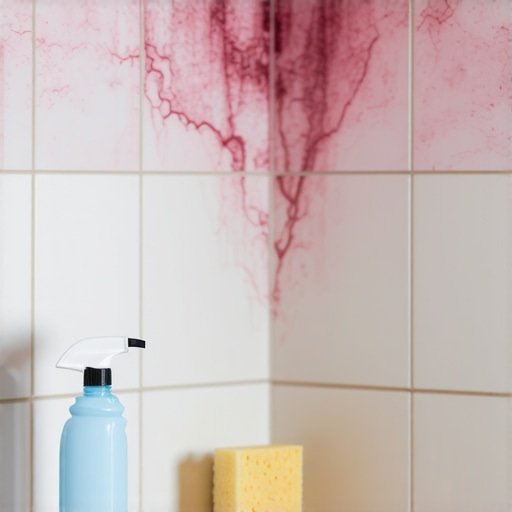
Pink mold in showers is actually a bacterium called Serratia marcescens that thrives on fatty residues found in soap and shampoo. To kill it without damaging the sealer, you must use pH-neutral antimicrobial cleaners rather than acidic or alkaline chemicals that strip the protective barrier from the porous grout surface. This pink slime is not a fungus. It is an opportunistic bacterium that loves the humid environment of your bathroom. It feeds on the phosphorus and fatty acids in your soap scum. When you see that salmon-colored hue, you are looking at a colony that has found a stable food source and a porous home.
The problem is that grout is essentially a hard sponge. Even if it is a high-quality cementitious grout, it has microscopic voids. These voids are the perfect nursery for Serratia marcescens. When we seal a floor, we are applying a liquid that fills these voids or coats the walls of the pores with a hydrophobic material, usually a silane or siloxane based chemical. This prevents water and oils from soaking in. When you hit that surface with harsh chemicals, you are not just killing the bacteria. You are breaking the molecular bond of the sealer.
Why your sealant fails under chemical warfare
Grout sealers fail when harsh chemicals like bleach or vinegar break down the polymers and silanes that create the hydrophobic barrier. Once the sealer is compromised, the grout becomes porous again, allowing water, soap scum, and bacteria to penetrate deep into the cement structure. Most homeowners reach for the strongest bottle under the sink. That is a mistake. Bleach has a very high pH, around 11 to 13. While it is a great disinfectant, it is also an oxidizer that can degrade the resins in your sealer. On the other end of the spectrum, vinegar is an acid with a pH of about 2 to 3. Acids are even worse for cement-based grout because they actually dissolve the calcium carbonate in the cement. You are literally eating away the glue that holds your floor together.
“A floor is only as good as the subfloor beneath it; deflection is the enemy of every joint.” – Master Flooring Axiom
Molecular zooming into the grout pore
When we look at grout under a microscope, we see a landscape of peaks and valleys. The sealer acts as a sacrificial layer that sits on top of these peaks. If you use an abrasive brush or a caustic chemical, you strip that layer. Once the sealer is gone, the pink bacteria can migrate into the capillary structure of the grout. This is why you see the pink color returning just a few days after cleaning. You didn’t kill the source. You only cleaned the surface while simultaneously opening the door for a deeper infection. You need to use a cleaner that can penetrate the biofilm of the bacteria without reacting with the sealer.
The risk of mechanical agitation on tile surfaces
Cleaning tile and grout requires gentle mechanical action with a soft nylon brush rather than stiff wire brushes or abrasive pads. Using excessive force can scratch the glaze on your ceramic or porcelain tile and mechanically remove the sealant from the grout joints. I have seen guys use those drill-attachment brushes. Unless you are stripping a floor to the bare concrete, stay away from them. You are dealing with a finish, not a rusted car frame. A soft brush combined with the right chemistry will do more than all the muscle in the world. This is especially true for tile cleaning tips that focus on longevity. If you scratch the surface, you create more surface area for the pink slime to latch onto.
A checklist for long term grout health
To maintain a mold-free shower, you need a system, not just a one-time cleaning event. Follow this protocol to keep your grout and sealant intact.
- Squeegee the walls after every single shower to remove the food source for bacteria.
- Increase ventilation by running the exhaust fan for at least 20 minutes post-shower.
- Use a pH-neutral cleaner specifically labeled for natural stone or sealed grout.
- Check the integrity of your sealant annually using the water droplet test.
- Inspect the transition joints where the wall meets the floor for cracked caulk.
Comparing cleaning agents for tile and grout
This table breaks down the common chemicals people use and why most of them are garbage for your sealant.
| Cleaning Agent | pH Level | Effect on Sealant | Effect on Pink Mold |
|---|---|---|---|
| Bleach | 11-13 (Alkaline) | Highly Damaging | Kills on contact |
| Vinegar | 2-3 (Acidic) | Dissolves Sealant | Moderate Kill |
| Steam | Neutral | Can weaken bond | Kills with heat |
| Neutral Cleaner | 7 (Neutral) | Safe | Removes biofilm |
| Baking Soda | 8-9 (Weak Base) | Mildly Abrasive | Weak Kill |
The baseboard connection in wet environments
People forget that the bathroom does not stop at the shower curb. The moisture in the air affects your baseboards makeover ideas as well. If you have high humidity from poor shower drainage or lack of ventilation, your baseboards will start to swell. This is especially true if you are using MDF boards instead of solid wood or PVC. When the baseboards swell, they pull away from the wall, breaking the caulk line. This allows moisture to get behind the walls, which can lead to mold issues far worse than the pink slime in your grout. You should always look at chic baseboard designs that utilize moisture-resistant materials for bathroom applications.
Modern shower design and moisture management
Modern shower designs emphasize large format tiles and minimal grout lines to reduce the surface area where bacteria and mold can grow. Utilizing epoxy grouts or high-performance cementitious grouts during the installation phase can significantly reduce the porosity of the system and improve long-term hygiene. If you are looking at showers that wow, you are likely seeing installations with very thin joints. This is not just for looks. It is an engineering choice. The less grout you have, the less maintenance you have. If you are planning a renovation, check out showers with a style that incorporate these technical advantages.
The ghost in the expansion joint
In every shower, there is a change of plane where the floor meets the wall. Many installers make the mistake of putting grout in this corner. That is a failure waiting to happen. Because of the way houses move, that corner needs a flexible sealant, not a rigid grout. If that joint cracks, pink mold will set up shop inside the wall cavity. You should use a 100 percent silicone caulk that matches your grout color. This is part of the grout restoration secrets that the pros use. You scrape out the old, hard grout and replace it with a flexible barrier that actually keeps the water out.
“Ceramic tile is a permanent finish; the maintenance of the joints is the only variable in its lifespan.” – TCNA Handbook Summary
Restoration versus replacement
Sometimes the pink mold has won. If the grout is soft, crumbling, or permanently stained, you might need to look into how to refresh grout without replacing it entirely. This often involves a deep mechanical cleaning followed by a grout colorant. These colorants are essentially an epoxy-based paint for your grout lines. They seal the grout and provide a fresh, uniform color. It is a much cheaper option than a full rip-out, but it requires the grout to be structurally sound.
The 1/8 inch that ruins everything
Accuracy is the difference between a floor that lasts forty years and one that fails in four. If your grout joints are too narrow for the type of grout used, the material will not have the strength to resist cleaning. Sanded grout needs a joint of at least 1/8 inch to ensure the sand particles can pack together correctly. If you try to shove sanded grout into a 1/16 inch joint, you are left with a weak, binder-heavy mixture that pink mold will eat for breakfast. When you are looking for eco friendly tile solutions, remember that the most sustainable floor is the one you never have to replace.
The physical reality of steam cleaning
Many people think steam is the answer to everything. While steam at 212 degrees Fahrenheit will certainly kill Serratia marcescens, it can also cause problems. The heat can cause the moisture inside the grout to expand rapidly. If your sealer is still somewhat intact, that steam pressure can cause the sealer to delaminate or even blow out small chunks of grout. If you use steam, keep the nozzle moving. Never linger on one spot for more than a second or two. You want to kill the bacteria, not boil your grout.
Final inspection of the shower system
Your shower is a system of layers. From the waterproofing membrane behind the tile to the sealer on the surface, every part has a job. Pink mold is just a sign that your maintenance layer has failed. Clean it with a neutral antimicrobial, dry the area completely, and then reapply a high-quality solvent-based sealer. Stop using the heavy acids. Stop using the bleach. Treat your tile with the same respect you would a fine piece of furniture. If you keep the soap scum off the walls and the air moving through the room, the pink mold will not have a reason to stay. It is about biology and physics.