
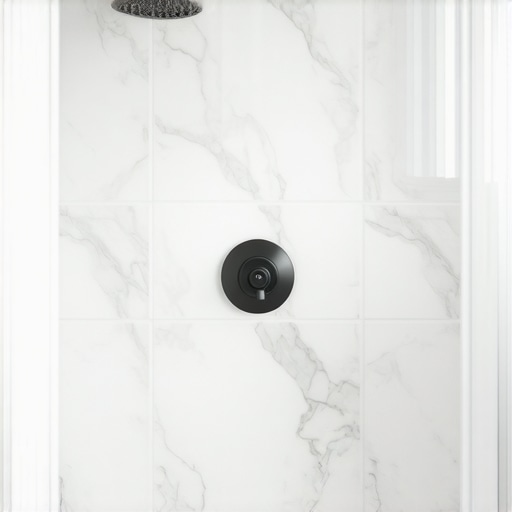
The chemistry of soft stone and acidic ruin
To clean marble shower tiles safely you must use a pH-neutral cleaner specifically formulated for natural stone to avoid etching the calcium carbonate structure. Avoid all vinegar, lemon juice, or bleach products because these acidic or highly alkaline substances react chemically with the marble, essentially dissolving the top layer of the stone and leaving permanent dull marks. This process happens at a molecular level where the acid breaks the bonds of the calcite crystals. I spent three days grinding concrete on a job last month just so the floor wouldn’t click like a castanet, and that same level of precision is required when you touch marble. People treat it like ceramic, but it is a living, breathing rock that absorbs every mistake you make. I once walked into a house where a custom Carrara shower looked like it had been scrubbed with sandpaper. The homeowner had been using a ‘natural’ citrus spray for six months. The acid had eaten so deep into the tiles that the surface felt like a chalkboard. You cannot buff that out with a sponge. You have to bring in heavy diamond pads and start the polishing process from scratch. Most guys skip the leveling compound under the pan, but I know that if the subfloor has even a 1/8 inch dip, water pools and the minerals in that water sit on your marble until they calcify. Cleaning is not just about the soap. It is about the physics of how water moves across the surface. This is why tile cleaning tips for a sparkling bathroom in 2025 emphasize the use of microfiber over abrasive bristles. Microfiber traps the particulates without scratching the soft mineral face of the stone. If you use a stiff brush, you are creating microscopic channels where mold and soap scum will eventually live. It is a slow death for a beautiful installation.
The physics of the shower pan and moisture traps
The structural integrity of a marble shower depends on a perfect slope and a high-performance waterproofing membrane that prevents moisture from sitting beneath the stone. If your shower pan was not mud-set with a true 1/4 inch per foot slope, cleaning becomes a nightmare because the grout lines stay saturated for days. This saturation leads to efflorescence, which is when minerals from the mortar bed travel up through the stone and exit as a white crust on the surface. You cannot just wipe this away. It is a chemical migration. Marble is remarkably porous, with a density that varies significantly between grades. High-end Calacatta is more compact than lower-grade white marble, but both will act like a sponge if the humidity is not managed. I have seen showers that wow modern designs for 2025 fail within the first year because the installer forgot to seal the edges of the cut tiles. When you cut a marble tile, you open up the internal capillary structure. If that edge is not sealed before it hits the grout, the stone will pull moisture from the grout itself, leading to ‘picture framing’ or dark staining around the perimeter of every single tile. No amount of surface cleaning will fix a stain that is literally inside the rock. You must understand that marble is a structural challenge disguised as a decorative choice. If the subfloor is not rigid, the grout will crack. When the grout cracks, water enters the subfloor and creates a mold colony that will eventually rot your baseboards makeover ideas to elevate your space from the inside out. I always tell my clients that if they see a crack in the corner, they should call me immediately. Do not just caulk over it. Caulk is a temporary bridge, not a structural solution. You need to identify why the movement is happening before you try to clean or repair the surface.
“A floor is only as good as the subfloor beneath it; deflection is the enemy of every joint.” – Master Flooring Axiom
The myth of the forever sealer and chemical barriers
Applying a high-quality penetrating sealer is the only way to protect marble from deep staining, but it must be reapplied every six to twelve months depending on usage. A sealer does not make marble waterproof. It makes it water-resistant by filling the pores of the stone with a resin that prevents liquids from soaking in instantly. Think of it as a tactical delay. It gives you time to wipe up the spill before it becomes a permanent part of the bathroom floor. I see guys all the time who think a one-time application at the factory is enough. It is not. The steam from your shower and the friction of your feet gradually wear down that resin barrier. When the water stops beading on the surface, your protection is gone. This is where grout restoration secrets for long-lasting results become vital. If the grout is failing, the sealer on the stone is usually failing too. You need to use a penetrating sealer that allows for vapor transmission. If you use a topical sealer that forms a plastic film on top of the marble, you are trapping moisture inside the stone. This will cause the marble to turn yellow or even rot over time. It is a process called oxidation, where the iron naturally present in the stone reacts with trapped water. You will see orange or brown spots appearing from the middle of the tile. There is no cleaning that. That is a permanent chemical change. I always recommend a solvent-based sealer for showers because the molecules are smaller and can dive deeper into the stone than water-based alternatives. It smells like a refinery for an hour, but it saves the floor for a decade. Do not let anyone tell you that ‘stone-look’ porcelain is the same. Porcelain is a dead material. Marble is alive. It reacts to its environment. If you want the look of showers with a style trendy ideas for small bathrooms, you have to accept the maintenance that comes with a premium natural material.
A technical comparison of cleaning agents and stone safety
| Cleaning Agent | pH Level | Safety Rating | Effect on Marble |
|---|---|---|---|
| White Vinegar | 2.5 | Dangerous | Dissolves calcite, causes instant etching |
| Lemon Juice | 2.2 | Dangerous | Corrodes surface, leaves white ghost marks |
| Bleach (Diluted) | 11.0 | Risky | Degrades sealers, can cause yellowing |
| pH-Neutral Soap | 7.0 | Safe | Lifts oils without reacting with stone |
| Specialty Stone Cleaner | 7.0-8.0 | Optimal | Removes soap scum and conditions pores |
The table above demonstrates that the closer a cleaner is to a neutral pH of 7, the safer it is for your investment. Most homeowners reach for the harshest chemical possible when they see mold. They want to kill the fungus, but they end up killing the stone. If you have a mold problem in a marble shower, the issue is not the cleaner. The issue is the ventilation and the drainage. If water sits in the grout lines, mold will grow regardless of how much bleach you throw at it. You are better off using a soft squeegee after every shower to remove the bulk of the water. This simple physical action reduces the mineral buildup and the organic matter that mold feeds on. It is about managing the ecosystem of the bathroom. I often suggest eco-friendly tile solutions for sustainable homes in 2025 that focus on steam cleaning as an alternative to chemicals. High-temperature steam can kill mold spores without leaving a chemical residue that might attract more dirt later. However, you must be careful not to hold the steam wand in one spot for too long or you risk thermal shock to the stone. Marble expands and contracts with heat. If you hit a cold slab with 200-degree steam too fast, you could cause a hairline fracture. Everything in flooring is about balance.
The ghost in the expansion gap
Expansion gaps at the change of plane are the most overlooked part of shower maintenance and they are where most leaks originate. You cannot use rigid grout where the wall meets the floor or where two walls meet. You must use a 100 percent silicone caulk that matches the grout color. Structures move. Houses settle. If you have grout in those corners, it will crack. Once it cracks, the cleaning water you use will seep behind the tiles and begin to dissolve the thin-set. This creates a hollow sound when you tap the tiles. I call it the ghost in the gap because you cannot see the damage until the tile literally falls off the wall. When you are cleaning, pay close attention to these joints. If the silicone is peeling, it must be replaced. This is part of the chic baseboard designs that transform rooms in 2025 philosophy, where every transition is treated as a functional element. A clean shower is a dry shower. If you have moisture behind the stone, no amount of surface scrubbing will stop the smell of dampness. I also tell people to check their how to refresh grout without replacing it guides before they decide to rip everything out. Sometimes a deep clean with a vapor steamer and a fresh coat of high-quality sealer can bring a ten-year-old shower back to life. You just have to be willing to do the work. It is not a five-minute job. It is a Saturday morning commitment. You need the right tools, the right chemistry, and the right attitude. If you treat your marble like a cheap laminate, it will look like one in six months. Treat it like a monument, and it will last a lifetime.
“Marble is a metamorphic history book. Every vein and pore tells the story of thousands of years of pressure. Don’t ruin it with a five-dollar bottle of bathroom spray.” – Stone Specialist Manual
The checklist for a preserved marble finish
- Use a squeegee after every single use to eliminate standing water and mineral deposits.
- Clean weekly with a dedicated stone soap and distilled water if your tap water is hard.
- Inspect all grout and silicone joints for cracks or peeling every three months.
- Perform the water bead test to check if the sealer is still active on the stone surface.
- Avoid using suction-cup mats or plastic organizers that trap water against the marble.
- Buff the stone dry with a clean microfiber cloth to prevent water spots and streaking.
Following this protocol ensures that the delicate surface of the marble remains polished and free of the dullness that plagues neglected showers. Many people ask about using baking soda for stains. While it is less abrasive than some powders, it is still alkaline. If you use it, you must rinse it thoroughly and neutralize the area. Never leave a baking soda paste on marble for an extended period. It can leach the natural oils out of the stone and leave it looking parched. If you have a deep oil stain from a shampoo bottle, you need a professional poultice. This is a clay-based powder that you mix with a chemical and tape over the stain. It literally sucks the oil out of the pores of the rock. It is a slow process, often taking 24 to 48 hours, but it is the only way to save a heavily stained slab. If you have questions about specific products or need a professional assessment of your subfloor, feel free to contact us for expert guidance. We have seen every type of failure and every type of success. The key is always the same. Start with a solid foundation and treat the finish with the respect it deserves. Marble is not just a surface. It is a structural investment. For more information on our standards, you can review our privacy policy regarding site usage and data. Maintenance is the difference between a bathroom that adds value to your home and one that becomes a liability. Do not cut corners. Do not use cheap chemicals. Keep your stone clean and keep it dry. That is the only secret that matters in the world of high-end flooring. It is the physics of the rock, plain and simple.
Comments
3 responses to “The Best Way to Clean Marble Shower Tiles Safely”
This post offers crucial insights into the delicate nature of marble and the importance of understanding its chemical and physical properties. I completely agree that using the wrong cleaning agents can cause irreversible damage. I once neglected the importance of sealing grout properly after a renovation, and I ended up with stubborn stains that took professional restoration to fix. Your point about the water movement and moisture management really resonates with me. I’ve started using microfiber cloths and squeegees regularly, which has significantly improved the appearance of my Marble bathroom. It’s interesting how vital the right tools and consistent maintenance are, especially for such a high-end material. Has anyone tried steam cleaning for marble showers? I’ve heard it’s effective but risky if not done carefully, especially concerning thermal shock. What are your experiences with steam cleaning—do you recommend it, or should it be avoided altogether? I’d love to hear practical tips from others who have managed to keep their marble pristine without causing damage.
This detailed insight really highlights how essential it is to respect marble’s unique properties when cleaning. I’ve always been cautious, especially after seeing some badly damaged tiles caused by improper cleaning agents. Your mention of sealing edges after cutting tiles is a great tip — I had no idea that unsealed edges can result in such internal damage over time. I’ve been debating whether to use steam cleaning, but now I understand the risks involving thermal shock better. Has anyone had success with low-temperature steam or alternative methods that don’t pose a crack risk? It seems like a balancing act between effective cleaning and preserving the integrity of such a porous, living stone. I appreciate the emphasis on regular maintenance and careful inspection because neglecting even small cracks can lead to bigger structural issues down the line. How often do you recommend professionally re-sealing marble showers for optimal longevity? Would love to hear some expert advice on creating a sustainable cleaning routine that respects the material’s nature while keeping it looking pristine.
This post really emphasizes how crucial understanding the chemistry and physical structure of marble is for proper maintenance. I’ve always been cautious about cleaning marble, but reading about the effects of acidic cleaners like vinegar and lemon juice really drives home how easy it is to cause irreversible damage without realizing. I particularly appreciated the mention of sealing edges after cutting tiles—it’s a detail that’s often overlooked but can make a big difference in preventing internal moisture issues over time. I’ve experimented with steam cleaning in my bathroom, but I’ve been wary of thermal shock—especially with the porosity of marble. Has anyone tried using lower-temperature steam or other gentle methods that work without risking cracks? Also, how often do you all recommend re-sealing your marble surfaces to keep them protected? I’d love to hear about routines that have worked well for others who want to preserve their natural stone investment while maintaining a pristine appearance.