
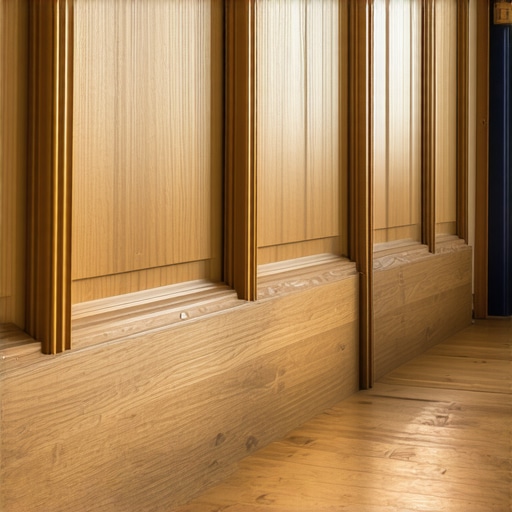
I once walked into a house where a $15,000 wide-plank walnut floor was cupping so bad it looked like a potato chip because the installer didn’t check the crawlspace humidity. The baseboards were pushing so hard against the drywall that the nails were literally popping out and hitting the floor. It smelled like wet oak and regret. That is the reality of wood. It is a living, breathing material that reacts to every drop of moisture in the air. If your baseboards are swelling right now, it is not a mystery, it is physics. Wood is hygroscopic. It wants to reach an equilibrium with the air around it. When the summer humidity spikes, your trim acts like a sponge, pulling water molecules into its cellular structure until it physically cannot hold its shape any longer.
The hidden physics of wet wood
Baseboards swell because of high relative humidity and the hygroscopic nature of cellulose fibers. When the ambient moisture exceeds 55 percent, wood cells absorb water, causing the material to expand across the grain. This expansion leads to warping, bowing, and the characteristic swelling seen at the base of your walls. You have to understand the difference between bound water and free water. Bound water is held within the cell walls of the wood. When the humidity rises, the cell walls thicken. This happens at a microscopic level, but across a twelve-foot run of trim, that expansion translates into a significant physical shift. Most homeowners think their house is a static environment. It is not. It is a shifting, breathing organism. If you used solid pine or oak for your trim, you are dealing with a material that is constantly trying to grow. This is why professional installers focus on the Equilibrium Moisture Content or EMC. If the EMC of your wood does not match the room, the wood will move. It is inevitable. For those looking for aesthetic upgrades while managing these issues, checking out chic baseboard designs that transform rooms in 2025 can provide insight into materials that handle moisture better than traditional options.
The ghost in the expansion gap
The expansion gap is the intentional space left between the flooring and the wall to allow for natural material movement. When installers fail to leave at least a 1/4 inch gap, the baseboards and flooring collide during humid months. This pressure forces the baseboard to buckle or pull away from the wall. Most guys in the trades today are in too much of a hurry. They tight-fit the baseboard directly against the floor boards. They think it looks cleaner. What they are actually doing is building a ticking time bomb. When summer hits and the humidity climbs to 70 percent, those floor planks expand. They hit the baseboard. The baseboard has nowhere to go but out or up. I have seen 3/4 inch solid oak lift a baseboard two inches off the floor just through the sheer force of expansion. It is like a slow-motion car crash. You need that gap. You cover it with a shoe molding or a quarter round if you have to, but you never, ever pin the baseboard tight against a wood floor without room for the house to move. It is the 1/8 inch that ruins everything. If you are dealing with moisture issues that have migrated to your floors or walls, you might also need to look into grout restoration secrets for long lasting results to ensure your tiled areas are not suffering from the same vapor pressure issues.
The chemical reality of MDF versus solid pine
Medium Density Fiberboard or MDF swells significantly more than solid wood when exposed to high humidity or direct moisture. While solid wood expands across the grain, MDF is made of compressed sawdust and glue, meaning it absorbs water like a sponge and often suffers permanent structural failure. Once MDF gets wet, it is over. The resins that hold the fibers together begin to break down. You will see the edges of the baseboard start to puff up and look fuzzy. No amount of sanding will fix that. It is a chemical change, not just a physical one. Solid pine will shrink back down when the air dries out, but MDF stays swollen. It loses its density. If your home has high humidity levels in the summer, MDF is the worst choice you can make. It is cheap, sure. It comes pre-primed. But in a high-moisture environment, it is garbage. For areas prone to moisture, you should consider baseboards makeover ideas to elevate your space using moisture-resistant materials like PVC or high-quality engineered polymers that do not react to vapor pressure.
“A floor is only as good as the subfloor beneath it; deflection is the enemy of every joint.” – Master Flooring Axiom
The moisture trap inside your walls
Crawlspaces and basements are the primary sources of moisture that cause baseboard swelling. Ground moisture evaporates and moves upward through the subfloor via hydrostatic pressure, saturating the bottom of the wall plates and the baseboards. This capillary action can occur even if the room feels dry. If you do not have a vapor barrier in your crawlspace, your baseboards are drinking from the earth. I have spent three days grinding concrete on a job last month just so the floor would not click like a castanet because the slab was sweating. That moisture moves through the wood. It is called vapor drive. The humidity in the air is only half the battle. The moisture coming from under the house is the real killer. You can run your AC all day, but if that subfloor is wet, your baseboards will stay swollen. You need a 6-mil poly vapor barrier on the ground. You need to tape the seams. You need to keep that moisture in the dirt where it belongs. While addressing these structural issues, homeowners often find that their bathrooms also need attention, which is where showers that wow modern designs for 2025 can offer inspiration for water-resistant renovations.
| Material Type | Expansion Risk | Moisture Resistance | Best Use Case |
|---|---|---|---|
| Solid Oak | High | Moderate | Living Areas |
| MDF Trim | Very High | Low | Dry Bedrooms |
| Finger-Jointed Pine | Moderate | Moderate | General Trim |
| PVC/Polymer | Negligible | Very High | Bathrooms/Basements |
Why your HVAC is failing your trim
Air conditioning units act as dehumidifiers by pulling moisture out of the air as it passes over the evaporator coils. If an HVAC system is oversized or undersized, it will not run long enough to properly dehumidify the home, leaving the relative humidity high enough to swell wood. Most people think the AC is just for temperature. Wrong. It is for climate control. If the air in your house stays at 65 percent humidity, your baseboards will never stop moving. You want that number between 35 and 55 percent. Anything higher and you are asking for trouble. I have seen people turn off their AC when they go on vacation in July to save money. They come back to a house where every door sticks and the baseboards are buckling. It costs more to fix the trim than they saved on the electric bill. Keep the air moving. Keep the moisture low. If you have tile in these rooms, keeping it clean is part of the maintenance cycle, so follow tile cleaning tips for a sparkling bathroom in 2025 to prevent mold growth in the humid air.
“Wood flooring will perform best when the environment is controlled to stay within a relative humidity range of 30 to 50 percent and a temperature range of 60 to 80 degrees Fahrenheit.” – NWFA Technical Guidelines
The 1/8 inch that ruins everything
Incorrect nailing techniques often contribute to baseboard failure during the summer. If a baseboard is nailed through the flooring into the wall plate, it locks the floor in place, preventing expansion and forcing the baseboard to bend or crack under the resulting pressure. You have to nail into the studs. Never nail into the floor. This is basic stuff, but I see it all the time. The floor needs to slide under the baseboard. If you pin it down, you are fighting the forces of nature. Wood expansion can exert hundreds of pounds of pressure per square inch. Your finish nails will not hold it. The wood will either split or the baseboard will pull the nails right through the drywall. It is a mess. I always tell my guys to use a spacer when they are installing. Give it room to breathe. If you are looking for professional help to fix these issues, you can contact us for a consultation.
- Check relative humidity with a digital hygrometer.
- Maintain indoor humidity between 35% and 55% year-round.
- Ensure a 1/4 inch expansion gap exists behind all baseboards.
- Seal the back of solid wood trim before installation to slow moisture absorption.
- Use a dehumidifier in basements or crawlspaces to reduce vapor drive.
The chemical bond of modified thin-set
While we are talking about baseboards, we have to talk about how they interact with other surfaces like tile. If you have tile floors, the grout line at the wall is a major point of failure. You should never grout the gap between the tile and the baseboard. That should be a color-matched 100 percent silicone caulk. Grout is rigid. It does not move. When your house shifts in the summer, the grout will crack and fall out. Silicone is flexible. It handles the movement. If your grout is already failing, you might want to learn how to refresh grout without replacing it to save yourself some time and money. The chemistry of these materials matters. Modified thin-sets have polymers that allow for a tiny bit of flex, but the finish materials like grout and trim need to be installed with movement in mind. The physics of the subfloor and the chemistry of the adhesives are what make a floor last twenty years instead of two.
Comments
2 responses to “Why Your Baseboards Are Swelling in the Summer Humidity”
Reading through this detailed explanation really highlights how important proper moisture management and installation practices are in home renovation. I once worked on a project where a homeowner kept ignoring the expansion gap during installation, and sure enough, by summer, the baseboards started to crack and peel away. It’s fascinating how such a small detail like leaving a 1/4 inch gap can make such a huge difference in preventing costly repairs later on. It makes me wonder, with all these risks, what are the best moisture-resistant materials for someone who lives in a particularly humid climate? I’ve heard good things about PVC or engineered composites but would love to hear what others in similar environments recommend for long-term durability. Also, I’m curious if anyone has experience using vapor barriers in crawlspaces that have genuinely helped reduce vapor drive and save on repairs. It seems like proactive moisture control could really make a difference in maintaining the integrity of our woodwork and overall home health.
This post really highlights how critical proper installation and moisture management are for long-term home durability. I’ve seen firsthand the damage caused when the expansion gap isn’t respected—almost always resulting in costly repairs down the line. What stands out to me is the importance of choosing materials wisely, especially in climates with high humidity. PVC or moisture-resistant engineered materials seem to be a smart investment if you live somewhere particularly wet or humid. I also wonder about the long-term effectiveness of vapor barriers—I’ve installed them in crawlspaces, and they do seem to help, but are there specific products or installation techniques that maximize their benefits? Additionally, controlling indoor humidity with a proper HVAC setup feels like the cornerstone of prevention, yet many overlook it. What do others find as the most effective ways to combine material choice, installation, and environment control to prevent swelling? Would love to hear some tried and true solutions from the community.