
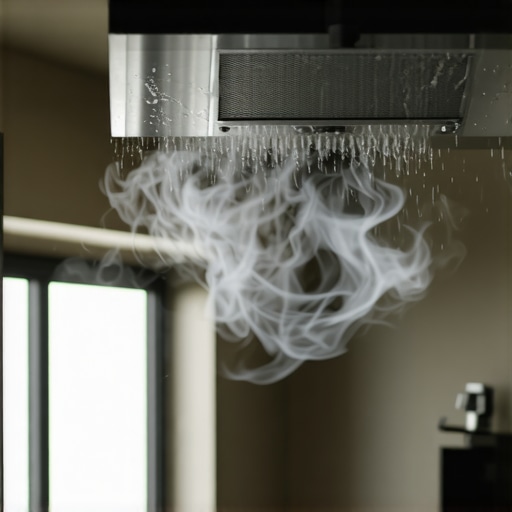
I smell like WD-40 and oak dust most days. My knees have the permanent calluses of a man who has spent twenty five years crawling over subfloors with a moisture meter and a six foot level. I do not look at a bathroom as a place to relax. I see it as a structural engineering challenge where water is the primary antagonist. Most guys skip the leveling compound. They think the underlayment will hide the dip. It will not. I spent three days grinding concrete on a job last month just so the floor would not click like a castanet because of moisture warping. I once walked into a house where a fifteen thousand dollar wide plank walnut floor was cupping so bad it looked like a potato chip because the installer did not check the crawlspace humidity or the bathroom ventilation. If your exhaust fan is failing to pull steam out of the room, you are not just looking at a foggy mirror. You are watching the slow destruction of your grout, the swelling of your baseboards, and the eventual failure of your tile bond. Let us get into the physics of why that fan is lying to you.
The math of air movement in tight bathrooms
A bathroom exhaust fan fails to remove steam when the Cubic Feet per Minute rating is insufficient for the room volume or restricted by duct friction. High static pressure caused by long duct runs or tight bends prevents the motor from moving the air effectively. To calculate the required CFM, you need to multiply the room square footage by 1.07. If your bathroom is one hundred square feet, a fifty CFM fan is essentially a paperweight. You need a fan that can cycle the air volume at least eight times per hour. I have seen fans that hum loudly but do nothing. This is often because the flapper in the wall cap is stuck shut with years of lint and exterior grime. When air cannot escape the house, it stays in the room, turns back into liquid water on your cold tile, and begins the process of delamination. You can check this by holding a single square of toilet paper up to the intake. If it does not stick to the grill, your fan is useless. You are essentially bathing in a pressurized steam box that is forcing moisture into every microscopic crack in your grout lines. This moisture does not just sit there. It travels through capillary action into the thin-set beneath. When that thin-set stays wet, it undergoes a chemical softening that eventually leads to loose tiles.
Why steam ruins your tile installation
Steam is water in a gaseous state that penetrates the porous structure of cementitious grout and the micro-fissures in tile glazing. When a fan fails, the relative humidity in a bathroom can hit ninety nine percent in minutes. This vapor pressure forces water deep into the substrate where it cannot easily evaporate. I have seen beautiful showers with a style that looked modern but were rotting from the inside because the steam had no exit strategy. The industry standard for tile installation assumes the room will return to a dry state within an hour of use. If your fan is weak, the room stays damp for six hours. This constant saturation cycles the minerals in the grout to the surface, creating a white, chalky film called efflorescence. It is not just ugly. It is a sign that the structural integrity of the grout is being leached away.
“A floor is only as good as the subfloor beneath it; deflection is the enemy of every joint.” – Master Flooring Axiom
Moisture from a failed fan introduces a different kind of deflection. It causes the subfloor material, usually plywood or OSB, to expand and contract at a different rate than the tile. This shear stress is what causes your floor to start popping. I have replaced entire floors where the plywood was as soft as wet cardboard because the homeowner thought a noisy fan was a working fan. It was not.
The swelling of expensive baseboards
Baseboards act as a perimeter moisture wick when steam settles as condensation at the floor level. Because hot air rises and then cools, it drops liquid water onto the junction where your tile meets the wall. If your fan is not pulling that air out, your chic baseboard designs will begin to cup and peel away from the drywall. I always tell people to look at the bottom of their trim. If the paint is bubbling, you have a ventilation crisis. Most baseboards are made of MDF or finger-jointed pine. Both of these materials are incredibly sensitive to humidity. When they absorb moisture, they expand. Since they are nailed into the studs, they have nowhere to go but out. This pressure can actually push against the perimeter tiles of your floor, breaking the bond of the outermost grout lines. This is why a simple fan failure leads to a three thousand dollar floor repair. You can check out baseboards makeover ideas to see what a proper installation should look like, but no amount of aesthetic beauty will save a board that is being drowned in steam every morning. The physics of wood expansion is relentless. It will buckle. It will rot. It will fail.
Ductwork geometry and the loss of suction
The efficiency of a bathroom exhaust fan is dictated by the diameter, length, and material of the exhaust ducting. A four inch rigid metal duct is the gold standard, but many builders use three inch flexible foil tubing. This flexible tubing creates immense internal turbulence and friction. For every ninety degree turn in a flex duct, you lose about twenty five percent of your airflow capacity. If your fan is rated at eighty CFM and you have two elbows and a ten foot run, you are likely only moving forty CFM. This is why the mirror stays foggy. The steam is being generated faster than the fan can overcome the static pressure of the ductwork. Furthermore, if the duct is not insulated in an unheated attic, the steam will condense inside the pipe. This water then runs back down the duct and into the fan motor. I have pulled fans out that were filled with rust and mold because the duct was essentially a straw for cold water. This is a common failure point that most homeowners never see until the ceiling starts to sag. If you suspect your fan is underperforming, it is time to contact us for a professional assessment of your bathroom environment before the tile starts to fail.
| Room Size (Sq Ft) | Required CFM | Duct Diameter (Inches) | Max Duct Length (Feet) |
|---|---|---|---|
| 50 | 50 | 4 | 20 |
| 80 | 90 | 4 | 15 |
| 100 | 110 | 6 | 30 |
| 150 | 160 | 6 | 20 |
Solutions for a drier bathroom environment
To fix a steam problem you must address the fan motor capacity, the ductwork resistance, and the source of the moisture. Sometimes the solution is as simple as cleaning the dust off the squirrel cage blower inside the fan housing. A layer of dust can reduce airflow by fifty percent. Other times, the entire unit needs to be replaced with a high static pressure centrifugal fan. These fans are designed to push air through long duct runs without losing velocity.
- Check the exterior wall cap for bird nests or lint blockages.
- Ensure the ducting is rigid metal rather than flexible foil.
- Verify that the fan is wired to stay on for twenty minutes after a shower.
- Seal the grout with a high quality penetrating sealer to prevent steam absorption.
- Install a humidity sensor switch that turns the fan on automatically.
While most people want the thickest underlayment, too much cushion actually causes the locking mechanisms on LVP or the thin-set on tile to snap under pressure. The same logic applies to fans. A bigger motor is not always better if the ducting cannot handle the volume. You need a balanced system. If you want to keep your bathroom looking like the showers that wow in the magazines, you have to treat the air with the same respect you treat the tile. Use a moisture meter. Test the airflow. Do not let a thirty dollar motor ruin a ten thousand dollar bathroom. The final word on moisture management is that you cannot ignore the chemistry of the room. When water stays in the air, it finds its way into the floor. And when it finds its way into the floor, it wins every single time. “