
The chemical myth of white surfaces
The best way to clean moldy caulk without bleach is to use 3% hydrogen peroxide mixed with baking soda to create a thick, oxygenating paste that penetrates the silicone matrix. This method works because it uses mechanical bubbling to lift fungal spores from the microscopic pits in the sealant rather than just turning them white with a surface-level oxidizer. I spent three days grinding concrete on a job last month just so the floor wouldn’t click like a castanet, and that same attention to detail applies to your shower. I once walked into a house where the homeowner had been dumping bleach on their shower corners for five years. The caulk looked white as a sheet, but when I pulled the baseboards in the hallway, I found the drywall was a sponge of black rot. The bleach had dried out the silicone, causing microscopic cracks that let moisture bypass the seal while hiding the mold colony growing behind it. Bleach is a cosmetic lie that destroys the structural integrity of your sealants. If you want a real fix, you have to understand the physics of the bond. Silicone is a non-porous material in theory, but as it ages and goes through thermal expansion cycles, it develops tiny fissures. Mold spores, specifically Stachybotrys chartarum and Aspergillus, anchor their roots, or hyphae, deep into these cracks. A high-surface-tension liquid like bleach cannot reach the bottom of these pits. You need a surfactant and an oxygen-rich reaction to flush the root system out. [image_placeholder_1]
Why bleach ruins your shower sealant
Bleach is a highly corrosive substance with a pH around 12 or 13 which destroys the flexibility of silicone and polyurethane sealants over time. When you apply it to flexible joints, it leaches the plasticizers out of the material, making the caulk brittle and prone to delamination. Once the caulk loses its grip on the tile edge, your shower is no longer waterproof. This is a structural engineering failure disguised as a cleaning routine. I always tell my clients that a floor or a shower is only as good as the subfloor beneath it; deflection is the enemy of every joint. If your caulk is brittle, it cannot handle the micro-movements of your house, and those gaps become highways for water. For those looking to upgrade their aesthetics while fixing these issues, looking at showers with a style trendy ideas for small bathrooms can help you plan a layout that minimizes high-moisture corners. Most homeowners do not realize that the standard grocery store spray is mostly water and salt once the chlorine evaporates, which actually provides the moisture that mold needs to grow back even faster. It is a vicious cycle that ends with a carpenter like me tearing out your subfloor. You are better off using the chemistry of acidity and oxygenation to maintain a healthy perimeter.
The physical architecture of a mold colony
Mold is not a stain but a living organism that requires organic matter and stagnant moisture to thrive in the corners of your shower. In a bathroom environment, it feeds on skin cells, soap scum, and the minerals left behind by hard water. When you see those black spots, you are looking at the fruiting bodies of a massive underground network. To kill it, you must disrupt the cell walls of the fungus. Vinegar, specifically white distilled vinegar with 5% acidity, is capable of killing approximately 82% of mold species. It is an acetic acid that travels into the pores of the caulk better than bleach ever could. I have seen guys try to paint over moldy caulk, and it is the biggest mistake you can make. It is like putting a fresh coat of wax on a rusted truck frame. You have to address the root. If the mold has penetrated behind the bead of caulk, no amount of cleaning will fix it. You have to cut it out. But if it is still on the surface, a mixture of vinegar and baking soda creates a carbon dioxide reaction that physically pushes the debris out of the sealant texture. This is a mechanical advantage that no chemical spray can replicate. If you are also dealing with dirty lines between tiles, you might want to look into how to refresh grout without replacing it to ensure the entire surface is protected. My hands smell like oak dust and floor wax most days, but I know the scent of a failing shower pan from a mile away, and it always starts with ignored caulk mold.
“The installation of a waterproof membrane is not a suggestion; it is a structural requirement for longevity.” – TCNA Handbook Principles
Natural agents that destroy fungal roots
Hydrogen peroxide is the heavy hitter in the world of non-toxic cleaning because it acts as a powerful oxidizer that breaks down the proteins in mold spores. When you pour 3% peroxide on mold, it fizzes. That fizzing is the release of oxygen, which is a physical force that helps lift the mold out of the caulk. For the best results, you want to make a paste. Mix baking soda with enough peroxide to get the consistency of toothpaste. Smear it on the moldy areas and let it sit for at least an hour. The baking soda acts as a mild abrasive that does not scratch the tile but provides enough friction to clear away the biofilm. While you are at it, check the transitions to your walls. If your baseboards look tired from the humidity, checking out baseboards makeover ideas to elevate your space can help you choose materials like PVC or moisture-resistant MDF that won’t rot like standard pine. Here is a comparison of how different agents perform against shower mold.
| Cleaning Agent | pH Level | Penetration Depth | Structural Impact |
|---|---|---|---|
| Bleach | 13.0 | Surface Only | Corrodes Silicone |
| White Vinegar | 2.5 | Deep Pore | Safe for Sealants |
| Hydrogen Peroxide | 4.5 | Medium | Oxygenates Spores |
| Tea Tree Oil | 5.5 | Deep | Natural Fungicide |
The step by step restoration process
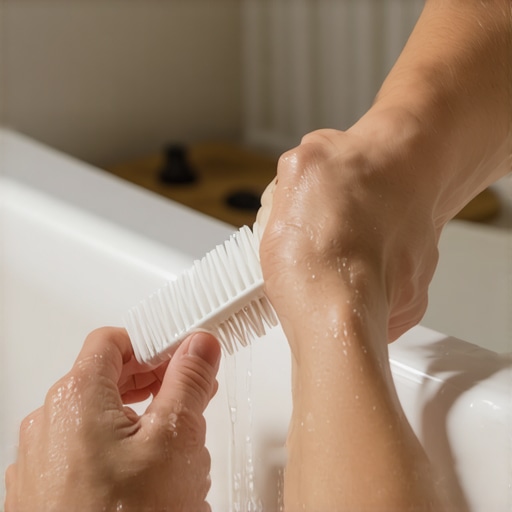
Restoring your shower caulk requires a methodical approach to ensure the mold does not return within a week. You cannot just spray and walk away. You need to scrub. I use a stiff nylon brush, never metal, because metal will tear the silicone and create more hiding spots for fungi. If you want more general advice on maintaining your bathroom, tile cleaning tips for a sparkling bathroom in 2025 offers a good overview of modern maintenance schedules. Follow this checklist for a deep clean:
- Apply pure white vinegar to the area and let sit for 30 minutes.
- Scrub the caulk with a nylon brush to loosen the biofilm.
- Rinse with hot water and dry the area completely with a microfiber cloth.
- Apply the baking soda and hydrogen peroxide paste to any remaining spots.
- Cover the paste with plastic wrap to keep it from drying out for one hour.
- Rinse again and use a hair dryer to ensure no moisture remains in the fissures.
Most guys skip the drying step, but that is the most important part. If you trap moisture under a new layer of cleaner or if the caulk stays wet, the mold will be back before the weekend. Information gain: while most people want the thickest bead of caulk possible, a massive glob of silicone actually takes longer to cure and is more likely to trap water at the edges. You want a thin, concave bead that sheds water quickly. If your grout is also looking rough, you can find grout restoration secrets for long-lasting results to complement your clean caulk.
“A floor is only as good as the subfloor beneath it; deflection is the enemy of every joint.” – Master Flooring Axiom
The 1/8 inch gap that ruins everything
In the world of flooring and showers, the 1/8 inch expansion gap is the most misunderstood structural necessity in the entire house. Caulk is used at change-of-plane joints, like where the floor meets the wall or where two tiled walls meet, because those joints move. If you use grout there, it will crack. If you use cheap caulk, it will mold and fail. I have seen beautiful chic baseboard designs that transform rooms in 2025 get absolutely destroyed because the installer didn’t leave a gap for movement or used a non-flexible sealant that pulled away from the wall. When that gap opens up, mold moves in. To prevent this, always use 100% silicone in the shower. It is more expensive and harder to work with than siliconized acrylic, but it is the only thing that will last ten years. Acrylic caulk contains organic polymers that mold loves to eat. 100% silicone is inorganic and provides no food source for the fungi. If you are going for an eco-friendly approach, consider eco-friendly tile solutions for sustainable homes in 2025 which often feature better ventilation designs. The ghost in the expansion gap is the moisture that sits there for hours after your shower. If you don’t use a squeegee and a vent fan, you are inviting the mold back regardless of what you clean with. Keep your joints tight but flexible, and keep them dry. That is the only way to win the war against the black spot without reaching for the bleach bottle.