
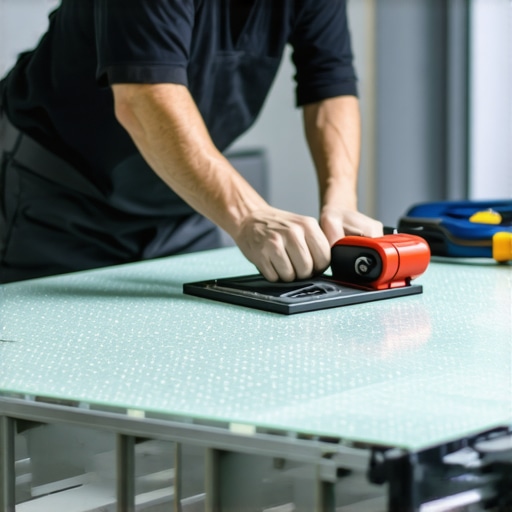
The physics of precision in glass tile cutting
Cutting glass tile is not about brute force, it is a dance with structural tension and thermal management. To successfully cut glass without shattering the brittle material, you must understand that glass is a non-crystalline solid that lacks a slip plane. This means any stress applied incorrectly will result in a chaotic fracture rather than a controlled edge. Professional installers prioritize the management of heat and vibration because these two factors account for nearly every failure in the field. When you are working on modern showers or intricate kitchen backsplashes, the margin for error is measured in microns. If you treat glass like ceramic, you will fail. Ceramic tile has a clay body that absorbs vibration, but glass reflects that energy back into the blade, leading to the dreaded edge chipping. This guide focuses on the mechanical and chemical requirements for achieving a factory finish on every cut.
The cooling chemistry of wet saws
Wet saws provide the necessary lubrication and temperature regulation to prevent glass from reaching its thermal shock threshold during a high speed cut. The water does more than just keep dust down, it acts as a coolant for the diamond matrix of the blade. Without constant water flow, the friction between the glass and the diamond rim generates localized heat. This heat causes the glass to expand at the point of contact while the rest of the tile remains cool. That temperature gradient is what causes the glass to crack. For those designing showers that wow, the quality of these cuts determines the longevity of the installation. If a micro-crack is introduced during the cutting phase, it can expand over time due to building settling or thermal changes, eventually leading to a full thickness break across the tile face.
“A floor is only as good as the subfloor beneath it; deflection is the enemy of every joint.” – Master Flooring Axiom
The grit and bond of diamond blades
Diamond blades specifically engineered for glass use a much finer grit and a softer metal bond than standard porcelain blades. A standard 60 grit blade will chew the edges of glass, leaving a jagged mess. You need a 200 to 400 grit continuous rim blade. The softer metal bond allows the diamonds to be exposed at a controlled rate, ensuring the blade stays sharp and doesn’t glaze over. I spent three days grinding concrete on a job last month just so the floor wouldn’t click like a castanet, and that same level of obsessive preparation applies to your tile tools. If your blade is dull, it forces the motor to work harder, increasing vibration. That vibration is the primary cause of the trailing edge break, where the last half inch of the tile snaps off before the blade finishes its path. You must keep the blade dressed with a dressing stone to ensure the diamond matrix is always fresh.
The wet saw disaster and the lessons learned
Most guys skip the leveling compound. They think the underlayment will hide the dip. It won’t. I remember a job where a rookie tried to cut expensive recycled glass tiles for a custom shower pan using a dry snapper. He ruined three boxes of tile before he admitted he was out of his depth. The glass kept splintering because he didn’t realize the internal tension of the glass was fighting the pressure of the scoring wheel. I had to step in and show him how to use a high quality wet saw with a sliding table. We spent the afternoon recalibrating the saw because even a 1/32 inch misalignment in the fence will cause the blade to bind, which creates heat and breaks the tile. That is the reality of this trade. It is not about how fast you can go, it is about how much you respect the material properties. If you don’t respect the glass, it will bite you every single time.
Managing the trailing edge fracture
Trailing edge fractures occur when the weight of the tile or the pressure of the blade causes the final corner to snap off prematurely. To prevent this, you must slow your feed rate as you reach the end of the cut. Think of it like a plane landing, you want the softest possible contact. Another professional trick is to flip the tile and make a small one inch score on the back side before starting the main cut from the front. This creates a relief point for the energy to dissipate when the blade reaches the end. When you are finishing a project and preparing to install chic baseboard designs, these clean tile edges make the transition look professional. A jagged tile edge hidden under a baseboard is the mark of a hack. A true pro ensures every edge is clean enough to be exposed.
| Blade Type | Grit Level | Best Use Case |
|---|---|---|
| Standard Ceramic | 60-80 | Subway tile, basic floors |
| Porcelain Turbo | 100-150 | Hard vitrified materials |
| Glass Specialist | 200-400 | Glass mosaics, large format glass |
| Electroplated Diamond | 800+ | Polishing and micro-finishing |
The geometry of the score and snap
Manual tile cutters or score and snap tools can work for thin glass mosaics, but they require a delicate touch. The scoring wheel must be sharp and made of tungsten carbide. You apply a single, continuous stroke. Never score the same line twice. Scoring creates a fissure in the surface tension. When you apply pressure with the breaking flaring, that fissure travels through the entire thickness of the tile. If your score is inconsistent, the break will follow the path of least resistance, which is usually a diagonal line toward the corner. For smaller bathrooms, as seen in showers with a style, using a manual cutter for straight lines can save time, provided you understand the physics of the snap. If the glass is tempered, however, do not attempt to cut it. Tempered glass is designed to explode into thousands of pieces the moment the surface tension is breached.
The importance of masking tape
Blue painter’s tape is a vital tool for preventing top side chipping on glass tile. By placing a strip of tape over your cut line, you provide a sacrificial layer that the blade must pass through. This helps hold the surface of the glass in place and reduces the micro-vibrations that cause small flakes to pop off the edges. It also allows you to mark your measurements clearly with a fine tip marker without the ink bleeding or washing away in the water stream of the wet saw. Once the cut is complete and the tile is dry, you can check the edge. If you still see small chips, you can use a diamond hand pad to hone the edge. This is especially important for tile cleaning tips later on, as smooth edges don’t trap dirt or grout residue like rough edges do.
- Always use a fresh diamond blade specifically for glass.
- Maintain a constant, heavy flow of water to the cutting site.
- Never force the tile through the blade, let the diamonds do the work.
- Use masking tape to stabilize the surface and reduce chipping.
- Hone the cut edges with a diamond sanding block for a factory finish.
Vibration and the subfloor connection
Structural stability starts long before the tile hits the saw. If your saw table is wobbly or sitting on an uneven subfloor, the vibration will transfer directly into the glass. I have seen guys try to cut glass on a piece of plywood thrown over two sawhorses. It is a recipe for disaster. The saw needs to be on a stable, level surface. The same logic applies to the installation. If your tile is set on a flexy subfloor, the glass will eventually crack. Glass has zero flexibility. If the floor moves, the glass breaks. This is why we check for deflection before even opening a box of material. If you are doing eco-friendly tile solutions, ensure the substrate is as green and as solid as the tile itself. A rigid substrate is the only way to protect your hard work.
“Glass is a liquid that forgot how to flow; treat it with the respect its chemistry demands.” – Master Flooring Axiom
The 1/8 inch that ruins everything
Expansion gaps are the most ignored part of a glass tile installation. Glass expands and contracts with temperature changes. If you butt the glass tight against a wall or a tub flange, it has nowhere to go. The pressure will build up until the tile sheer-breaks. Always leave a 1/8 inch gap at all perimeters and change-of-plane joints. This gap should be filled with 100 percent silicone caulk, not grout. Grout is rigid and will crack, or worse, it will transfer the stress back into the glass. When you are looking for grout restoration secrets, you will find that the best secret is to use the right material in the right place from the start. Silicone handles the movement, grout handles the static areas. Don’t mix them up.
The final polish and maintenance
Edge honing is the final step that separates the amateurs from the masters. After the cut is made, the edge of the glass is often razor sharp and potentially fragile. Using a 200 grit diamond hand pad, you should lightly rub the edge at a 45 degree angle. This creates a tiny bevel that makes the tile safer to handle and more resistant to chipping during the grouting process. Once the installation is finished, you might find you need to how to refresh grout after years of use. Keeping those glass edges smooth ensures that the grout remains bonded and doesn’t flake away. For homeowners looking to upgrade, consider baseboards makeover ideas that complement the clean, modern look of glass. Proper cutting technique ensures the glass remains the focal point of the room for decades, not just until the first temperature swing hits the house.