
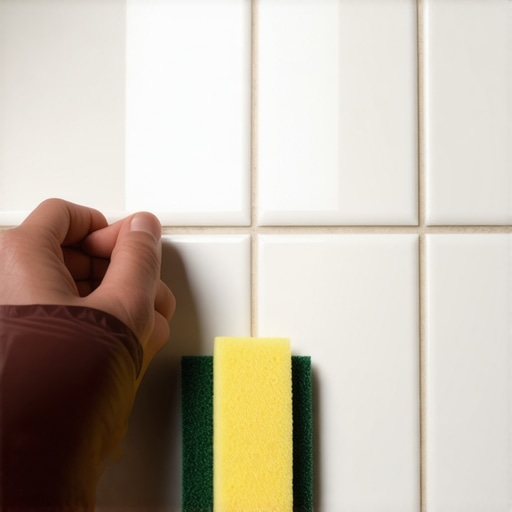
I spent three days grinding concrete on a job last month just so the floor wouldn’t click like a castanet because the previous installer skipped the leveling compound. That same lack of discipline is exactly what ruins a tile restoration. Most guys think they can just slap a new coat of sealer over the old stuff, but they are wrong. When you ignore the existing chemical barrier on your grout, you are building a failure into your floor. I have spent twenty five years on my knees with a moisture meter and a level, and I can tell you that a floor is a performance surface, not a decoration. If the sealer is failing, it needs to be gone, every microscopic bit of it, before you even think about a fresh application.
The hidden chemistry of failed grout bonds
Stripping grout sealer requires a deep understanding of solvent chemistry and alkaline reactivity to effectively dissolve acrylic polymers or silane resins. This process ensures the cementitious grout becomes hydrophilic again, allowing for proper adhesion of new restoration products and penetrating sealers without affecting the tile finish.
Grout is essentially a porous, sand based sponge that we freeze in time using sealers. Over time, those sealers break down due to UV exposure, foot traffic, and the wrong cleaning agents. When a sealer fails, it does not just disappear. It turns into a yellowed, flaky ghost of its former self that sits in the pores of the grout. If you try to apply a new sealer over this mess, it will not bond. It will sit on top, peel off in weeks, and you will be back where you started. To do this right, we have to talk about molecular physics. We are looking for the point where the chemical stripper breaks the long chain polymers of the old sealer without eating into the glaze of the tile. Most people use tools that are too aggressive. I have seen homeowners take a wire brush to their porcelain, and it breaks my heart. You do not need a sledgehammer to kill a fly, and you do not need steel wool to strip grout.
The chemical reality of acrylic versus solvent sealers
Identifying sealer types is the first step in chemical stripping because water-based acrylics respond to high pH alkaline cleaners while solvent-based impregnators require heavy-duty strippers containing methylene chloride or esters. Knowing the molecular weight of the sealer prevents permanent tile damage and ensures grout restoration success.
You need to know what you are fighting before you pick your weapon. Take a few drops of water and put them on the grout line. If the water beads up, the sealer is still there. If it soaks in, the sealer is gone or never existed. If the water beads but the grout looks like it has a plastic film on it, you are dealing with a topical acrylic. These are usually easier to get off because they sit on the surface. But if the grout looks natural and still beads water, you have a penetrating sealer. Those are the ones that live deep in the pores. Stripping a penetrating sealer is about capillary action. You need a stripper that can dive down into those pores and pull the resin back to the surface. It is a slow process. It is not like wiping a counter. You have to let the chemical do the work. If you are working in showers that wow, you also have to worry about the vertical surfaces and how long the stripper stays in contact with the grout. Gravity is your enemy here.
“A floor is only as good as the subfloor beneath it; deflection is the enemy of every joint.” – Master Flooring Axiom
Tools that save your porcelain from scratches
Professional grout stripping tools should be limited to stiff nylon brushes and synthetic scrub pads to avoid scratching tile glazes or marring ceramic surfaces. Using non-metallic agitators maintains the structural integrity of the tile assembly while providing enough mechanical force to lift dissolved residues.
| Tool Type | Use Case | Risk Level | Effectiveness |
|---|---|---|---|
| Nylon Brush | Agitating chemical strippers | Very Low | High |
| Brass Brush | Heavy buildup on stone only | High for tile | Extreme |
| Microfiber Cloth | Wiping away residue | Zero | Medium |
| Wet-Dry Vacuum | Removing slurry | Zero | High |
I have seen guys use flathead screwdrivers to scrape grout. That is a crime. Every time you hit the edge of the tile, you are creating a chip that will hold dirt for the rest of its life. Use a stiff nylon brush. The bristles are flexible enough to get into the texture of the grout but soft enough that they will not leave a mark on a high gloss porcelain. If you are dealing with a really stubborn epoxy sealer, you might think about heat. Heat can soften the resin, but you have to be careful. Too much heat and you will thermal shock the tile, causing it to crack. It is all about balance. This is why I tell people that tile cleaning tips are not just about soap, they are about understanding the physics of the materials you are working with.
Step by step removal of stubborn residues
Applying a grout stripper requires consistent dwell time to allow the active solvents to emulsify old resins before mechanical agitation begins. This multi-stage process involves neutralizing the pH of the grout afterwards to prevent chemical interference with newly applied sealers or colorants.
- Apply the stripper only to the grout lines using a small brush.
- Allow the chemical to dwell for 15 to 20 minutes without drying.
- Agitate the grout with a nylon scrub brush in a circular motion.
- Extract the slurry immediately using a wet-dry vacuum.
- Rinse the area three times with clean, pH-neutral water.
The biggest mistake is letting the stripper dry. If it dries, the sealer just re-bonds to the grout, and now it is even harder to get off because it is mixed with the stripper chemicals. You have to keep it wet. I usually work in three by three foot sections. It is slow, boring work, but it is the only way to ensure 100 percent removal. If you are looking for grout restoration secrets for long lasting results, the secret is always the prep work. Once the grout is stripped, it will look dark because it is wet. You have to wait for it to dry completely to see if you missed any spots. If you see white or clear flakes when it is dry, that is old sealer. Go back and do it again. Don’t be lazy.
Managing moisture in showers during the stripping process
Shower grout stripping requires strict moisture management because liquid chemicals can migrate behind tile walls if caulk joints are compromised. Ensuring the shower pan is dry before starting prevents dilution of the stripper and ensures the chemical concentration remains effective against hard water buildup and soap scum.
In a shower, you are not just fighting sealer, you are fighting body oils and minerals. These layers act like armor for the sealer. You might need to hit the grout with a degreaser first just to get to the sealer. The swampy humidity of a place like Houston makes this even harder because the grout never truly dries out. If the grout is saturated with water, the stripper cannot get in. I tell my clients to stop using the shower for 48 hours before I show up. I want that grout as thirsty as a man in the desert. When I apply the stripper, I want the grout to suck it in so it can kill the sealer from the inside out. This is how you get professional results. While you are in there, look at your layout. Maybe it is time for a change, like some showers with a style that uses larger format tiles to minimize the grout lines entirely.
“Proper surface preparation represents ninety percent of the labor but one hundred percent of the success in grout restoration.” – TCNA Handbook Advisory
Protecting your baseboards from chemical runoff
Protecting baseboards during grout stripping involves masking with poly-sheeting and low-tack tape to prevent chemical etching of painted surfaces or wood finishes. This protective barrier is essential when using alkaline strippers that can dissolve wood stains and soften latex paints on contact.
Chemical strippers do not know the difference between grout sealer and the paint on your baseboards. If you let that stuff sit on your trim, it will bubble the paint in minutes. I have seen beautiful chic baseboard designs ruined because someone was sloppy with a scrub brush. Tape everything off. Use plastic sheeting. It takes an extra hour, but it saves you a day of repainting. When you are scrubbing near the edges, move parallel to the baseboard, not toward it. You want to keep the slurry in the middle of the floor where you can vacuum it up. If you are doing a baseboards makeover, do the grout first. That way, any splashing happens on the old trim, not the new stuff.
Selecting the next defense for your grout lines
Choosing a new sealer requires a breathability analysis to ensure vapor transmission is not blocked, which can lead to efflorescence or sub-surface spalling. Modern fluorochemical sealers provide the highest oil and water resistance while maintaining the porous nature of the cementitious matrix.
Once the floor is clean and dry, you have to decide how to protect it. Do not just grab the cheapest bottle at the big box store. Those are usually just watered down acrylics that will turn yellow in a year. You want a high quality penetrating sealer. If you want to go green, there are eco-friendly tile solutions that use bio-based solvents. They smell better and they work just as well if you apply them right. The key is saturation. You want to feed the grout until it cannot take any more. Then you wipe off the excess. If you leave excess sealer on the tile, it will dry into a hazy mess that you will have to strip all over again. It is a cycle of pain if you are not careful. If you are tired of the color, you can even look at how to refresh grout without replacing it using color seals. These are basically epoxy paints for your grout lines, and they are incredibly durable if the stripping was done correctly. If you have questions about your specific floor, you can always contact us for expert advice. This is not just about looks, it is about engineering a surface that lasts for decades. If you treat your floor like a structural asset, it will reward you. If you treat it like a cheap rug, it will fail you every single time. “