
The myth of the mandatory wet saw
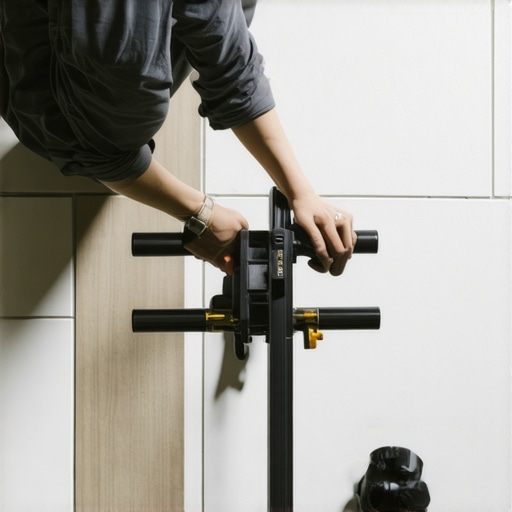
Cutting tile without a wet saw requires a mastery of the score and snap method, utilizing a manual tile cutter or an angle grinder with a diamond blade. This approach relies on the physics of controlled fracture rather than abrasive grinding. By creating a surface-level stress point in the glaze, you allow the internal tension of the ceramic or porcelain body to release along a predictable path. Most professional installers prefer these methods for straight cuts because they are faster, cleaner, and require no water management on the job site. I spent three days grinding concrete on a job last month just so the floor wouldn’t click like a castanet because the previous guy skipped the leveling compound. That is the reality of this business. If you do not respect the subfloor, the tile will never sit right. I have seen guys try to hide a bad cut under baseboards only to find that the uneven floor caused the tile to lift and crack the grout within a week. You have to understand that tile is essentially a sheet of glass baked onto a clay biscuit. If you treat it like wood, you will fail. The structural integrity of the material is your greatest asset if you know how to manipulate it. Every cut is a calculated risk. When you are working on showers or complex layouts, the manual cutter is often your best friend for speed. It saves you the trip to the truck and the mess of the water pump. You want a clean edge for your tile, and you want it without the slurry mess that ruins your workspace. If you are interested in modern bathroom layouts, look into showers with a style trendy ideas for small bathrooms to see how precision cuts matter in tight spaces.
The physics of the score and snap
The score and snap technique utilizes a tungsten carbide wheel to create a microscopic fissure in the tile glaze. This fissure acts as a guide for the mechanical stress applied by the breaking bar. When the pressure is localized on either side of the score line, the tile naturally breaks along the path of least resistance. This is not a matter of strength but a matter of precision and physics. A common mistake is applying too much pressure during the score. You are not trying to cut through the tile with the wheel. You are merely ‘writing’ a line into the glass-like surface. If you press too hard, you create jagged micro-fractures that will cause the tile to shatter unpredictably. I have replaced thousands of dollars of tile because someone thought they needed to be a heavyweight champion on the handle. The molecular structure of porcelain is denser than ceramic, requiring a sharper wheel and a steadier hand. Ceramic is more forgiving but can be brittle if it has been stored in a damp environment. Moisture absorption in the clay body changes the way the tension releases. This is why acclimation is not just for wood. Keep your materials dry before the cut. If you find your edges are always rough, it might be time to look into grout restoration secrets for long lasting results to help hide those minor imperfections during the finishing phase.
“A floor is only as good as the subfloor beneath it; deflection is the enemy of every joint.” – Master Flooring Axiom
The grinder technique for complex shapes
An angle grinder equipped with a continuous rim diamond blade is the most versatile tool for L-cuts and U-cuts without water. Unlike the manual cutter, the grinder is an abrasive tool that removes material rather than snapping it. This creates significant dust and heat, so proper ventilation and a steady hand are non-negotiable. You must approach the cut with the blade spinning at full RPM to prevent the diamond grit from catching and chipping the glaze. I prefer a four-inch grinder because it offers the most control. You should never force the blade. Let the diamonds do the work. If the blade starts to glow, you are moving too fast or using a dull disc. Heat is the enemy of a clean edge. It causes the glaze to expand faster than the biscuit, leading to ‘spidering’ or small cracks along the cut line. This is especially problematic when you are fitting tile around showers where every gap is visible. For those focusing on aesthetic transitions, chic baseboard designs that transform rooms in 2025 can provide the perfect cover for those necessary perimeter expansion gaps. Always cut from the finished side of the tile to ensure the cleanest entry point for the blade. If you are cutting for a corner, score the back of the tile slightly to prevent the corner from snapping off prematurely.
The role of the subfloor in tile longevity
Subfloor preparation is the foundation of a tile installation that lasts decades rather than months. Most installers ignore the 1/8 inch dip in the concrete, thinking the thin-set will fill it. It won’t. Thin-set is an adhesive, not a leveler. When the thin-set shrinks during the curing process, it pulls the tile down into the dip, creating a ‘lippage’ issue or a hollow spot. I have spent countless hours with a floor grinder, wearing a respirator and covered in gray dust, just to make sure the substrate was within the TCNA tolerance of 1/8 inch over 10 feet. If your subfloor is wood, you need to ensure there is no deflection. If the floor bounces, the grout will crack and the tile will eventually pop loose. This is basic structural engineering. You cannot build a solid house on a swamp, and you cannot lay a tile floor on a trampoline. Always use a cement backer board or an uncoupling membrane to isolate the tile from the movement of the subfloor. This prevents the stress of the building’s natural expansion and contraction from transferring directly into your hard surface. Keeping your surfaces clean after installation is also vital, and you can find more info at tile cleaning tips for a sparkling bathroom in 2025.
Technical comparison of tile cutting methods
Choosing between a manual cutter and an angle grinder depends on the volume of straight cuts versus the complexity of the layout. The manual cutter is unrivaled for speed on standard 12×24 porcelain or smaller ceramic pieces. However, it cannot handle the intricate notches required for plumbing or door jambs. The grinder fills that gap but requires a higher skill floor and safety gear. Below is a breakdown of how these tools perform under pressure.
| Tool Method | Best Use Case | Primary Risk | Speed Rating |
|---|---|---|---|
| Manual Score/Snap | Straight rips and crosscuts | Incomplete fracture | High |
| Angle Grinder | L-cuts and notches | Glaze chipping | Medium |
| Carbide Nippers | Small circular nipping | Tile shattering | Low |
| Rub Stone | Smoothing raw edges | Excessive abrasion | Slow |
Checklist for a successful tile cut
- Check the subfloor for levelness before you even touch a tile.
- Mark your cut line with a pencil or grease pen on the glazed side.
- Ensure the carbide wheel is clean and spins freely without wobbling.
- Apply steady, even pressure from the start of the score to the very end.
- Snap the tile immediately after scoring to prevent the ‘memory’ of the stress from fading.
- Use a rub stone to take the sharp, dangerous edge off the cut piece.
- Vacuum the cutting bed between every single cut to avoid debris-induced cracking.
“The Tile Council of North America standards dictate that no more than 33 percent offset should be used for large format tiles to minimize lippage.” – TCNA Handbook
The contrarian truth about underlayment
While most people want the thickest underlayment available for comfort, too much cushion actually causes the locking mechanisms on modern tile-look LVP and the bond on traditional tile to fail. If there is too much ‘give’ under the tile, every footstep acts as a hammer blow to the grout lines. Over time, this leads to pulverized grout that looks like sand. This is why I advocate for a rigid substrate. You want the floor to feel solid. If you want softness, buy a rug. A tile floor should be a permanent structural element. When you are finishing the perimeter, don’t just slap on some baseboards and call it a day. Ensure the expansion gap is maintained. That gap allows the entire floor system to move as the temperature and humidity change throughout the seasons. If you crowd the wall, the floor will tent. It’s not a matter of if, but when. For those looking to upgrade their trim, baseboards makeover ideas to elevate your space provides insights into how the right profile can complement your technical work. Even the most perfectly cut tile looks like amateur hour if the baseboards are crooked or the grout is sloppy.
[IMAGE_PLACEHOLDER]