
The chemical betrayal of chlorine bleach
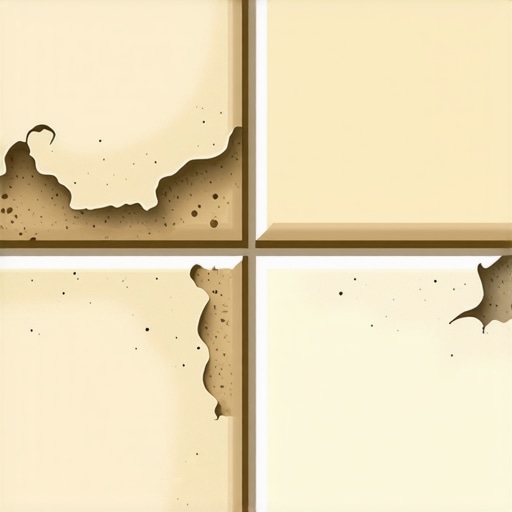
Chlorine bleach is a high-pH oxidative agent that aggressively attacks the structural integrity of cementitious grout by dissolving the calcium-based binders that hold the sand particles together. This process increases porosity and creates microscopic voids where mold and bacteria can hide more effectively than before. I spent three days grinding concrete on a job last month just so the floor wouldn’t click like a castanet, and that experience taught me one thing: homeowners obsess over the surface while ignoring the chemistry beneath. Grout is essentially a very thin, very specialized concrete. It relies on a delicate balance of Portland cement, aggregate, and polymers to stay rigid and waterproof. When you douse it in sodium hypochlorite, the active ingredient in bleach, you aren’t just cleaning. You are triggering an ionic exchange that strips the binder from the sand. The result is a grout line that looks white for twenty-four hours but starts shedding dust and absorbing moisture the moment you step out of the shower. This is the hidden cost of the quick fix. You think you are winning the war against grime, but you are actually performing a slow-motion demolition of your bathroom floor. Most guys skip the leveling compound and think underlayment will hide the dip. They are wrong, and they are equally wrong when they think bleach is a cleaning solution. It is a corrosive that has no place on a tile installation that you intend to keep for more than a few years.
The microscopic architecture of cementitious grout
Grout is not a solid mass but a complex lattice of mineral crystals and sand grains held together by a chemical bond. When you apply harsh chemicals, you are essentially performing a slow-motion demolition of that lattice, turning a protective barrier into a sponge that sucks up moisture. To understand why bleach is the enemy, you have to look at the hydration process of Portland cement. When grout is mixed with water, it forms calcium silicate hydrate (C-S-H) crystals. These crystals grow and interlock, creating the strength required to keep tiles in place and keep water out. Bleach, which typically has a pH between 11 and 13, is far too alkaline for regular maintenance. It reacts with the calcium hydroxide in the grout, causing a process known as leaching. As the calcium is pulled out of the grout matrix, the C-S-H structure weakens. The grout becomes brittle. You might notice small cracks or a sandy texture when you run your finger along the joint. This is the physical evidence of chemical erosion. In professional tile cleaning circles, we call this ‘burning’ the grout. Once the surface is burnt, its natural resistance to staining is gone forever. You have effectively opened up the pores of the cement, making it a magnet for soap scum, skin oils, and the very mold you were trying to kill in the first place.
“A floor is only as good as the subfloor beneath it; deflection is the enemy of every joint.” – Master Flooring Axiom
Why PH balance determines floor longevity
The pH scale is the most important tool for any homeowner who wants their tile to last for decades instead of years. Neutral cleaners sitting at 7.0 are safe for both the sealer and the grout, while bleach sits dangerously high and acidic cleaners sit dangerously low. Every time you use a cleaner with an extreme pH, you are compromising the integrity of the installation. For those working on showers that wow modern designs for 2025, maintenance is as important as the initial waterproofing. Most people assume that because grout is hard like stone, it is indestructible. The reality is that grout is chemically active. It reacts to its environment. If you live in a region with high humidity, you might be tempted to use bleach to fight mildew. However, this creates a cycle of destruction. The bleach makes the grout more porous, which allows more moisture to penetrate, which leads to more mildew. You are feeding the problem with the supposed cure. A neutral pH cleaner, on the other hand, breaks down surface tension and lifts dirt without attacking the cement binder. This preserves the internal density of the grout, which is the only thing standing between your subfloor and water damage. If you lose that density, you lose the floor. I have seen 3/4 inch oak floors buckle because a nearby bathroom had failing grout that let water migrate under the transition strips. It is all connected.
| Cleaner Type | pH Level | Effect on Grout Binder | Sealer Safety |
|---|---|---|---|
| Chlorine Bleach | 11-13 | Severe Erosion | Strips Instantly |
| Vinegar (Acetic Acid) | 2-3 | Dissolves Calcium | Weakens Bond |
| Neutral Cleaner | 7.0 | None | Safe for Long Term |
| Professional Alkaline | 9-10 | Mild (Use Sparingly) | Safe if Diluted |
The slow erosion of tile sealants
Sealants are the only line of defense for porous grout, but bleach acts as a solvent that strips these protective coatings away in a single application. Without a sealer, the grout remains exposed to every spill and every drop of dirty water in the room. When we install a floor, we apply a penetrating sealer that occupies the microscopic voids in the grout. This creates a hydrophobic barrier. Water beads on the surface instead of soaking in. Bleach is designed to break down organic matter and stains, but it does not distinguish between a piece of dirt and a protective polymer. It eats through the sealer within minutes. Once the sealer is gone, the grout is vulnerable. I have walked into homes where the homeowner complained that their white grout was turning grey no matter how much they bleached it. I had to explain that they were the cause. They had stripped the sealer, opened the pores, and now every time they mopped, the dirty mop water was being sucked deep into the grout lines like a straw. You cannot bleach your way out of a physical absorption problem. You have to clean the grout properly and then re-seal it. For those looking at how to refresh grout without replacing it, the first step is always to stop the chemical abuse and start a proper maintenance regimen.
The math of porous absorption
Porous grout follows the laws of fluid dynamics where smaller pores create stronger suction via capillary pressure. When bleach expands these pores, the grout begins to absorb moisture at an exponential rate, leading to deep-set staining that no amount of scrubbing can ever remove. Think of your grout lines as a series of straws. In a healthy, dense, and sealed grout line, those straws are capped. When you use bleach, you remove the caps and widen the straws. The capillary action becomes much more aggressive. In a bathroom environment, this means the grout is constantly damp. It never fully dries out because it is holding onto water deep within its matrix. This constant state of saturation leads to the breakdown of the thin-set adhesive beneath the tile. I have seen entire floors delaminate because the grout became so porous that water was constantly feeding the underside of the tiles. This is how you end up with loose tiles and crunchy floors. It is also why tile cleaning tips for a sparkling bathroom in 2025 focus so heavily on avoiding harsh oxidizers. We are trying to keep the grout dense. Density is the enemy of mold. Density is the friend of the homeowner. If you keep your grout dense, the mold has nowhere to anchor itself. If you bleach it, you are giving the mold a luxury apartment to grow in.
Grout restoration secrets for long lasting results
Effective grout restoration requires a deep understanding of alkaline versus acidic cleaners and the application of high-quality penetrating sealers. Instead of bleaching the surface, professional techniques involve lifting the dirt out of the pores using heat and neutral chemistry to preserve the floor. If your grout is already damaged, bleach will only accelerate its demise. You need to look into grout restoration secrets for long lasting results. This often involves using a professional-grade alkaline cleaner to break down grease, followed by a thorough rinsing with clean water. If the grout is structurally sound but permanently stained, a color-sealant is a much better option than bleach. A color-sealant is essentially an epoxy-based paint that sits on the grout and fills the pores, creating a completely waterproof and stain-proof surface. This is how you fix a floor that has been ruined by years of bleach use. You are manually restoring the density that the chemicals took away. It is a labor-intensive process, but it is cheaper than a full tear-out. I always tell my clients that if they treat their grout with respect, it will last fifty years. If they treat it with bleach, they will be calling me back in five for a regrout. It is that simple. The chemistry does not lie.
“Cement is a thirsty medium; what you feed it today determines the cracks you see tomorrow.” – Master Flooring Axiom
- Stop using bleach or vinegar for weekly maintenance.
- Use a pH-neutral cleaner specifically formulated for stone and tile.
- Re-apply a high-quality penetrating sealer every 12 to 18 months.
- Ensure your baseboards makeover ideas to elevate your space include a silicone caulk bead at the floor-to-wall transition.
- Use a soft nylon brush instead of wire brushes to avoid scratching the grout.
- Wipe down shower walls after every use to reduce the need for deep cleaning.
Final thoughts on floor health. You have to stop thinking about cleaning as an act of war. You aren’t trying to blast the floor into submission. You are trying to maintain a structural component of your home. Treat your grout like you would treat the finish on a fine piece of furniture or the paint on a luxury car. You wouldn’t wash your car with bleach because you know it would ruin the clear coat. Your tile and grout are no different. They have a finish, they have a structure, and they have a limit to what they can endure. Switch to a neutral cleaner, keep it dry, and keep it sealed. Your knees and your wallet will thank you ten years down the road when you aren’t paying someone like me to jackhammer up a shower floor that should have lasted a lifetime.