
Most flooring contractors skip the leveling compound. They think the underlayment will hide the dip. It won’t. I spent three days grinding concrete on a job last month just so the floor wouldn’t click like a castanet. That job taught me once again that shortcutting the structural foundation of a room always leads to a catastrophe. When I finally got the floor level, the homeowner asked if we could save a few bucks by using MDF baseboards. I told him straight up that putting MDF in a small bathroom is like building a boat out of crackers. It looks fine until the first wave hits. Most people see baseboards as a trim detail, a simple border to hide the gap between the tile and the drywall. In my twenty-five years on my knees with a moisture meter, I have learned that a baseboard is actually a critical component of the room’s moisture management system. In a small bathroom, where steam from the shower saturates every square inch of the air, the material you choose determines whether your walls will stay healthy or become a breeding ground for mold.
The structural reality of paper pulp
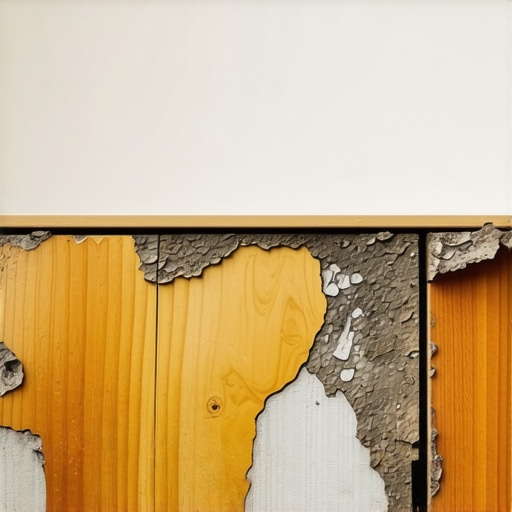
MDF baseboards fail in bathrooms because they are composed of compressed wood fibers and resin that react violently to moisture. Unlike solid wood or PVC, MDF lacks a continuous cellular structure. When water vapor penetrates the thin factory primer, the internal fibers swell, causing the board to expand at the edges and eventually crumble into a soft, pulpy mess. Medium density fiberboard is essentially a high grade of cardboard. It is manufactured by breaking down hardwood or softwood residuals into wood fibers, combining them with wax and a synthetic resin binder, and forming panels by applying high temperature and pressure. While this creates a smooth surface that is easy to paint, it leaves the material extremely vulnerable to the wicking effect. In a bathroom, water doesn’t just sit on the surface. It finds its way into the bottom edge of the board where it meets the tile or grout. Because the bottom edge is rarely painted or sealed, it acts like a sponge, pulling water up into the core of the board through capillary action. Within months, the baseboard begins to cup and pull away from the wall. The paint starts to flake, and you are left with a soggy, distorted mess that cannot be repaired.
“A floor is only as good as the subfloor beneath it; deflection is the enemy of every joint.” – Master Flooring Axiom
Why steam finds every weakness
Small bathrooms act as pressure cookers where high humidity levels accelerate the degradation of porous materials like MDF. When you take a hot shower, the relative humidity in a small space can jump from 40 percent to nearly 100 percent in minutes. This creates a high vapor pressure environment where water molecules are forced into every crack and crevice. If you have installed showers with a style that involves heavy steam or rainfall heads, the volume of moisture is even higher. This steam eventually condenses back into liquid water on the coolest surfaces, which are typically the baseboards and the floor. The condensation runs down the wall and pools at the junction of the baseboard and the floor. If that baseboard is MDF, the water sits there, soaking into the bottom edge. Even if you have the best grout restoration secrets in the world, they won’t save a baseboard that is fundamentally built to fail in wet conditions. The expansion of the board puts pressure on the caulk line, breaking the seal and allowing even more water to get behind the trim and into the drywall. This is how you end up with black mold behind your baseboards that you don’t even see until the smell becomes unbearable.
The physics of the wicking effect
The wicking effect occurs when the porous internal structure of the MDF draws liquid water upward against the force of gravity. This happens because the surface tension of the water is stronger than the adhesive bonds of the urea-formaldehyde resins used to hold the wood fibers together. As the fibers absorb water, they expand in volume. Because the MDF is compressed so tightly during manufacturing, there is no room for this expansion to happen internally. The only way for the board to expand is outward. This causes the telltale bubbling and mushrooming that you see at the bottom of cheap bathroom trim. Solid wood baseboards also absorb water, but they have a natural grain and lignin structure that allows for some degree of expansion and contraction without total structural failure. MDF has no such luxury. Once the resin bonds are broken by water, the material is ruined forever. You cannot sand it down and repaint it because the internal structure has turned to mush. This is why I always tell my clients to look at chic baseboard designs made from PVC or solid cedar for their bathrooms. These materials are engineered to withstand the moisture levels of a high traffic wet area.
Choosing a material that survives the swamp
PVC and solid wood are the only acceptable choices for bathroom trim because they offer superior resistance to water absorption and fungal growth. PVC baseboards are completely waterproof and will never rot, swell, or peel, making them the gold standard for small, humid bathrooms. If you prefer the look of real wood, you must use a species that is naturally rot resistant or ensure that every side of the board, including the back and the bottom edge, is primed and painted before installation. Many homeowners think they are being smart by buying moisture resistant MDF, but even that material is only rated for occasional humidity, not the constant soaking it gets in a bathroom with showers that wow. The following table compares the most common baseboard materials used in bathroom renovations today.
| Material | Water Absorption (24h) | Janka Hardness | Lifespan in Wet Area |
|---|---|---|---|
| MDF | 15% to 25% | 700 to 1000 | 1 to 3 Years |
| PVC | 0% | N/A | 50+ Years |
| Pine | 5% to 10% | 380 to 420 | 5 to 10 Years |
| Tile | 0.1% to 3% | N/A | 100+ Years |
As the table shows, MDF is the worst performer by a wide margin. Even pine, which is a relatively soft wood, outperforms MDF because its natural resins provide a modicum of protection. However, for a bathroom that you want to last for twenty years, PVC or a matching floor tile baseboard is the only logical choice. If you are going for a high end look, you can find baseboards makeover ideas that use porcelain tile as the trim. This creates a completely waterproof transition that is impossible to rot.
The 1/8 inch that ruins everything
A gap as small as 1/8 inch between the baseboard and the tile floor can act as a reservoir for standing water and soap scum. This reservoir becomes a bacterial playground and a direct path for moisture to enter the subfloor. When I am installing a floor, I make sure the subfloor is perfectly flat so the baseboard sits tight. If the baseboard is hovering over a dip in the floor, the caulk joint will eventually fail because it has to bridge too large a gap. Most installers use cheap acrylic caulk that dries out and cracks. You need a high quality 100 percent silicone or a hybrid polymer sealant that can handle the movement of the house without breaking the seal. If you have older trim that is starting to show its age, you might look into how to refresh grout without replacing it, but remember that the grout line is only the first defense. The secondary defense is the mechanical bond between the baseboard and the wall. If you use MDF, that mechanical bond is weak because the material doesn’t hold nails well when it gets damp. The nails pull right through the soft fibers, and the board starts to lean away from the wall, opening up an even bigger gap for water to enter.
“Deflection is the silent killer of tile and trim; if the floor moves, the grout cracks, and the water wins.” – Master Flooring Axiom
The bathroom baseboard installation checklist
Proper installation of bathroom baseboards requires specific steps to ensure a moisture proof seal and a long lasting finish. Follow these steps to avoid the common mistakes that lead to rot and mold growth in your wet areas. This list is based on the standards I follow for every professional job I take on.
- Choose PVC or solid wood over MDF every single time for bathroom environments.
- Seal the back and bottom edges of all wood baseboards with an oil based primer before installation.
- Leave a tiny 1/16 inch expansion gap between the baseboard and the tile to allow for seasonal movement.
- Use 100 percent silicone caulk to seal the gap between the floor and the trim.
- Never nail baseboards into the bottom plate of the wall if you suspect plumbing lines are nearby.
- Check the moisture content of the subfloor before installing any trim or flooring.
- Ensure the bathroom ventilation fan is rated for the square footage of the room to pull steam out quickly.
If you follow these rules, you won’t have to worry about your baseboards falling apart. It is about doing the job right once rather than doing it cheap three times. If you are concerned about the environmental impact of your choices, you can explore eco-friendly tile solutions that can be used for both your floor and your trim. This eliminates wood and plastic entirely from the wet zone, providing the most durable and sustainable solution possible. Finally, keep your surfaces clean. Regular maintenance is key, and using tile cleaning tips will help you spot any caulk failures or moisture issues before they turn into major structural repairs.