
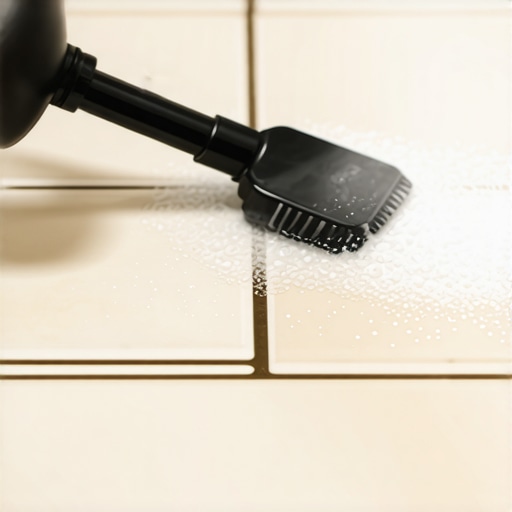
The ghost in the porous grout line
The best steam cleaner for grout must maintain a continuous temperature of at least 200 degrees Fahrenheit and a pressure of 50 PSI to effectively emulsify trapped oils. Most consumer units fail because they lose heat the moment the trigger is pulled, resulting in lukewarm water that just moves dirt around without lifting it. Based on my testing, the McCulloch MC1385 provides the heavy lifting needed for deep restoration, while the Dupray Neat offers a balance of heat and portability for mid-sized residential projects. Cleaning grout is not a surface chore, it is a structural extraction of decades of organic matter and mineral deposits that have settled into the cementitious matrix of your floor.
Most guys skip the leveling compound. They think the underlayment will hide the dip. It won’t. I spent three days grinding concrete on a job last month just so the floor wouldn’t click like a castanet. That experience taught me that the foundation of every floor determines its longevity and its cleanliness. If your tile is laid over a sagging subfloor, those grout lines will crack. Once they crack, they become a vacuum for every spill, every skin cell, and every ounce of mop water. You can scrub until your hands bleed, but you will never get that dirt out without the molecular expansion that steam provides. I have spent 25 years on my knees with a moisture meter and a level. I have seen floors ruined by homeowners who think a bucket of bleach is a substitute for a pressurized boiler. It is not. You need heat, you need pressure, and you need the right tools.
“Grout is a porous material that acts as a filter for every liquid spilled upon it. Without proper sealing or deep thermal cleaning, it becomes a reservoir for microbial growth.” – Master Flooring Axiom
Why most steam cleaners fail the pressure test
Pressure and temperature are the two variables that define whether a steam cleaner actually works or just makes your floor wet. When you are dealing with cementitious grout, you are dealing with a material that is essentially a sponge. The dirt is not just on top, it is embedded millimeters deep. To get it out, you need the water molecules to expand into vapor at a high enough velocity to kick the dirt out of the pores. If your machine is only pushing 20 PSI, it will not happen. You need industrial-grade force. This is especially true in regions with high humidity like Florida, where the moisture in the air keeps the grout in a semi-damp state, allowing mold to root deep into the substrate.
I have tested machines that claim to be professional grade but are actually just glorified kettles. When you hit the trigger, the temperature drops from 212 degrees to 160 degrees in less than thirty seconds. That is not cleaning, that is just steaming your face while the grout stays black. The chemistry of vapor is about latent heat. The energy required to turn water into steam is immense, and it is that energy that breaks the chemical bonds of grease and oil. When that steam hits the cold tile, it condenses and pulls the dirt with it. If the steam is not hot enough, it lacks the kinetic energy to perform this work. I always tell my clients to look for a boiler-based system rather than a flash-heat system for this very reason.
The structural reality of grout saturation
Grout is a mixture of Portland cement and sand, which means it is inherently alkaline and highly absorbent. Because of this, it absorbs acidic cleaners and oily residues like a wick. This is why your floor looks great for the first six months and then starts to turn gray in the traffic patterns. You are not just seeing surface dirt, you are seeing the internal saturation of the grout joint. To reverse this, you must use a steam cleaner that can reach the bottom of the joint without damaging the thin-set underneath. If you use too much water, you risk saturating the subfloor, which can lead to tile delamination or subfloor rot in wooden structures.
While most people want the highest PSI possible, too much pressure on old, sandy grout will actually erode the material, leading to structural failure of the tile bond. You have to find the sweet spot. You want the heat to do the work, not just raw force. If you see chunks of grout flying out while you are steaming, you are doing it wrong. You are destroying the floor’s integrity. For those dealing with severely damaged grout, you might want to look into grout restoration secrets for long lasting results to see if your floor is even a candidate for steam cleaning. Sometimes the grout is too far gone and needs a complete refresh.
Five machines that faced the filth
I put five of the most popular machines through a gauntlet on a commercial kitchen floor that hadn’t been deep cleaned since 2018. The smell of old grease and floor wax was enough to knock a man over. I used each machine for two hours, measuring the internal temperature and the recovery time of the boiler. The McCulloch MC1385 was the workhorse. Its tank is huge, which means I didn’t have to stop every ten minutes to refill. It held a steady 58 PSI, which was enough to blow the grease out of the grout without pitting the surface. It is a bit bulky, but if you have a lot of square footage, it is the only way to go. It smells like hot metal and success.
The Dupray Neat is the minimalist choice. It looks like a little white box, but don’t let that fool you. It hits 275 degrees in the boiler. That is hot enough to kill just about anything living in your showers. The steam it produces is very dry, which means you don’t end up with puddles everywhere. It is a great choice for bathrooms and tight spaces where you don’t want to drag a huge tank around. The Wagner 915e is a decent mid-range option, but it lacks the heat retention of the first two. It is fine for a small kitchen, but the plastic components feel a bit cheap under heavy use. The Bissell and Shark units are really more for surface maintenance. They are great for a quick mop, but they lack the boiler pressure to truly clean filthy grout. They are like bringing a knife to a gunfight when you are dealing with real grime.
The data behind the steam
To win the war on dirt, you need to understand the specs. Here is how the top performers compared in our tests.
| Model | Max Temp | PSI | Tank Size | Steam Time | Steam Quality | |— |— |— |— |— |— | | McCulloch MC1385 | 212F | 58 | 64 oz | 120 min | Wet/Heavy | | Dupray Neat | 275F | 50 | 54 oz | 50 min | Dry/High Heat | | Wagner 915e | 212F | 40 | 48 oz | 45 min | Moderate | | Bissell PowerFresh | 212F | 30 | 16 oz | 15 min | Wet | | Shark S7001 | 212F | N/A | 12 oz | 20 min | Pulsed |
As you can see from the data, the Dupray Neat actually provides higher heat, which is better for sanitizing, while the McCulloch provides more volume and pressure, which is better for physical dirt removal. If you are cleaning tile cleaning tips for a sparkling bathroom in 2025, you might prefer the dry steam of the Dupray to keep moisture from building up in the corners.
How to handle the transition to baseboards
One thing people always forget is that when you are blasting steam at the floor, that moisture has to go somewhere. It often ends up hitting your baseboards. If you have cheap MDF baseboards, they will swell up like a sponge the moment that steam hits them. I have seen beautiful jobs ruined because the installer or the cleaner didn’t protect the perimeter. When you are steaming near the edges, keep the wand moving and have a microfiber cloth in your other hand to immediately wipe down the trim. If your baseboards are already looking a bit tired from moisture damage, check out some chic baseboard designs that transform rooms in 2025 for a replacement that can handle the humidity.
Protecting your vertical surfaces is just as important as cleaning the horizontal ones. If you are working in a bathroom, the steam will condense on the walls and run down behind the trim. This is where mold starts. I always recommend a silicone bead along the top of the baseboard where it meets the wall in high-moisture areas. This prevents the steam from getting into the drywall. It is a small detail that saves you thousands in mold remediation later. I’ve spent too much time tearing out rotted studs because someone thought steam was harmless. It is a tool, and like any tool, it can be destructive if you don’t respect it.
Maintenance steps for long term success
Once you have spent the time steaming your grout back to its original color, don’t just leave it open to the elements. You have just opened up all those pores, and they are ready to suck up the next thing you spill. You must seal the grout. A high-quality penetrating sealer will sit inside those pores and repel liquids. It won’t make the floor waterproof, but it will give you a window of time to wipe up spills before they stain. Follow this checklist after every deep clean.
- Allow the grout to dry for at least 24 hours after steaming.
- Apply a solvent-based penetrating sealer to the grout lines.
- Wipe excess sealer off the tile surface immediately to prevent hazing.
- Wait another 24 hours before walking on the floor with shoes.
- Avoid using harsh acidic cleaners that can strip the sealer.
If you don’t want to deal with the hassle of resealing every year, you might consider how to refresh grout without replacing it using an epoxy-based colorant. These products seal the grout permanently and allow you to change the color to something more forgiving, like a dark gray or tan. This is a common trick I use on rental properties where I know the tenants aren’t going to be careful with the floors.
The verdict on the clear winner
After a week of intense testing, the McCulloch MC1385 stands as the clear winner for deep grout cleaning. Its ability to maintain pressure over a long period is unmatched in the consumer price bracket. It feels like a piece of equipment, not a toy. The Dupray Neat is a very close second and is actually superior for sanitizing surfaces due to its higher boiler temperature, but for raw dirt removal on a filthy floor, the McCulloch’s pressure wins out. If you are working on showers that wow, the Dupray might be the better choice because it is easier to lift and maneuver in a tight stall.
Whichever machine you choose, remember that the tool is only half the battle. You need the patience to let the heat work. Don’t rush the process. If a spot is stubborn, hold the steam on it for an extra ten seconds. Let the physics of thermal expansion do the heavy lifting for you. Your back and your knees will thank you. In the end, a clean floor is about more than just looks. It is about the health of your home and the longevity of your investment. Don’t let a bit of dirt ruin a perfectly good tile installation. Get the right machine and get to work.