
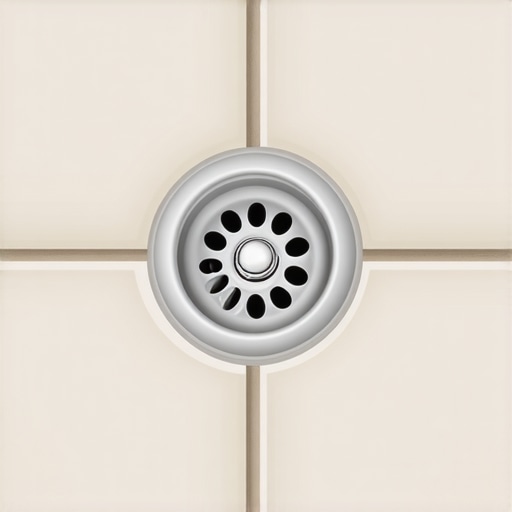
Why Your Shower Floor Drain is Sitting Too High for the Tile
A shower floor drain sitting too high is not just a cosmetic annoyance. It is a fundamental engineering failure that compromises the integrity of the entire waterproofing system. When the drain flange or the grate sits above the finished tile surface, water cannot exit the system. This leads to standing water, mold growth, and the eventual decay of the mortar bed. I spent three days grinding concrete on a job last month just so the floor wouldn’t click like a castanet. That job reminded me that precision is the only thing standing between a luxury bathroom and a swamp. If your drain is too high, it means the stack of materials beneath your feet was not calculated correctly from the subfloor up.
The physics of the proud drain flange
A high shower drain usually results from a failure to account for the thickness of the mud bed or the specific height of the waterproofing system used during installation. In professional tiling, we call a protruding element proud. If the drain is proud of the tile, the physics of gravity work against the installation. Water will pool around the metal or plastic rim, saturating the grout and eventually finding a path through the secondary drainage holes. This creates a permanent state of dampness that eats away at adhesives. You cannot simply build up the tile with extra thin-set to meet a high drain. Doing so creates a trip hazard and violates the 1/4 inch per foot slope requirement necessary for proper evacuation.
The issue often begins at the rough-in stage. Plumbers often set the drain pipe based on a standard height without knowing if the tile installer plans to use a traditional mud bed, a foam tray, or a low-profile linear system. If the plumber sets the pipe too high, the tile guy is stuck. I have seen guys try to feather out the tile to meet the drain, but it looks like a volcano. It is ugly and it is wrong. To avoid this, the entire assembly must be planned as a single unit. This includes the subfloor, the pre-slope, the liner, the final mortar bed, and the tile thickness. If you are looking for inspiration on how these systems should look when finished correctly, check out showers that wow modern designs for 2025 for examples of high-end execution.
The chemistry of the mortar bed and thin set bond
The relationship between the mortar bed and the thin-set mortar determines the final elevation and the long-term stability of the shower floor. Modern tile installations rely on ANSI A118.4 or A118.15 modified mortars. These chemicals are designed to provide high shear strength and flexibility. However, they are not intended to be used as a leveling layer. If you use thin-set to try and bridge the gap to a high drain, you are introducing too much moisture into a concentrated area. As the water evaporates from a thick layer of thin-set, the material shrinks. This shrinkage can cause the tile to crack or lose its bond with the substrate.
“A floor is only as good as the subfloor beneath it; deflection is the enemy of every joint.” – Master Flooring Axiom
In a traditional wet bed, the installer uses a mix of Portland cement and sand, often referred to as deck mud. This mixture is packed over a pre-slope. The drain assembly is bolted down to the liner. If the bolts are tightened too far or not enough, the drain height shifts. The molecular bond of the mortar is strongest when it is compressed to a consistent density. When an installer has to add a huge hump of mud just to reach the top of a high drain, they often lose that density. The result is a crumbly substrate that will eventually fail under the weight of the user. Understanding grout restoration secrets for long lasting results starts with ensuring the substrate is rock solid so the grout never has to deal with movement.
Technical specifications for drain height and tile thickness
When measuring for a drain, you must use a digital caliper to account for every millimeter. A standard porcelain tile is usually 8mm to 10mm thick. Your thin-set, once troweled and compressed with a 1/4 inch notch, will add approximately 2mm to 3mm. If you are using a decoupling membrane, add another 3mm. If your drain is sitting 20mm above your mortar bed, you have a massive problem. You cannot bridge a 10mm gap with mortar alone without creating a bowl effect that ruins the drainage. The TCNA (Tile Council of North America) Handbook provides specific details on these layers, and ignoring them is the fastest way to a failed inspection.
| Layer Component | Typical Thickness (mm) | Cumulative Height (mm) |
|---|---|---|
| Subfloor (Plywood/Concrete) | Base Layer | 0 |
| Pre-Slope (Mortar) | 12 to 25 | 12-25 |
| Waterproofing Membrane | 1 to 3 | 13-28 |
| Setting Mortar (Thin-set) | 3 | 16-31 |
| Tile Surface | 8 to 12 | 24-43 |
As the table shows, the cumulative height can vary wildly. If the plumber sets the drain at 50mm, but your total assembly is only 30mm, you are in trouble. This is why I always tell my crew to dry-fit everything. We set the drain, we lay the tile on the subfloor, and we measure the gap. If it is not perfect, we cut the pipe. There is no shortcut. If you ignore this, you will be looking for how to refresh grout without replacing it within six months because the constant standing water will have turned your grout into a moldy mess.
The ghost in the expansion gap
Expansion gaps at the perimeter of the shower are often the most overlooked aspect of floor engineering and height management. Every building moves. Humidity and temperature changes cause the subfloor and the wall studs to expand and contract. If your tile is locked tight against the drain and tight against the wall, something has to give. Usually, the tile tents or the grout around the drain cracks. This is why we use 100 percent silicone sealant at the transition points instead of hard grout. It allows for the microscopic shifting of the materials without breaking the waterproof seal.
When the drain is too high, it creates a rigid point of resistance. As the floor tries to move, it pushes against the metal flange. Because the drain pipe is often anchored to the house framing, it does not move with the tile. This differential movement is what causes those hairline cracks you see around the circular cut of the tile. In regions with high humidity, this movement is even more pronounced. If you are in a climate like Florida or the Pacific Northwest, you need to be even more diligent about these gaps. Once the floor is set, you might also consider how your wall transitions look. High-quality baseboards makeover ideas to elevate your space can help hide the necessary expansion gaps at the outer edges of the bathroom floor.
How to fix a high drain without ripping out the floor
Fixing a high drain usually requires removing the surrounding tile and grinding down the mortar bed or adjusting the drain throat. If you catch the mistake before the thin-set cures, it is a simple fix. If the floor is already finished, you are looking at a surgical operation. You must carefully remove the tiles surrounding the drain. Then, you use a diamond blade to cut the plastic throat of the drain down to the correct height. Most modern drains, like those from Schluter or Oatey, have an adjustable height grate. If you are lucky, you can just screw the grate deeper into the assembly. If the flange itself is too high, you have to chip out the mortar, lower the flange, and re-waterproof the entire area.
- Check the drain height against the tile sample before applying any adhesive.
- Ensure the pre-slope maintains a 2 percent grade toward the drain.
- Use a level to check for any high spots in the mortar bed that might be pushing the tile up.
- Verify that the drain throat is fully seated into the flange assembly.
- Test the drainage with a bucket of water before the final tile set.
- Use only 100 percent silicone around the drain grate for flexibility.
If you find that the drain is only slightly high, you might be able to use a thicker tile or a natural stone. Natural stone like marble or travertine often comes in 1/2 inch thicknesses which can help take up some of the slack. However, this will change the height of the floor at the entry, potentially requiring a transition strip. For more on keeping your tile looking its best after these repairs, see tile cleaning tips for a sparkling bathroom in 2025. Proper maintenance is only possible if the engineering was right from day one.
The structural reality of water management
Water management in a shower is a matter of managed paths and surface tension. When a drain is too high, surface tension allows the water to hang at the edge of the tile. It never quite makes the jump into the drain. This water then sits until it evaporates. As it evaporates, it leaves behind mineral deposits and soap scum. This creates a slip hazard and a breeding ground for bacteria. In my 25 years of experience, I have seen floors that looked beautiful but smelled like a locker room because of a 1/8 inch height discrepancy at the drain. It is the most common failure in DIY installations and even in many professional ones.
“Water follows the path of least resistance, but it always respects the laws of gravity.” – Master Flooring Axiom
The solution is always in the planning. You have to treat the shower as a machine. Every component must be calibrated. From the choice of eco-friendly tile solutions to the specific brand of waterproofing membrane, every decision impacts the final height. If you want a floor that lasts 50 years, you don’t guess. You measure. You don’t hope the thin-set covers your mistakes. You fix the subfloor. You fix the pipe. You ensure that when you step into that shower, the only thing you have to think about is the water coming out of the showerhead, not the water pooling around your ankles. For those interested in long-term aesthetics, checking out chic baseboard designs that transform rooms in 2025 can provide the finishing touch to a technically perfect bathroom renovation.