
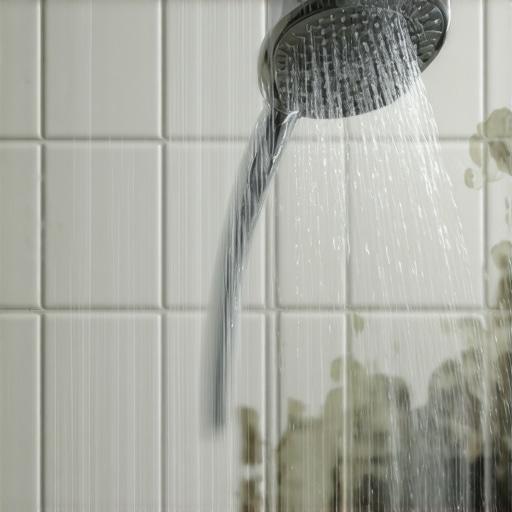
I spent three days grinding concrete on a job last month just so the floor would not click like a castanet, but even that frustration pales in comparison to a leaking shower wall. I once walked into a luxury bathroom where the homeowner was complaining about a musty smell and a soft spot in the hallway carpet. It took me five minutes to find the culprit. The shower head was not just spraying water on the user; it was siphoning a steady stream through a failed seal at the wall penetration. Most installers treat the plumbing nipple as someone else’s problem, but a floor installer knows that water always finds the path to the subfloor. When a shower arm is not properly sealed behind the escutcheon plate, water travels along the pipe, hits the back of the tile, and begins its slow, invisible destruction of the wall assembly. This is not a cosmetic issue. It is a structural engineering failure that compromises the thin-set bond and eventually the floor joists below.
The physics of water migration behind the wall
Water spraying behind tiles occurs because of a breach in the hydrostatic seal at the plumbing penetration point or a failure in the waterproofing membrane. When the shower arm is under pressure, any imperfection in the threading or the sealant allows water to travel backward into the wall cavity. This movement is often driven by capillary action, where water moves through narrow spaces without the assistance of gravity. In a shower, the space between the plumbing nipple and the tile hole is the perfect conduit for this disaster. If you do not have a solid bead of 100% silicone or a specialized pipe seal gasket, you are essentially pouring water directly into your wall studs every time you bathe. The moisture then sits on the bottom plate of the wall, leading to mold and rot that can go undetected for years until the floor starts to sag.
“A floor is only as good as the subfloor beneath it; deflection is the enemy of every joint.” – Master Flooring Axiom
The chemistry of thin-set and moisture saturation
Standard polymer-modified thin-set is designed to hold tile in place but it is not a waterproof barrier. When water sprays behind the tile, it saturates the mortar bed, causing a chemical breakdown over time that leads to bond failure. Many people assume that the thin-set will act as a dam. It does not. In fact, thin-set is often porous enough to wick moisture upward and outward. Once the moisture reaches the backer board, the real trouble starts. If the installer used a standard cement board without a liquid applied membrane like RedGard or a sheet membrane like Kerdi, the board will soak up water like a sponge. This expands the material, creates internal pressure, and eventually causes the tiles to pop or the grout to crack. You can learn more about managing these surfaces in our guide on grout restoration secrets for long lasting results. [IMAGE_PLACEHOLDER]
Why your subfloor is lying to you
A subfloor might look dry from the top while the underside is rotting due to a slow leak from the shower valve or head. Water from a faulty shower head spray often travels down the vertical studs and pools on the subfloor or the crawlspace plate. By the time you see the water on the bathroom floor, the structural damage is already done. I have seen plywood subfloors turned into wet cardboard because a $5 plumbing seal was forgotten. The integrity of the entire room depends on that 1/8 inch gap around the shower arm. If that gap is not filled with a high-quality sealant that can handle the vibration of the pipes, the water will find its way out. You should always check for dampness around the baseboards in the adjacent room. For ideas on how to finish those areas properly, check out chic baseboard designs that transform rooms in 2025.
| Waterproofing Method | Vapor Permeance Rating | Typical Failure Point | Install Difficulty |
|---|---|---|---|
| Liquid Membrane | Low | Inconsistent Thickness | Medium |
| Sheet Membrane | Very Low | Seam Overlaps | High |
| Cement Board Only | High | Joint Cracking | Low |
| Plastic Barrier | Medium | Punctures | Medium |
The myth of waterproof grout
Grout is a cementitious product that is naturally porous and will absorb water if not sealed properly or if the installation is subjected to constant spray behind the tile. Many homeowners think that as long as the grout looks good, the wall is safe. This is a dangerous assumption. Water can pass through the microscopic pores of the grout and reach the adhesive layer. If the spray from the shower head is hitting the wall at an angle that forces water into the crevices of the escutcheon plate, the grout nearby will stay perpetually damp. This leads to the growth of black mold and the eventual softening of the wall structure. If your grout is already looking rough, you might need to look at how to refresh grout without replacing it to stabilize the surface before deeper damage occurs.
The structural checklist for shower wall integrity
- Check the shower arm for a tight seal using a pipe wrench and Teflon tape.
- Ensure the hole in the tile is small enough to be covered by the escutcheon but large enough for a silicone bead.
- Inspect the grout lines for hairline fractures that indicate movement in the wall.
- Verify that a waterproof membrane was used behind the tile installation.
- Monitor the baseboards outside the shower for swelling or discoloration.
- Test the shower head for back-spray by running it and checking the wall interface.
Professional solutions for a leaking shower head penetration
Fixing a spray that goes behind the tiles requires removing the shower arm and applying a professional-grade sealant to the plumbing nipple and the wall interface. You cannot just slap some caulk on the outside of the metal plate and hope for the best. You need to pull the plate back, dry the area completely with a heat gun or hairdryer, and apply a high-solids silicone. If the leak has been happening for a while, you may need to use a moisture meter to see if the wallboard is still structurally sound. If the meter reads above 15%, you are looking at a potential tear-out. For those keeping their tiles clean after a repair, see our tile cleaning tips for a sparkling bathroom in 2025.
“Modern waterproofing requires a continuous bond; a single gap in the membrane is a total system failure.” – TCNA Installation Handbook
The ghost in the expansion gap
Expansion gaps at the floor and wall transitions are often where water hides after it leaks behind the tiles from a faulty shower head. When the water travels down the wall, it collects at the bottom of the shower stall. If the transition between the wall tile and the floor or the baseboard is not properly caulked, the water will seep into the subfloor. This is why I always insist on a silicone joint at all change of plane transitions. Grout will crack at the corners, and those cracks are open doors for moisture. The physics of house settling means your shower is always moving slightly. Rigid grout cannot handle that movement, but silicone can. Keep an eye on your baseboards for any signs of water damage, as the baseboards makeover ideas to elevate your space won’t matter if the wood is rotting from the inside out.