
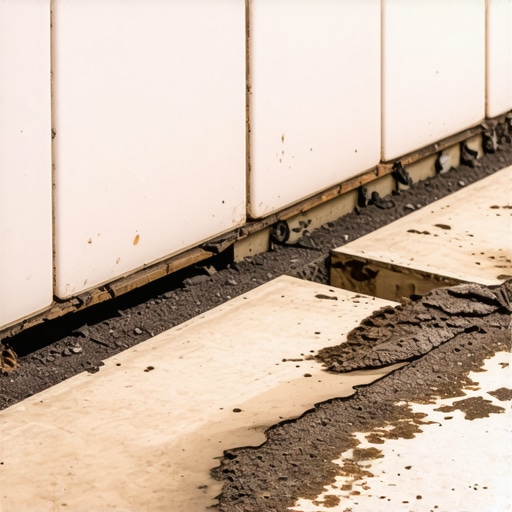
The silent destruction of your bathroom foundation
Most guys skip the leveling compound. They think the underlayment will hide the dip. It won’t. I spent three days grinding concrete on a job last month just so the floor wouldn’t click like a castanet. But when we are talking about wood subfloors in a bathroom, the stakes are higher. You are not just looking at a click, you are looking at a structural collapse. I have seen 500 pound cast iron tubs nearly end up in the basement because a homeowner ignored a hairline crack in their grout. The subfloor is the spine of your home. When it rots, the whole skeleton suffers. You might think your tile is permanent, but it is actually a porous shield that fails the moment moisture finds a path to the plywood. This is the reality of residential engineering. Water is a patient predator. It waits for a pinhole in the sealant or a gap in the caulk around the baseboards to begin its work. Once moisture reaches the subfloor, the chemistry of the wood changes. The lignin that holds the wood fibers together begins to dissolve. This leads to a loss of structural rigidity that no amount of expensive tile can fix.
The tactical feel of a failing joist
A spongy or soft sensation when walking on bathroom tiles is the most direct indicator of subfloor rot and structural degradation. This occurs when the plywood or oriented strand board beneath the tile loses its ability to resist deflection. In flooring terms, deflection is the amount of vertical movement a floor system experiences under a load. The National Wood Flooring Association and the Tile Council of North America have strict standards for this. If your subfloor flexes more than L/360 of the span, your tile will fail. I have walked into hundreds of bathrooms where the homeowner says the floor feels bouncy. That bounce is not a feature, it is the sound of the wood fibers separating and turning into compost. When you step on a tile and feel that slight dip, you are feeling the failure of the bond between the mortar and the substrate. The thin-set is cracking because it cannot handle the movement. It is a brittle material designed for a rigid world. When the world beneath it becomes soft, the thin-set turns back into sand.
“A floor is only as good as the subfloor beneath it; deflection is the enemy of every joint.” – Master Flooring Axiom
The physics of capillary wicking in wet environments
Water moves through grout lines and porous tile through a process called capillary action, which draws moisture deep into the subfloor. This is why even a perfectly installed shower can fail if the transition to the floor is not handled correctly. If you look at modern showers, you will notice they emphasize waterproof membranes like Kerdi or Wedi. Without these, the water hits the cement board. Many people think cement board is waterproof. It is not. It is water-stable, meaning it won’t rot, but it will let water pass right through it to the plywood. This is a crucial distinction that most DIYers miss. The water seeps through the grout, travels through the cement board, and pools on the plywood. Because there is no airflow, the plywood stays wet for months. This is the perfect breeding ground for Coniophora puteana, also known as wet rot. This fungus literally eats the cellulose, leaving the floor as weak as wet cardboard. You might notice your baseboards starting to discolor or pull away from the wall. This is because the subfloor is shrinking and expanding at a rate the wood trim cannot match.
| Subfloor Material | Moisture Resistance | Deflection Rating | Rot Potential |
|---|---|---|---|
| Exterior Grade Plywood | High | Excellent | Medium |
| OSB (Standard) | Low | Good | Very High |
| Cement Backer Board | High (Stable) | Poor (Brittle) | None (Transfers water) |
| AdvanTech Plywood | Very High | Superior | Low |
Why your grout is screaming for help
Cracked or missing grout is not just an aesthetic problem; it is a structural warning sign that the subfloor is shifting. When the subfloor rots, it loses its flat profile. It begins to crown or cup. This puts immense pressure on the tile assembly. Since the tile is harder than the subfloor, the grout is the first thing to give way. If you see cracks running through several tiles in a straight line, your joists are likely failing or have settled due to rot. If you see crumbling grout, you need to look at grout restoration methods, but only after you have verified the substrate is dry. Applying new grout over a rotting subfloor is like putting a band-aid on a broken leg. It won’t stay. The movement will just crack the new grout within weeks. I always tell clients to look for the ghost in the expansion gap. If the grout at the perimeter of the room is turning into powder, the whole floor is moving. This movement is often caused by the subfloor swelling as it absorbs moisture from the air or from direct leaks. In humid climates, this is even more pronounced. The wood sucks up the humidity and has nowhere to go but up.
The invisible decay and microbial scent
A persistent musty odor in a bathroom despite regular cleaning is a primary indicator of mold growth within the subfloor layers. You can use all the tile cleaning tips in the world, but if the rot is underneath, the smell will remain. This odor is caused by microbial volatile organic compounds. It is the smell of biology winning the war against your architecture. When the subfloor stays damp, the mold spores that are naturally present in the air begin to colonize. They grow in the dark, moist space between the tile and the wood. This is not just a structural issue, it is a health issue. I once tore up a floor where the plywood was so covered in black mold that it looked like it had been charred in a fire. The homeowner had no idea because the tile on top looked fine. They just thought the bathroom always smelled a bit damp because of the shower. If you smell earth or dirt in your bathroom, your subfloor is likely returning to the earth.
The 5 Point Subfloor Health Checklist
- Check for tiles that sound hollow when tapped with a plastic mallet.
- Inspect the intersection of the floor and the baseboards for gaps.
- Look for dark stains on the ceiling of the room directly below the bathroom.
- Measure the moisture levels of the subfloor from underneath using a pin-meter.
- Push a screwdriver into the subfloor from the crawlspace to check for soft spots.
The molecular reality of wood saturation
When we talk about wood saturation, we are talking about the Fiber Saturation Point. This is usually around 30 percent moisture content. Once wood hits this point, the water is no longer just in the cell cavities; it is in the cell walls. This is when the structural integrity vanishes. In a bathroom, the subfloor can hit this point easily if there is a slow leak behind the toilet or under the tub. The glue used in standard plywood is often not rated for continuous moisture exposure. The layers start to delaminate. You end up with several thin sheets of wood instead of one thick, rigid panel. This is why the floor feels bouncy. You are essentially walking on a stack of loose paper. If you are going to repair this, you must cut out the rot at least 12 inches past the last sign of damage. You have to find a solid joist to sister into. You cannot just patch a hole in a rotting floor and expect it to hold. You need to use a high-quality modified thin-set and ensure your grout is refreshed and sealed once the new subfloor is in place. If you don’t fix the source of the water, you will be doing this again in five years. It is about the physics of the assembly. Every layer must be compatible. Every layer must be protected. That is the only way to build a floor that lasts a lifetime.