
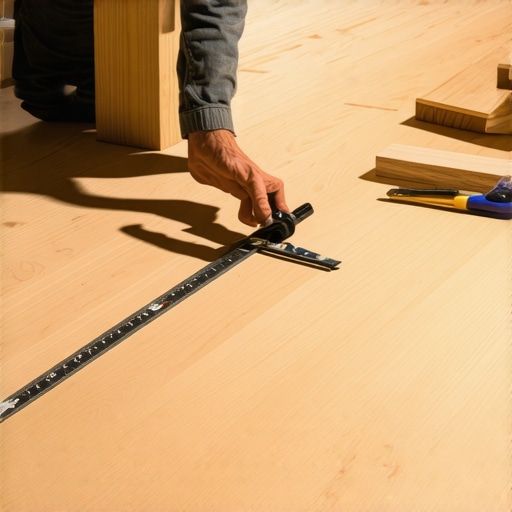
The 1/8 inch that ruins everything
Most guys skip the leveling compound. They think the underlayment will hide the dip. It won’t. I spent three days grinding concrete on a job last month just so the floor wouldn’t click like a castanet. That experience taught me that even the most expensive flooring cannot fix a subfloor that is out of level by more than 3/16 of an inch over a 10 foot span. When you are dealing with an older home or a slab that has settled, the gap between your brand new baseboard and the floor becomes an eyesore. You cannot just fill it with caulk. You cannot just hope nobody noticed. A true professional uses a compass to scribe the wood to the floor. This technique transfers the exact contour of the uneven surface onto the trim. It is the difference between a builder-grade hack job and a custom architectural finish. If you want to see how this fits into a larger design vision, look at baseboards makeover ideas to elevate your space for inspiration. I have seen million-dollar homes ruined by a 1/8 inch gap. It screams laziness. It tells the homeowner that the installer did not care about the structural integrity of the visual lines. We are going to examine the physics of the scribe and how to execute it with surgical precision.
Why your subfloor is lying to you
Subfloor deflection and settling occur when the structural joists or the concrete slab shift over decades, creating a slanting floor that is rarely level. Scribing baseboards involves using a scribing compass to map these topographical variations onto the trim material, ensuring a flush fit that eliminates gaps without the need for excessive shoe molding or caulk. The reality of wood is that it moves. Concrete moves too. When you lay a long, straight piece of baseboard against a floor that has a belly or a hump, the board stays straight while the floor dives away. This creates a shadow line. That shadow line is the enemy. It highlights every imperfection in the house. I have walked into jobs where the grout lines in the tile were perfectly done, but the baseboards looked like they were floating. It is a tragedy. Even in showers with a style trendy ideas for small bathrooms, the way the base or the curb meets the floor defines the quality of the build. You have to understand that the floor is a living entity. It expands and contracts. If your baseboard is not cut to follow that movement, you will see the failure within one seasonal cycle.
“A floor is only as good as the subfloor beneath it; deflection is the enemy of every joint.” – Master Flooring Axiom
The geometry of the gap
Scribing tools like a wing-nut compass or a specialized profiling tool work by maintaining a fixed distance between a metal point and a graphite pencil. By dragging the point along the undulating floor, the pencil replicates the exact vertical offset onto the face of the baseboard, allowing for a back-beveled cut that sits tight against the surface. When you set your compass, you are not just drawing a line. You are performing a geometric translation. You need to find the widest part of the gap first. If the gap is 1/2 inch at its worst, you set your compass to slightly more than 1/2 inch. This ensures that when you cut the wood away, the entire board drops down to meet the floor. If you set it too narrow, you will still have a gap. If you set it too wide, you will lose too much height on your baseboard and it might not align with your door casing. This is why I always tell my apprentices to check the casings first. If the floor slants significantly, you might need to trim the bottom of the casing to match the new, lower height of the baseboard. For those working with masonry surfaces, keeping the floor clean is vital. Check out tile cleaning tips for a sparkling bathroom in 2025 to ensure your work environment is ready for precision marking. Dust is the enemy of a sharp pencil line.
The physics of the back bevel
The cut is where most people fail. You do not cut straight down the line at a 90 degree angle. You have to back-bevel the cut. This means you tilt your jigsaw or your power plane to about 5 or 10 degrees. Why? Because the floor is rarely perfectly flat across its width. By back-beveling, you are creating a sharp point at the front of the wood that will dig into the floor, leaving no visible gap. If you cut it square, any slight tilt in the floor will leave a hairline fracture of light. I prefer a jigsaw with a fine-tooth scrolling blade. It gives me the control to follow the micro-curves in the wood. If you are working with solid oak, the wood is going to fight you. The grain will try to pull the blade. You have to be the boss of the tool. In wet areas like bathrooms where you might have showers nearby, this tight fit is even more important to prevent moisture from seeping under the wall. If you are worried about your existing bathroom surfaces, you might consider how to refresh grout without replacing it before you install new trim. A clean base makes for a better scribe. I have seen moisture destroy baseboards in six months because the installer left a gap that acted like a straw, sucking up floor water.
| Method | Precision Level | Effort Required | Best Use Case |
|---|---|---|---|
| Caulk Fill | Low | Minimal | Rental properties, small gaps under 1/16 inch |
| Shoe Molding | Medium | Low | Standard residential, covering expansion gaps |
| Scribing | Extreme | High | Custom homes, significant slants, professional finish |
| Floor Leveling | Structural | Very High | Major subfloor failure, new installations |
Tools that actually work
Professional scribing kits require a high-carbon steel compass, 4H graphite pencils for fine lines, and a variable-speed jigsaw with down-cut blades. Using a marking gauge or a simple block of wood is an alternative, but the mechanical compass offers the highest degree of repeatable accuracy on complex tile or stone surfaces. I do not use those cheap plastic compasses you find in the school supply aisle. They flex. If the tool flexes, your line is garbage. You need a tool with a locking nut that stays put. When I am working around a fireplace or a tile transition, I need to know that my 1/2 inch setting is still 1/2 inch by the time I get to the other side of the room. Consistency is the hallmark of a master. For those interested in high-end bathroom finishes, looking at showers that wow modern designs for 2025 can show you why these small details matter. A floor that flows perfectly into a shower curb without a massive glob of silicone is the goal. It is about the chemistry of the fit. If the wood fits perfectly, the finish lasts longer because there is no stress on the fasteners.
The hidden danger of moisture
Humidity is the ghost in the expansion gap. If you scribe your boards in the middle of a dry winter, and you live in a place like New Orleans or Houston, that wood is going to expand in the summer. If you have fit it too tight without an expansion gap behind the board, it will cup. I always leave a tiny bit of breathing room behind the baseboard, even if the bottom is scribed tight to the floor. The NWFA suggests that for every 10 feet of width, you should account for potential expansion. This is why choosing the right material matters. MDF is stable but hates water. Solid pine is cheap but moves like a snake. I prefer primed poplar for most high-end jobs. It scribes beautifully and takes paint like a dream. If you are doing a full remodel, you should also look into grout restoration secrets for long-lasting results to make sure the floor you are scribing to looks as good as the new trim you are installing. There is no point in putting a custom-scribed baseboard on a floor with crumbling grout. It is like putting a tuxedo on a pig.
“Wood moves in the direction of the grain; moisture is the engine of that movement.” – NWFA Technical Guide
Step by step guide to the perfect scribe
- Level the baseboard against the wall using shims to find the highest point of the floor.
- Secure the board temporarily with a few finish nails, ensuring it is plumb.
- Set the compass to the width of the largest gap between the board and the floor.
- Drag the metal point along the floor while the pencil marks the face of the board.
- Remove the board and use a jigsaw with a back-bevel angle to cut along the line.
- Smooth the cut with a block plane or a rasp for a micro-perfect fit.
- Test the fit and trim any high spots before final nailing.
The process is slow. It is tedious. It will make your back ache. But when you snap that board into place and it hugs the floor like they were grown together, you will understand why we do it. Most people will never know why that room looks so much better than the one next door. They won’t see the scribe. They will just see a floor that looks right. That is the ultimate compliment for a floor architect. If you are looking for more ways to upgrade your home, consider chic baseboard designs that transform rooms in 2025 for your next project. We are moving away from the thin, boring trim of the 90s and back into substantial, well-fitted millwork. This requires a higher level of skill. It requires the scribe. If you have questions about specific flooring materials or need professional advice on a complex layout, you can always contact us for expert guidance. We have seen every kind of slanted floor imaginable, and we have fixed them all with a simple compass and a bit of patience.
The final transition
Once the scribe is cut and the board is installed, the work is not quite finished. You have to consider the finish. If you are working in a bathroom near showers, you must seal the bottom edge of the wood before it hits the floor. I use a high-quality primer on the cut edge. This prevents the end-grain from acting like a wick for any moisture on the floor. For those into sustainability, eco-friendly tile solutions for sustainable homes in 2025 often include natural stones that have even more texture than standard ceramic. These floors require an even more aggressive scribe because the surface is not just slanted, it is rugged. You have to follow every peak and valley in the stone. It takes a steady hand and a sharp eye. Do not rush it. The floor has been there for years, and it isn’t going anywhere. Your trim should be prepared to stay there just as long. Remember to check our privacy policy if you are submitting photos of your project for a consultation. We take your home data as seriously as we take our miter joints. A floor is the foundation of the home’s character. Treat it with the respect it deserves, and it will reward you with decades of silent, sturdy service. No clicks. No gaps. Just perfection.{“@context”:”https://schema.org”,”@type”:”HowTo”,”name”:”How to Scribe Baseboards to a Slanting Floor Using a Compass”,”step”:[{“@type”:”HowStep”,”text”:”Level the baseboard against the wall using shims to find the highest point of the floor.”},{“@type”:”HowStep”,”text”:”Secure the board temporarily with a few finish nails, ensuring it is plumb.”},{“@type”:”HowStep”,”text”:”Set the compass to the width of the largest gap between the board and the floor.”},{“@type”:”HowStep”,”text”:”Drag the metal point along the floor while the pencil marks the face of the board.”},{“@type”:”HowStep”,”text”:”Remove the board and use a jigsaw with a back-bevel angle to cut along the line.”},{“@type”:”HowStep”,”text”:”Smooth the cut with a block plane or a rasp for a micro-perfect fit.”},{“@type”:”HowStep”,”text”:”Test the fit and trim any high spots before final nailing.”}]}