
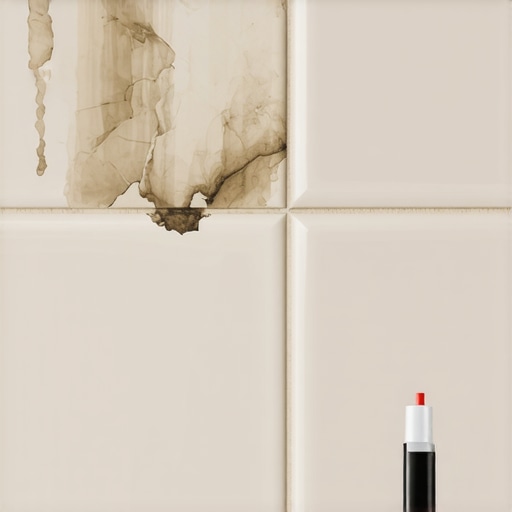
I spent three days grinding concrete on a job last month just so the floor wouldn’t click like a castanet. Most guys skip the leveling compound. They think the underlayment will hide the dip. It won’t. This same logic applies to grout. People see a dirty line and reach for a 10 dollar marker. They think they are fixing a problem. They are just painting a tombstone. A floor is a structural assembly. It is not an art project. When you treat it like one, you end up with mold and loose tiles. I have seen 50,000 dollar bathroom installs ruined by a lack of respect for the chemistry of the grout joint. It starts with a little discoloration and ends with a full rip out. If you think a pen is the answer, you do not understand the physics of moisture.
The myth of the miracle marker
Grout pens are topical acrylic pigments designed to hide surface stains on tile joints but fail to address structural integrity or deep-seated mold. They offer a temporary cosmetic fix rather than a restorative solution for porous cementitious materials in high-moisture areas like showers. You are basically putting a layer of cheap paint over a sponge. The moment that tile gets wet, the hydrostatic pressure from the subfloor or the capillary action of the grout pulls moisture behind that thin layer of pigment. It will bubble. It will peel. It will fail. You cannot solve a 3D structural problem with a 2D drawing tool. Most homeowners want the easy way out. The easy way leads to the expensive way. I tell my clients that if they want a clean floor, they need to look at the chemistry of the bond, not the color of the ink.
The porous reality of cementitious bonds
Cementitious grout is inherently porous, consisting of a microscopic network of capillary channels that trap dirt, bacteria, and minerals. Unlike epoxy grout, standard mixtures rely on a water-to-cement ratio that, if imbalanced, leads to efflorescence and crumbling joints. When you use a grout pen, you are sealing the surface while leaving the internal structure of the grout open to moisture. This is a recipe for disaster. The moisture gets in through the tiny gaps near the baseboards or the corners of the showers. It gets trapped under the acrylic layer. This creates a greenhouse for mold. You won’t see it until the grout starts falling out in chunks. I have pulled up tiles where the grout looked white on top but was black sludge underneath. That is the legacy of the grout pen. If you want real results, you should look into grout restoration secrets for long lasting results instead of reaching for a marker.
“A floor is only as good as the subfloor beneath it; deflection is the enemy of every joint.” – Master Flooring Axiom
Why your subfloor is lying to you
Subfloor deflection is the primary cause of grout cracking and joint failure because it introduces mechanical stress that rigid tile cannot absorb. If your subfloor has a dip, the tile will flex. When the tile flexes, the grout breaks. No amount of pigment will fix a structural crack. I have seen guys try to fill cracks with grout pens. It is like trying to fix a broken bone with a Band-Aid. You need to address the rigidity of the assembly. This often involves checking the joist spacing and the thickness of the plywood. If the subfloor moves, the floor fails. It is that simple. We spent a week on a job in a humid climate where the humidity was at 90 percent. The subfloor had expanded so much it was pushing the baseboards off the wall. The grout was popping out like popcorn. A pen wouldn’t have done a thing. You have to understand how the house moves before you can fix the floor. This is why tile cleaning tips for a sparkling bathroom in 2025 emphasize maintenance over cover-ups.
The chemical lie of topical coatings
Topical grout coatings create a non-breathable barrier that prevents vapor transmission, leading to internal rot and delamination of the tile adhesive. The physics of a bathroom are brutal. You have heat, steam, and standing water. Standard grout allows a certain amount of breathability. When you choke it with an acrylic pen, the water vapor has nowhere to go. It sits at the interface of the grout and the thin-set. Eventually, the bond breaks. This is why you see tiles that feel ‘hollow’ when you walk on them. The grout pen didn’t just hide the stain; it accelerated the failure of the bond. I always recommend a deep cleaning with an alkaline professional cleaner followed by a high-quality penetrating sealer. That way, the grout can still breathe while repelling liquids. If you are looking for how to refresh grout without replacing it, you need to use products that penetrate the surface, not just sit on top.
| Feature | Grout Pen | Penetrating Sealer | Epoxy Grout |
|---|---|---|---|
| Durability | Low (Months) | Medium (Years) | High (Decades) |
| Breathability | None | High | None (Waterproof) |
| Structural Support | Zero | Zero | Structural |
| Chemical Resistance | Poor | Moderate | Extreme |
The 1/8 inch that ruins everything
Expansion gaps of at least 1/8 inch at the perimeter of a room are required to allow for thermal expansion of the tile assembly. Most DIYers and bad contractors run the tile tight against the wall. They cover the mess with baseboards and think they are clever. When the house settles or the temperature changes, the tile has nowhere to go. It tents. It cracks the grout. A grout pen will not stop a floor from tenting. It will not stop the grout from pulverizing under the pressure of a shifting wall. I have seen people try to ‘color in’ the cracks caused by lack of expansion gaps. Within a week, the color is gone because the crack has widened. You have to respect the gap. If you are doing showers that wow modern designs for 2025, you need to ensure the waterproofing membrane and the movement joints are handled by a pro. The aesthetics are secondary to the engineering.
- Inspect the subfloor for any deflection or ‘bounce’ before applying any topical treatments.
- Clean the grout lines with a professional-grade oxygenated cleaner to remove deep oils.
- Avoid using acid-based cleaners on natural stone or cement grout as they etch the surface.
- Check for loose tiles by tapping the floor; a hollow sound means the bond is already gone.
- Ensure the humidity in the room is below 50 percent before applying any sealers or coatings.
Mechanical failures hidden by ink
Mechanical failure in a tile floor usually manifests as hairline cracks in the grout joints, signifying that the thin-set mortar has lost its tensile bond. A grout pen is a mask. It is a lie. When I walk onto a job site and see a grout pen in the trash, I know I am in for a long day. It means the previous person tried to hide the fact that the floor is moving. You cannot hide movement. Physics always wins. If you want a floor that lasts, you have to use the right materials from the start. This includes using modified thin-set with polymers that allow for a tiny bit of flex. It means using the right trowel size to get 95 percent coverage under the tile. If you skip those steps, no pen in the world will save your showers or your kitchen floors. Focus on the foundation. The rest is just noise. People ask me about eco friendly tile solutions for sustainable homes in 2025, and the most eco-friendly thing you can do is build a floor that doesn’t need to be replaced in five years.
“Grout is not glue; it is a filler for a gap that must be perfectly prepared.” – Master Flooring Axiom